Less Sugar, Same Sweetness? The Growing Demand for Healthier Desserts
By Hermoine Macura-Noble
Special to The Times Kuwait
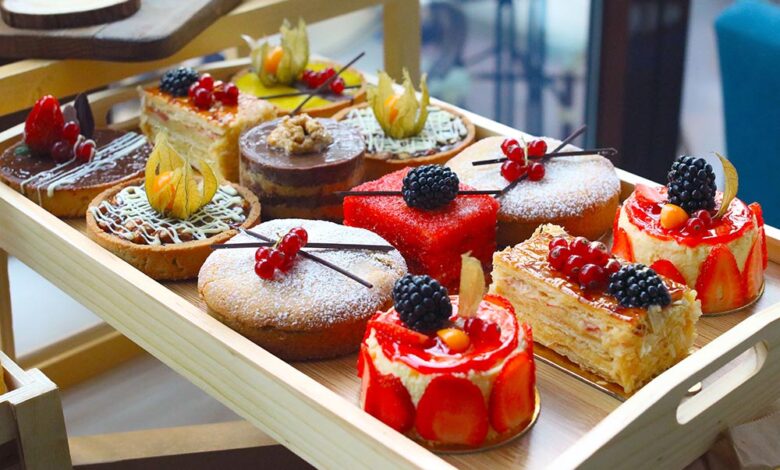
When most of us sit down at a restaurant and order our dessert, we are not thinking about insulin levels. We are thinking about chocolate. Possibly lots of it. And yet, somewhere between the green juice revolution and the collagen supplement craze something shifted in the dessert world too. Suddenly, dessert menus across the Gulf started looking suspiciously restrained.
Fermented this. Roasted that. A suspicious absence of the word “caramel” in places where caramel used to live rent-free. Welcome to the age of intelligent indulgence – where your dessert is engineered to make you feel good about eating it, even if you’re not entirely sure why.
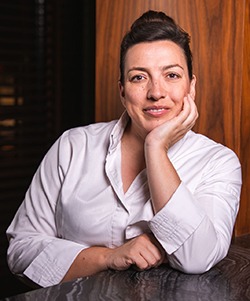
At the forefront of this quiet revolution – is BRIX Cafe, where the philosophy reads less like a menu and more like a manifesto. The team there will tell you, with complete sincerity, that sugar is not the enemy – excess is. “Sugar should support flavor, texture, and emotion but not dominate the experience,” explains Brix café Chef, Carmen Rueda Hernandez.
What’s particularly interesting about the BRIX approach is that they are not removing sugar so much as outsmarting it. Instead of reaching for the sugar jar, their kitchen reaches for fermentation, spices, herbs, bitterness, smoke, salinity, and citrus.
“Many of our desserts are designed almost like savory dishes in their structure,” says Hernandez. “We play with bitterness, salinity, umami, smoke, citrus, or floral notes to create complexity and emotion. When a dessert has multiple dimensions, you simply do not need as much sugar for it to feel complete.”
The result is something guests consistently describe as “cleaner” and “lighter” – and, crucially, they finish their desserts without immediately needing a lie-down. “They often leave saying they feel satisfied without feeling heavy afterwards,” Hernandez notes, “which for us is very important.”
The signature dish, African Power House, has become something of a cult item. “It contains all the elements we constantly search for in a plated dessert: contrast, texture, temperature, depth, freshness, and harmony,” Says Hernandez. Built around a deep, intense chocolate profile, it somehow manages to feel elegant rather than overwhelming.
The Basque cheesecake, meanwhile, continues to earn its place on the menu through sheer honesty of flavor. “I believe the desserts that resonate the most are always the ones that feel honest – where flavor, technique, and emotion exist in harmony rather than excess,” shares Hernandez. There are no tricks. It simply tastes like what it is, which in an era of maximum embellishment is almost radical.
This movement toward balance over excess is not unique to fine dining. Froyo has been doing the lighter dessert thing since 2010. Their signature product is a fresh, non-fat, with no added sugar or preservatives frozen yoghurt. It continues to attract a loyal following across seven branches in Kuwait.
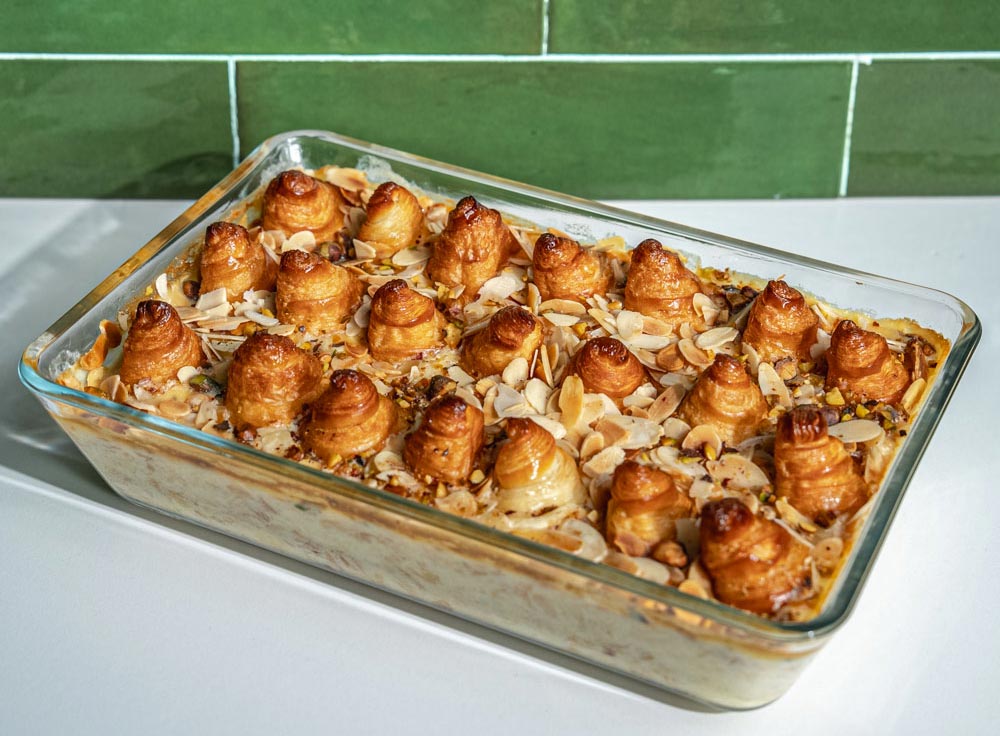
Froyo’s approach is less about fine-dining philosophy and more about straightforward pleasure: fresh ingredients, honest flavors, desserts made daily from scratch in their own kitchen. Pâte à choux, Frobites, mini crepes, and waffles round out a menu that proves you don’t need a gram of unnecessary sugar to keep people coming back.
What both BRIX Café and Froyo understand – and what the wider dessert industry is slowly catching up to – is that today’s diner in the Gulf is not asking to be punished. They are not ordering a salad when they want a chocolate dessert. They are simply asking that the chocolate dessert not make them feel like they’ve done something wrong.
“Guests come to BRIX for pleasure, emotion, and discovery,” the team says plainly. “The experience must still feel luxurious and satisfying.” That’s the shift – not deprivation, but a growing sophistication about what pleasure actually means.
The coffee pairing conversation has evolved accordingly. Where once a strong espresso was plonked next to whatever came out of the kitchen, there is now a genuine conversation happening between the cup and the plate. “Guests now appreciate lighter roasts, floral notes, citrus profiles, and more delicate coffee experiences that complement desserts rather than overpower them,” Hernandez observes. Non-alcoholic pairings – infusions, teas, fermented drinks, spiced concoctions – are treated almost as part of the dish itself.
Is this a trend? A phase? Almost certainly not. “I believe it is absolutely a long-term evolution and not just a temporary trend,” Hernandez says with conviction. “The future of pastry in the region will be about intelligent indulgence – desserts that are emotionally satisfying, technically refined, visually beautiful, but also lighter, cleaner, and more ingredient-focused.” The region’s dining culture is developing fast, and guests are not going back.
 By Hermoine Macura-Noble
The first Australian English speaking News Anchor in the Middle East. She is also the Author of Faces of the Middle East and Founder of US-based 501c3 charity – The House of Rest which helps to ease the suffering of victims of war. For more from our Contributing Editor, you can follow her on Instagram, here.