- Washington and Tehran return to indirect diplomacy for the first time since June, with the Strait of Hormuz, the US blockade and the future of the conflict at the centre of negotiations
The United States and Iran have resumed high-level diplomatic contacts in New York, marking the first known talks between the two sides since a June ceasefire collapsed, as President Donald Trump warned that Washington could “annihilate” the Islamic Republic if the conflict cannot be resolved, BBC reports.
The discussions took place on the sidelines of the United Nations General Assembly and were mediated by Qatar, with Iranian Foreign Minister Abbas Araghchi and US special envoy Steve Witkoff at the centre of the diplomatic effort. No breakthrough was reported, but Witkoff said the discussions had been completed and expressed hope that they would prove “constructive and promising.”
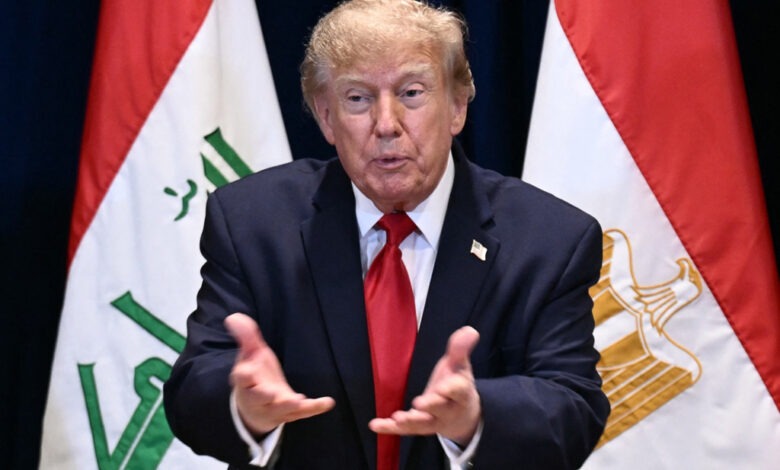
The renewed diplomacy came only hours after Trump used his address to the UN General Assembly to issue one of his starkest warnings yet to Tehran, presenting a choice between reaching a deal with Washington and facing further US military action.
“Will a deal be made with Iran … or do I annihilate the Islamic Republic?” Trump said, according to reports of his speech. He also said he believed an agreement could eventually be reached, while maintaining that Iran must not be allowed to obtain a nuclear weapon.
Despite the rhetoric, US and Iranian officials continued diplomatic contacts in New York. Trump later described a three-hour meeting involving American officials and the Iranian delegation as “very productive,” while Witkoff said mediators had shuttled between the two sides throughout the day.
Iranian Foreign Ministry spokesman Esmail Baghaei said Tehran had conveyed its conditions through the Qatari mediator. Iran is demanding an end to what it describes as US “acts of aggression”, an end to the war on all fronts, the lifting of the naval blockade and economic pressure, and the release of Iranian assets.
The Strait of Hormuz has emerged as one of the central issues in the diplomatic effort. Iran has indicated that it could reopen the strategically important waterway if Washington reduces military pressure and lifts its blockade of Iranian ports, according to a senior Iranian official cited by Reuters.
The stakes extend well beyond the United States and Iran. Before the conflict, roughly 20 percent of the world’s oil and liquefied natural gas passed through the Strait of Hormuz, making disruption to shipping there a major concern for global energy markets.
The diplomatic effort is unfolding as Trump faces pressure over the economic consequences of the prolonged conflict and as the United States approaches congressional elections in November. Trump has said he expects a settlement with Iran, but has also indicated that a deal may come only after the elections.
For now, the New York talks have reopened a diplomatic channel that had been closed since June, but the two sides remain far apart on the core issues. Iran is pressing for an end to military and economic pressure and the reopening of Hormuz, while Washington continues to insist on preventing Iran from acquiring a nuclear weapon.
The next stage of the talks will depend on whether Qatar and other mediators can bridge those differences without another escalation in the Gulf. Witkoff said the mediators would continue their work after the latest round of discussions.