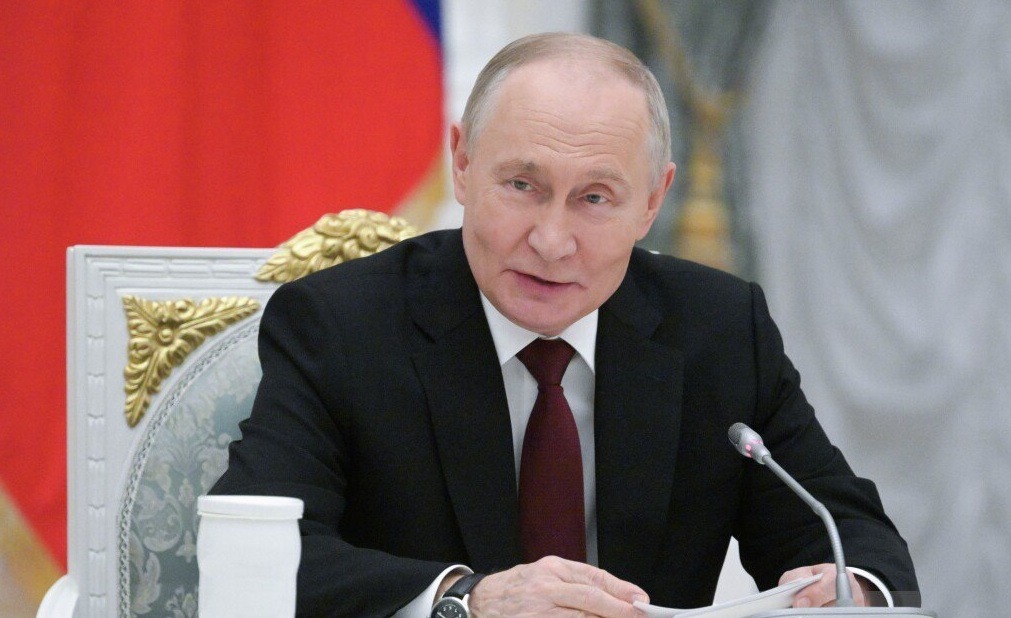
Russian President Vladimir Putin said on Saturday that the conflict between the United States and Iran is “highly complicated,” warning that any additional escalation in the Middle East would result in losses for all sides without exception.
Speaking to journalists in comments carried by RIA Novosti, Putin said Moscow remains in continuous contact with several parties involved in the conflict and hopes tensions surrounding Iran will be resolved quickly.
He stressed that any agreements or arrangements in the region should consider the interests of all concerned nations. Putin added that Moscow is maintaining communication with multiple parties on several regional and international issues and remains open to mediation efforts aimed at easing tensions.
Putin also praised the role of certain countries in encouraging dialogue, emphasizing that diplomatic and political solutions remain the most effective way to address the ongoing crises.
Over recent months, Russia has held discussions with international parties, including China, India and the United States, regarding the consequences of developments linked to the situation in Ukraine as part of a broader evaluation of global security issues, he said.
Regarding Russia’s ties with China, Putin stated that cooperation between Moscow and Beijing plays a major role in supporting international stability amid rapid changes affecting the global system.
Putin said the conflict in Ukraine is approaching an end and affirmed that Moscow is ready to reach a permanent settlement, as well as implement a practical exchange of prisoners of war with the Ukrainian side.
He added that Russia immediately accepted US President Donald Trump’s proposal to extend the truce and conduct a prisoner swap, noting that Moscow has yet to receive any related proposals from Kyiv.
Additionally, Putin said Armenia’s plans to join the European Union require detailed study and a cautious approach, given its regional obligations and existing ties with current economic blocs.
Putin noted that Armenia receives considerable benefits from its membership in the Eurasian Economic Union, particularly in the areas of agriculture and migration, underscoring the importance of preserving balance in its economic relations.
— KUNA