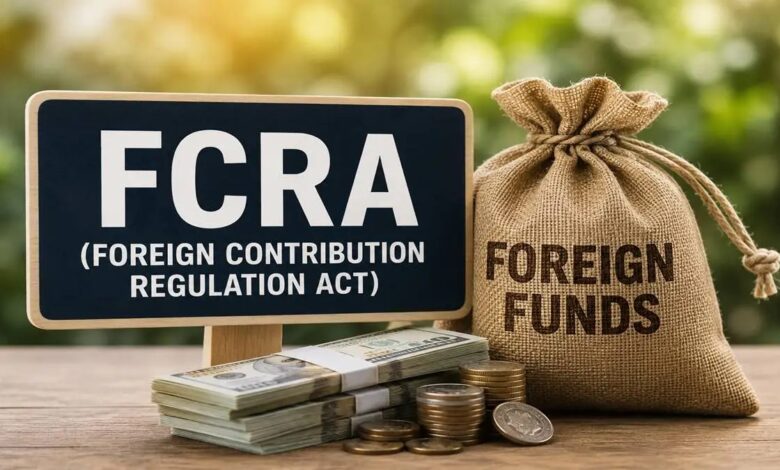
The Government of India has introduced stricter regulations governing foreign funding received by non-governmental organizations (NGOs) and associations, under amendments to the Foreign Contribution (Regulation) Act (FCRA), 2010.
The changes were notified by the Ministry of Home Affairs (MHA) through gazette notifications issued on June 23, introducing higher penalties, expanded disclosure requirements, and tighter compliance norms for organizations receiving foreign contributions.
Under the revised framework, penalties for violations related to the misuse or improper use of foreign funds have been significantly increased. NGOs diverting funds beyond permitted administrative limits or using contributions for unauthorized purposes will now face fines of at least Rs 1 lakh or a percentage-based penalty on the amount involved, whichever is higher.
Stricter penalties have also been introduced for speculative investments and misuse of foreign donations.
The new rules also place greater emphasis on registration transparency. Organizations applying for FCRA approval must now clearly specify their objectives, the nature of activities they intend to undertake, and the states or Union Territories where they plan to operate. Existing organizations have been given one year to update their registrations accordingly.
The amendments further distinguish between religious activities and proselytization, explicitly allowing activities such as maintenance of places of worship, religious education, and cultural preservation, while excluding any form of conversion-oriented outreach from permitted categories.
In addition, the definition of key functionaries has been expanded to include individuals with controlling authority, such as trustees, directors, and partners. Organizations with foreign nationals in key roles will generally not be eligible for registration, subject to limited government exceptions, the news agencies report.
The revised rules also mandate stronger financial accountability, requiring NGOs to disclose detailed activity reports, social media accounts, and donor sources where applicable. Organizations must also demonstrate adequate utilization of funds before receiving subsequent instalments of foreign contributions.
Authorities stated that the reforms are intended to enhance transparency, strengthen oversight, and ensure that foreign contributions are used strictly for their declared and approved purposes.