- Dubai continues to attract affluent individuals worldwide, driven by its low-tax environment, business-friendly regulations, fast-track residency options, and premium lifestyle offerings.
- One in five ultra-rich individuals is foreign-born, with the total number expected to grow by one-third to reach over 734,000 by 2030.
- Global mobility has become a core strategy for wealth creation, allowing individuals to diversify across markets, access opportunities, and enhance long-term financial security.
Dubai is home to around 900 ultra-high-net-worth individuals, each holding assets exceeding $30 million (Dh110 million), with the majority of foreign-born millionaires originating from India, Pakistan, and Saudi Arabia, according to a new study released Wednesday.
The report, published by Altrata in collaboration with Arton Capital, highlights that Dubai’s wealthy population skews younger compared to global peers. Notably, one in five foreign-born ultra-wealthy residents is under the age of 50.
Findings from the report, Global Citizens: Entrepreneurship, Mobility and the Ultra Wealthy, reveal that about 40 percent of Dubai’s millionaires have built their fortunes through a mix of self-made success and inheritance, above the global average.
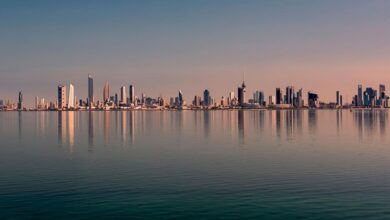
Dubai continues to attract affluent individuals worldwide, driven by its low-tax environment, business-friendly regulations, fast-track residency options, and premium lifestyle offerings. The emirate’s population surpassed four million last year, fueled by a steady influx of investors and skilled professionals.
The study also shows that more than 95 percent of foreign-born millionaire residents maintain assets outside the UAE, reinforcing Dubai’s role as a strategic base rather than a final destination. Female representation among this group remains limited, at approximately 7 percent.
Dubai’s wealthy residents come from a wide range of industries, reflecting its status as a global business hub. Unlike other markets where wealth is concentrated in a few sectors, Dubai demonstrates a more balanced distribution across industries such as industrial conglomerates, business and consumer services, banking and finance, construction, and manufacturing.
Sector-wise, around 13 percent of ultra-wealthy individuals are linked to industrial activities, followed by 12 percent each in business services and finance, 10 percent in construction and engineering, and 9 percent in manufacturing.
Globally, the report notes that one in five ultra-rich individuals is foreign-born, with the total number expected to grow by one-third to reach over 734,000 by 2030.
Their combined wealth is projected to surge from $63 trillion in 2025 to $84 trillion by the end of the decade, while 7.7 million individuals are expected to hold assets exceeding $5 million.
Experts emphasize that global mobility has become a core strategy for wealth creation, allowing individuals to diversify across markets, access opportunities, and enhance long-term financial security.
The trend reflects a broader shift, where wealth is increasingly detached from geography, with high-net-worth individuals structuring their lives and investments across multiple jurisdictions.
According to Arton Capital CEO Armand Arton, today’s wealthy prioritize flexibility, resilience, and global access. Meanwhile, Moira Boyle noted that nearly 80 percent of foreign-born ultra-wealthy individuals are self-made, underscoring the growing role of entrepreneurship and innovation in wealth creation.