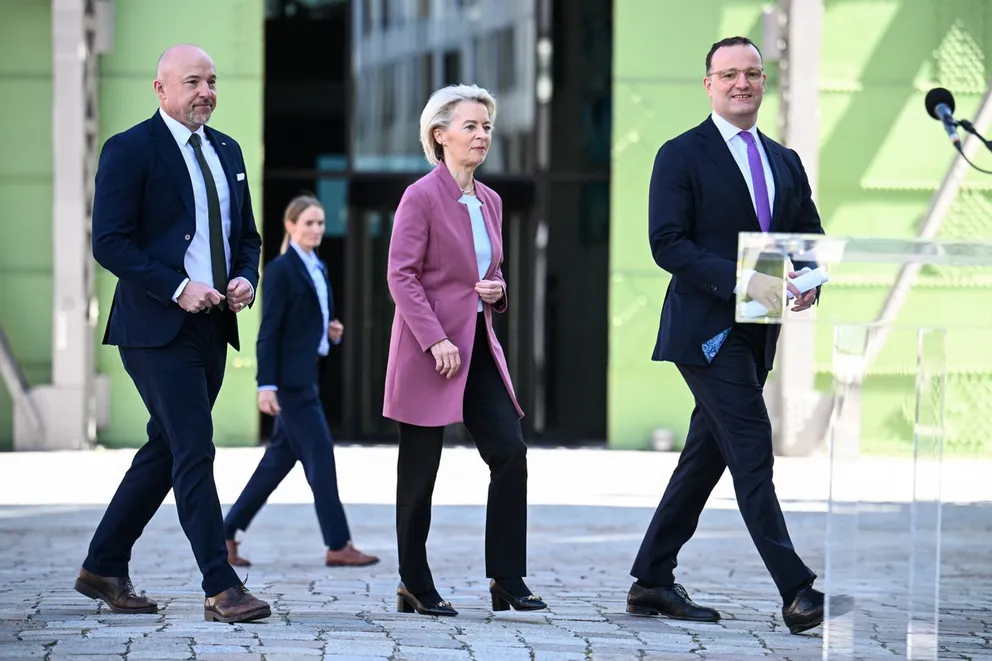
President of the European Commission Ursula von der Leyen said on Monday it is too early to consider lifting sanctions on Iran, stressing that any easing would require a “fundamental change” in Tehran’s policies.
Her remarks come amid a flurry of diplomatic activity and rising geopolitical tensions involving Iran and the United States. According to Axios, Iran has put forward a proposal to Washington that includes reopening the Strait of Hormuz and helping end the ongoing conflict, while postponing negotiations over its nuclear program to a later stage.
Diplomatic Efforts Expand
Meanwhile, Abbas Araghchi arrived in Russia for talks with Vladimir Putin, highlighting Moscow’s growing role as a key diplomatic partner for Tehran. The discussions are expected to focus on coordinating positions and assessing developments in the conflict.
Iran continues to engage in strategic messaging. Mohammad Bagher Ghalibaf signaled that Tehran retains significant leverage, particularly in energy and maritime routes, suggesting that control over shipping lanes remains a critical factor in its standoff with Washington.
Ongoing Pressure and Isolation
Adding to the pressure, Iran’s internal situation remains strained. According to NetBlocks, the country has now experienced 59 consecutive days of near-total internet blackout, marking one of the longest disruptions in recent years and deepening its isolation from the outside world.
A Stalemate with High Stakes
The latest developments point to a complex and fragile diplomatic landscape. While Iran signals willingness to negotiate on certain fronts, Western powers remain cautious, insisting on tangible policy changes before offering sanctions relief.
With critical issues such as nuclear negotiations, maritime security, and regional stability still unresolved, the path toward de-escalation appears uncertain, leaving global markets and geopolitical balances on edge.