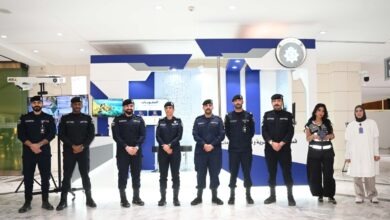
Kuwait executes massive multi-sector emergency readiness drive from ports to power plants
. . . deploys sweeping national command structure to reinforce home front resilience

Kuwait has activated a comprehensive, field-driven national crisis management model in response to recent regional developments, establishing an integrated operational framework designed to safeguard national security, ensure continuity of essential services, and reinforce the resilience of state institutions.
Over a 30-day mobilization period following early alerts on February 28, authorities carried out more than 130 high-level inspection tours across strategic facilities nationwide. This large-scale field deployment effectively transformed key infrastructure into interconnected monitoring and command hubs, forming a unified national readiness system covering more than 67 vital sites across all six governorates.
The coordinated response, led by over 28 senior officials and state leaders, established a proactive surveillance and deterrence structure aimed at protecting critical infrastructure, securing supply chains, and maintaining uninterrupted public services while strengthening public confidence.
At the leadership level, extensive field inspections were conducted across defense, security, energy, and infrastructure sectors. Key defense institutions, including the Ministry of Defense, the Kuwait National Guard, and the General Fire Force, were reviewed alongside strategic military bases and joint command centers such as operations rooms and decision-making hubs.
Parallel inspections covered civilian and strategic infrastructure, including power and water facilities, ports, airports, telecommunications systems, hospitals, food supply chains, digital infrastructure, and emergency shelters. These assessments focused on operational readiness, continuity planning, and system resilience under various emergency scenarios.
The First Deputy Prime Minister and Minister of Interior, Sheikh Fahad Al-Yousef, led inspections of border crossings, Coast Guard units, civil defense operations rooms, and key internal security sectors, with emphasis on northern border posts and strategic entry points.
The Minister of Defense conducted readiness evaluations across military installations and logistics structures, including the Supply and Logistics Authority, which supports operational sustainment of armed forces capabilities.
On the civilian front, ministers executed coordinated sectoral inspections to ensure nationwide coverage. The Minister of Social Affairs, Family and Childhood reviewed cooperative societies, shelters, humanitarian centers, and monitoring systems overseeing food distribution and welfare services, focusing on emergency readiness and continuity of essential supplies.
The Minister of Trade and Industry carried out market inspections across agricultural and food sectors, retail outlets, and supply chains, identifying regulatory violations while ensuring price stability and uninterrupted availability of essential goods.
The Minister of Public Works focused on transport logistics, port operations, emergency shelters, and flood preparedness systems, while the Minister of Electricity, Water, and Renewable Energy inspected power stations, water control centers, and utility infrastructure to ensure service stability under emergency conditions.
Health sector readiness was reinforced through inspections of emergency medical services, pharmaceutical reserves, hospital shelters, and logistical supply systems, ensuring uninterrupted healthcare delivery.
Additional inspections extended to youth centers, sports facilities, food safety laboratories, import terminals, and livestock facilities, alongside higher education institutions and training bodies to ensure institutional preparedness and operational continuity.
Judicial and financial institutions were also included in the nationwide readiness framework, with inspections of shelter facilities and government complexes to ensure administrative continuity under all circumstances.
Senior security leadership intensified parallel field operations across border points, ports, fire stations, civil defense centers, and emergency response units, reinforcing operational coordination across security agencies. Customs authorities similarly conducted inspections at key entry points, including northern ports and border crossings, ensuring smooth flow of goods and sustained operational efficiency.
Food security and agricultural stability were supported through field visits to farms, fisheries, and distribution markets, while judicial oversight visits ensured continuity of legal processes and institutional functionality.
In parallel, humanitarian considerations remained central to the national response, with senior officials visiting the injured and reviewing medical care standards directly with healthcare teams.
Collectively, these coordinated nationwide operations reflect a unified crisis management model integrating military readiness, civil protection, infrastructure resilience, and humanitarian response. Operating alongside the armed forces’ mission of safeguarding national borders, this system underscores Kuwait’s comprehensive preparedness to maintain stability and continuity across all state functions.
Input from Al-Rai and Al-Anba newspapers