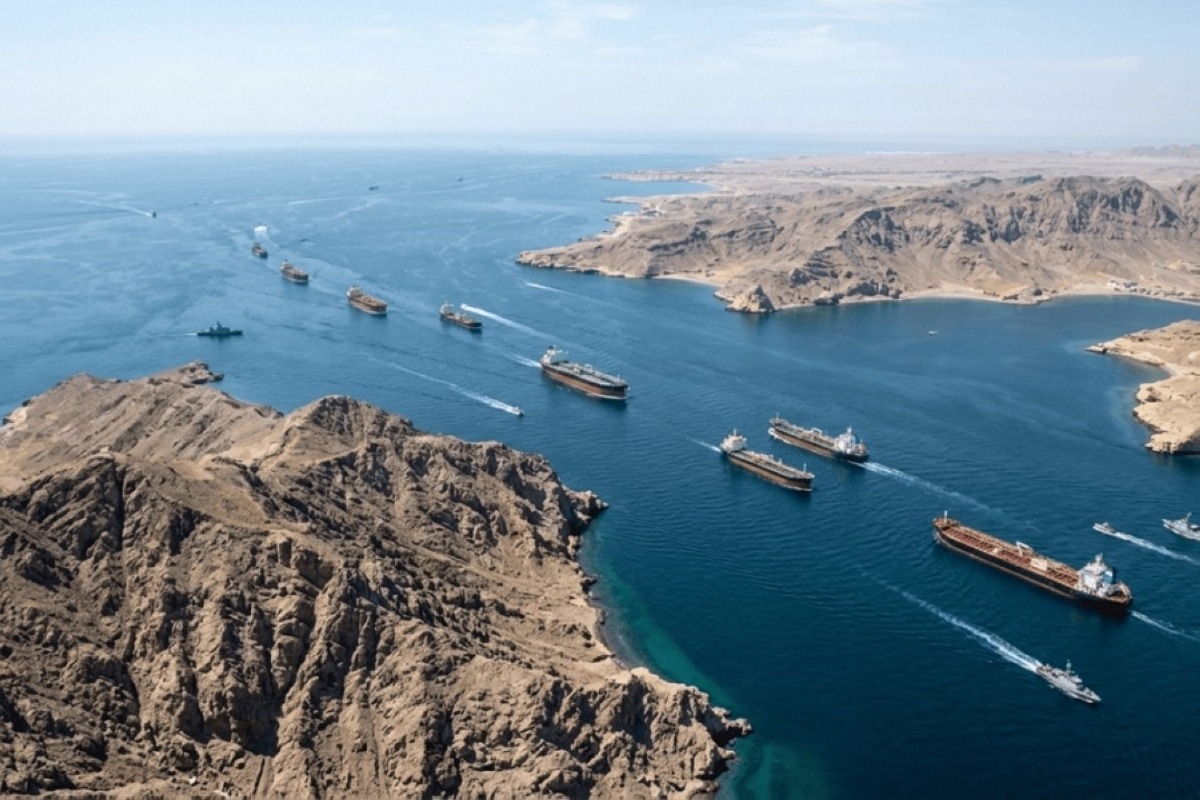
Months of disruption around the Strait of Hormuz are forcing Gulf oil exporters to accelerate efforts to develop alternative routes. The strait, between Iran and Oman, previously carried about 20% of global crude exports and roughly 20 million barrels of oil and petroleum products daily, making it extremely difficult to replace.
Saudi Arabia has shown the strongest ability to bypass Hormuz through its East-West Pipeline, which moves crude from eastern oil fields to Yanbu on the Red Sea. IMF PortWatch data shows Gulf coast shipments fell from 47.5 million tons to 6.3 million tons in April-May, while Red Sea shipments rose from 29.6 million to 54.8 million tons. The additional 25.2 million tons replaced about 61% of lost Gulf-side volumes.
The UAE has its own bypass infrastructure through the Abu Dhabi Crude Oil Pipeline (ADCOP), connecting Habshan with Fujairah outside Hormuz. However, Fujairah remains vulnerable to attacks because of its proximity to Iran. UAE Gulf coast traffic fell from 68.5 million tons to 12 million tons, while alternative port traffic dropped from 13.7 million to 6.3 million tons.
The UAE’s experience highlights two major problems with alternative routes: limited capacity and security risks. Fujairah cannot quickly replace the massive throughput of facilities such as Jebel Ali, while shipowners and insurers may avoid routes considered almost as risky as Hormuz.
Long-term alternatives could require billions of dollars. A proposed Basra-Aqaba pipeline could cost $8 billion-$10 billion and take five to seven years, while a Basra-Oman pipeline could cost $10 billion-$15 billion. Such projects could improve regional energy resilience but cannot solve an immediate supply crisis.
Alternative shipping routes also carry significant costs. Sending tankers around the Cape of Good Hope could add hundreds of thousands of dollars to each voyage. The Red Sea provides another option, but ships must pass Bab al-Mandab, where Houthi attacks have threatened commercial shipping.
Qatar, Kuwait and Bahrain face the greatest vulnerability because they have no coastlines outside the Persian Gulf. Unlike Saudi Arabia and the UAE, they cannot easily redirect exports through domestic alternative routes and would require cooperation with countries such as Iraq, Jordan or Israel.
Israel has proposed a broader regional energy corridor, with oil and gas pipelines running west through the Arabian Peninsula toward its Mediterranean ports. Such a network could reduce dependence on both Hormuz and Bab al-Mandab, but would require major investment and extensive regional cooperation.
Analysts stress that pipelines, ports and terminals can also be attacked, meaning infrastructure alone cannot guarantee energy security. Gulf producers will likely accelerate investment in pipelines, alternative ports, storage and diversified shipping routes.
Despite these efforts, Strait of Hormuz remains extremely difficult to replace because existing bypass capacity represents only a fraction of the approximately 20 million barrels of oil and petroleum products that previously moved through it each day. A prolonged closure could also increase pressure on Iran by encouraging a broader international response, making the waterway a critical economic, energy and geopolitical flashpoint.