- GCC Secretary-General Jassim Al-Budaiwi has called for the restoration of free navigation through the Strait of Hormuz and Bab Al-Mandab, warning that disruption to the Gulf’s strategic waterways has consequences far beyond the region.
The Gulf Cooperation Council has placed the security of vital maritime routes and the uninterrupted flow of trade and energy at the centre of its regional position, with Secretary-General Jassim Al-Budaiwi describing Iran’s disruption of international navigation and closure of the Strait of Hormuz as a “flagrant violation” of the 1982 UN Convention on the Law of the Sea.
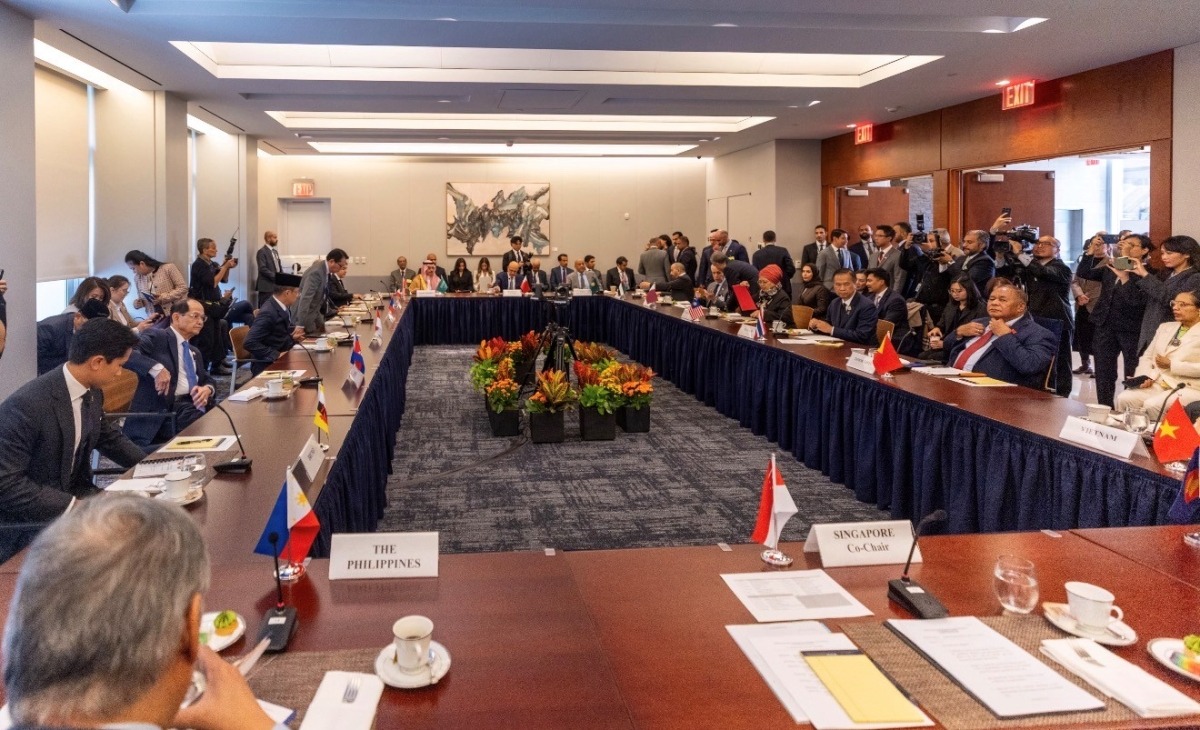
Addressing the joint ministerial meeting between the GCC and the Association of Southeast Asian Nations (ASEAN) in New York, held on the sidelines of the high-level week of the 81st session of the UN General Assembly, Al-Budaiwi said the impact of the developments had extended beyond the Gulf, affecting countries and economies around the world.
The GCC position comes amid continued regional concern over the security of the Strait of Hormuz, one of the world’s critical maritime routes. The UN Security Council’s Resolution 2817 calls for respect for navigational rights and freedoms and condemns actions or threats aimed at closing, obstructing or interfering with international navigation through Hormuz.
Al-Budaiwi said GCC states had faced more than 7,000 ballistic missile and drone attacks by Iran since February 28, according to figures cited in his address, with attacks targeting vital facilities and causing human and material losses. He stressed that the GCC states were not party to the war and had instead pursued mediation and diplomatic efforts while exercising restraint in an effort to contain the escalation.
The GCC secretary-general reiterated the Gulf states’ call for Iran to fully comply with Security Council Resolution 2817, permanently and unconditionally halt attacks and provide guarantees against their recurrence. He also called for navigation through the Strait of Hormuz and Bab Al-Mandab to return to the situation that existed before February 28.
The GCC has consistently linked maritime security to the wider stability of the region and the global economy. In recent statements, the council has stressed that freedom of navigation through Hormuz is essential not only to Gulf security but also to energy supplies and international trade.
Al-Budaiwi also rejected unilateral measures that would impose fees or conditions on the right of passage, while holding Iran responsible, from the GCC’s stated position, for compensation for damages resulting from the attacks. For the Gulf states, the issue is therefore not limited to the security of a single waterway. Disruption to Hormuz directly intersects with the movement of energy, commercial shipping and supply chains, giving the maritime crisis a regional and international dimension.
The GCC has also highlighted the importance of alternative routes and infrastructure in maintaining the flow of energy during periods of disruption. Al-Budaiwi recently pointed to Saudi Arabia’s East-West pipeline and Red Sea ports, along with Fujairah in the UAE and Duqm in Oman, as alternative channels supporting energy flows during the disruption in Hormuz.
The council’s position has also been reinforced by attacks on commercial vessels. In September, Al-Budaiwi condemned the attack on the Saudi tanker SIDR while it was transiting the Strait of Hormuz, describing it as a threat to maritime navigation, regional stability and global trade. The GCC has similarly condemned attacks affecting UAE vessels in Hormuz, stressing that repeated targeting of navigation and property represents a threat to maritime security and international trade.
Alongside the security concerns, the GCC is maintaining its diplomatic engagement with international and regional partners. Al-Budaiwi’s participation in the GCC-ASEAN ministerial meeting reflects the council’s broader effort to strengthen partnerships with Asian economies at a time when Gulf maritime security has direct implications for international commerce.
He described GCC-ASEAN relations as historically established and said cooperation between the two sides had gained momentum following the 2023 Gulf-ASEAN summit in Riyadh and the 2025 summit in Kuala Lumpur. The meeting also underlined the economic dimension of Gulf-Asian relations. For Asian economies, secure maritime routes through the Gulf are closely connected to energy supplies and international trade, while GCC states maintain extensive commercial and strategic links with Asian markets.
Against this backdrop, the GCC is presenting the Hormuz issue as a matter of international maritime security rather than a dispute confined to the Gulf. The council’s position is also reflected in Security Council Resolution 2817, which states that attempts to impede lawful transit through Hormuz constitute a serious threat to international peace and security. The resolution also calls on Iran to refrain from actions or threats that interfere with international navigation.
For the GCC, restoring freedom of navigation through Hormuz and Bab Al-Mandab has therefore become closely tied to regional security, energy stability and the uninterrupted movement of global trade. The message from the Gulf is clear: the security of the region’s strategic waterways is inseparable from the security of the wider global economy.