From code to chips: How Gujarat’s Dholera becomes the new face of India’s Silicon revolution
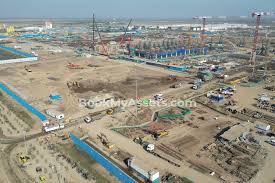
Where salt plains and industrial corridors once dominated the horizon, a different kind of infrastructure is beginning to emerge — ultra-clean fabrication facilities, semiconductor supply chains, precision manufacturing ecosystems and high-technology partnerships that are reshaping India’s industrial future.
India’s semiconductor ambition, once viewed largely as a long-term aspiration, is now entering a phase of visible execution.
Global technology majors, domestic conglomerates, policy institutions and advanced manufacturing firms are converging around a strategic national objective: building a robust semiconductor ecosystem that can support India’s digital economy, electronics manufacturing drive and technological sovereignty.
The momentum has accelerated sharply in 2026, with a series of investments, partnerships and policy initiatives positioning India as an emerging node in the global semiconductor value chain.
Dholera emerges as India’s ‘Silicon Gateway’
At the centre of this transformation stands Dholera, the smart industrial city in Gujarat that is rapidly evolving into India’s semiconductor capital.
Backed by large-scale infrastructure development, connectivity projects and industrial planning, Dholera has become the focal point of India’s attempt to establish a globally competitive chip manufacturing base.
The Tata Group’s semiconductor fabrication project in Dholera has emerged as one of the defining industrial ventures of the decade.
The project, developed in partnership with Taiwan’s Powerchip Semiconductor Manufacturing Corporation (PSMC), represents one of India’s most ambitious attempts to enter advanced semiconductor fabrication.
The significance of the project deepened further in May 2026 when Tata Electronics entered into a strategic partnership with Dutch semiconductor equipment giant ASML.
The collaboration is expected to support advanced chip manufacturing capabilities in India and strengthen access to critical lithography technologies that power modern semiconductor fabrication.
The development attracted global attention because ASML occupies a uniquely important position in the semiconductor world. Its lithography systems are considered essential for manufacturing advanced chips used in artificial intelligence, telecommunications, automotive electronics and high-performance computing.
The Tata-ASML engagement signals growing international confidence in India’s semiconductor manufacturing ambitions and reflects how India is increasingly being integrated into strategic global technology supply chains.
A strategic shift in global manufacturing
India’s semiconductor push is unfolding at a time when global electronics and chip supply chains are undergoing major restructuring.
The disruptions witnessed during the pandemic, geopolitical tensions and rising demand for trusted manufacturing ecosystems have encouraged companies and governments to diversify semiconductor production bases beyond traditional centres.
India is positioning itself as one of the major beneficiaries of this transition.
According to policy discussions and strategic assessments released by government-linked institutions, including NITI Aayog, India possesses several advantages that support long-term semiconductor growth.
These include a large engineering workforce, expanding electronics manufacturing capacity, rapidly growing domestic digital demand and strong government support for advanced manufacturing.
India’s electronics market itself has expanded dramatically over the past decade.
Smartphones, data centres, electric vehicles, defence electronics, telecommunications infrastructure and artificial intelligence applications are driving demand for semiconductor components at unprecedented levels.
This expanding demand base is creating the foundation for domestic chip manufacturing to evolve from a policy aspiration into an industrial necessity.
Govt incentives accelerate the ecosystem
The semiconductor mission launched by the Indian government has become a central pillar of the country’s technology and manufacturing strategy.
Production-linked incentive schemes, capital subsidies and infrastructure support are being deployed to attract investments across the semiconductor value chain, including fabrication plants, assembly and testing units, compound semiconductors, packaging facilities and design ecosystems.
India’s semiconductor programme is also focusing on creating an integrated ecosystem rather than isolated manufacturing projects. This includes support for chemicals, gases, substrates, clean-room technologies, semiconductor-grade water systems and high-precision logistics.
The long-term nature of semiconductor manufacturing has prompted authorities to focus heavily on infrastructure readiness.
Dholera’s industrial planning includes dedicated power systems, water infrastructure and logistics connectivity designed specifically for semiconductor manufacturing requirements.
This approach reflects lessons learned from established semiconductor hubs in East Asia, where industrial ecosystems evolved through deep coordination between infrastructure, policy and manufacturing networks.
Tata Electronics leads the industrial push
Among Indian companies, the Tata Group has emerged as the most visible private-sector force in semiconductor manufacturing.
Beyond fabrication plans, Tata Electronics has expanded aggressively into electronics assembly, semiconductor packaging and precision manufacturing.
The company’s semiconductor strategy reflects a broader industrial transition in India, where conglomerates are increasingly investing in high-value technology manufacturing instead of relying solely on traditional industrial sectors.
The Tata-PSMC project in Dholera is expected to manufacture chips for sectors including automotive, power management, communications and consumer electronics.
These segments are experiencing sustained global demand growth, particularly as electric mobility and artificial intelligence applications expand worldwide.
Industry observers view the project as strategically important because semiconductor fabrication requires long-term capital commitment, operational precision and ecosystem development.
The project is also expected to stimulate ancillary industries and supplier networks across multiple states.
India’s design strength gains manufacturing depth
For decades, India played a major role in global semiconductor design while lacking large-scale domestic manufacturing capabilities.
Thousands of Indian engineers contributed to chip design, verification and software development for global firms, especially in Bengaluru, Hyderabad, Pune and Noida.
India is now attempting to bridge the gap between design expertise and manufacturing capability.
The combination of design talent, software strength and emerging fabrication infrastructure could create a more comprehensive semiconductor ecosystem within the country.
This integration is becoming increasingly valuable as industries seek resilient and geographically diversified technology supply chains.
India’s semiconductor ambitions also align with broader national priorities, including digital infrastructure expansion, electronics exports, defence manufacturing and artificial intelligence development.
The growth of data centres, 5G networks, electric vehicles and advanced electronics manufacturing is expected to create sustained domestic semiconductor demand for years ahead.
Global partnerships and tech confidence
One of the most striking aspects of India’s semiconductor story is the level of international participation now visible in the sector.
Collaborations involving companies from Taiwan, the Netherlands, Japan and the United States indicate that India is gradually becoming part of the strategic global semiconductor conversation.
These partnerships extend beyond investment and increasingly include technology transfer, workforce training, equipment integration and manufacturing expertise.
The partnership between Tata Electronics and ASML particularly underscored this shift. Semiconductor manufacturing depends on highly specialised technologies and trusted supply relationships, making international collaborations critical for ecosystem development.
India’s growing role in trusted technology partnerships is also being strengthened by its expanding geopolitical and economic relationships with major global economies seeking diversified manufacturing bases.
Building a long-term industrial future
India’s semiconductor mission represents more than a manufacturing initiative. It marks a broader industrial transition in which the country is moving deeper into high-technology production, advanced engineering and strategic manufacturing.
The scale of the transformation underway in Dholera reflects this ambition.
Roads, logistics corridors, industrial utilities and specialised manufacturing zones are being developed not simply for immediate production targets, but for long-term industrial expansion.
As semiconductor ecosystems mature globally, countries that combine manufacturing capability with engineering talent and market scale are expected to occupy increasingly influential positions in the digital economy.
India’s efforts suggest that it intends to become one of those countries. The journey from software services to semiconductor fabrication is neither symbolic nor incremental. It represents a shift towards technological depth, industrial capability and strategic manufacturing resilience.
From Silicon Valley partnerships to fabrication lines rising in Dholera, India’s semiconductor ambitions are no longer confined to policy papers or investment announcements. They are beginning to take physical shape on the ground, signalling the emergence of a new industrial chapter in the country’s economic story.