Diplomatic Leadership Redefining the Concept of Sovereignty in the International System
Kuwait's distinguished record at the United Nations, its role, and its non-permanent membership on the Security Council reflect the country's ability to formulate international resolutions that serve collective peace and security.

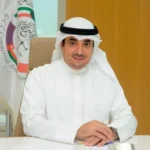
By Tareq Yousef AlShumaimry
Former Secretary-General of the Commercial Arbitration Centre of the Gulf Cooperation Council
In a world being reshaped today according to the balance of soft power, an international reality has emerged: the weight of nations is no longer measured by their geographical size, but rather by their exceptional ability to create a “civilized diplomacy” that asserts its presence in the global system.
The State of Kuwait, with its strategic geography and long-standing diplomatic history, represents a unique model of power that has been able to transform its “location” into a prestigious international “position,” based on Kuwait’s firmly established diplomatic presence.
This presence is the product of a diplomatic school whose foundations were laid in 1963 under the leadership of the late Sheikh Sabah Al-Ahmad Al-Jaber Al-Sabah, the “Dean of Diplomacy,” who shaped Kuwait’s identity as a center of political influence and international mediation.
This balanced approach was followed by His Highness the Crown Prince Sheikh Sabah Al-Khaled Al-Hamad Al-Sabah, who skillfully steered diplomacy, solidifying Kuwait’s role in the Security Council and international organizations. This continues to the pivotal role played today by His Excellency the Minister of Foreign Affairs, Sheikh Jarrah Jaber Al-Ahmad Al-Sabah, in managing foreign policy files with a wise vision that addresses the challenges of the 21st century and safeguards the nation’s highest interests.
Kuwait’s role in the international community has been evident through its active participation in international organizations and courts. It has played a historic role in the International Court of Justice by presenting sound legal arguments concerning issues of independence, sovereignty, and the rights of peoples, particularly in the case brought by the Republic of South Africa against Israel regarding the Gaza War. Kuwait’s role, along with that of other participating states, has strengthened the credibility of international law as a reliable source of justice.
Kuwait’s distinguished record at the United Nations, its role, and its non-permanent membership on the Security Council reflect the country’s ability to formulate international resolutions that serve collective peace and security. Furthermore, Kuwait plays a leading role in the Organization of Islamic Cooperation, the League of Arab States, and the Gulf Cooperation Council, acting as a voice of reason and a platform for bridging differing viewpoints.
Kuwait’s astute positioning and clear vision, which focus on transforming the UN Charter from theoretical texts into practical tools for protection, are demonstrated through a proactive legal diplomacy that anticipates international challenges and leads a global dialogue in the cyber age.
The adoption of a “Digital Ethics Charter” by these countries places them at the forefront of nations shaping modern international relations standards and protects them from the interference of transnational powers that threaten national stability through cyberspace and digital media.
At the regional level, the legacy of our foreign ministers gives Kuwait a qualitative advantage in activating “Gulf sovereign integration” within the framework of the Gulf Cooperation Council and coordinating joint positions regarding foreign interventions.
This role aligns with the “Safe Logistics Corridor” strategy and the diplomacy of the “Blue Economy,” making the stability of Kuwait and the other GCC states a paramount international economic interest for major global powers and solidifying their position as a reliable ally in protecting waterways and global energy security.
True power lies in the ability to transform common interests into an influential “political force,” and to build a “diplomatic and legal wall” that protects the state and raises its relative weight in international forums.
Enhancing the civilizational standing of the State of Kuwait is a “strategic imperative” imposed by the transformations of the international system through the legacy of the school of Sheikh “Sabah Al-Ahmad” and the innovative tools of preventive diplomacy in our present and future times.
The State of Kuwait will remain the difficult number in the equation of the Middle East, and the beacon that proves to the world that strong states with their wisdom and civilization are capable of shaping the international scene with full competence and parity.
Tareq Yousef AlShumaimry, served as Chairman of the Finance Committee and Chairman of the General Budget Committee of the Permanent Court of Arbitration in The Hague (PCA) and an observer in the Administrative Council of the Court and the Consular at International Court of Justice (ICJ) and the Embassy of the State of Kuwait in the Netherlands during this period from 2013 to 2020. Email: tareq@alshumaimry.com