
















Expatriate remittances from Kuwait jump 23.7% in first half of 2025 to 2.54 billion dinars
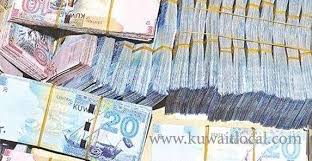
Expatriate workers’ remittances from Kuwait surged during the first half of 2025 to 2.541 billion dinars, compared to 2.053 billion dinars in the same period of 2024—an increase of 487.5 million dinars, or 23.7% growth.
This notable rise underscores the strength and stability of Kuwait’s labor market, supported by improved economic conditions, expanded government and private investment, and the continued purchasing power of the Kuwaiti dinar against major currencies—allowing expatriates to save and remit more.

During the first quarter of 2025, remittances rose sharply to 1.21 billion dinars, up 31.2% from 924.2 million dinars in the same period of 2024—the strongest quarterly growth in five years. The upward trend continued in the second quarter, reaching 1.32 billion dinars, compared to 1.12 billion dinars in 2024, marking a 17.6% increase, reports Al-Anba daily.
Economic data attributes this surge to increased government capital spending, stable oil prices, and expansion in infrastructure and energy projects, which collectively spurred job creation and higher incomes. The stable labor market and continued employment across productive and service sectors have also enhanced expatriates’ purchasing power.
Additionally, the Kuwaiti dinar’s strength has allowed workers to remit larger amounts at favorable exchange rates. Analysts note that improved economic stability in expatriates’ home countries, particularly across South and Southeast Asia, has further encouraged remittances, as local currencies gradually recover and workers capitalize on the dinar’s value.
Kuwait thus remains one of the most stable and rewarding labor markets in the region, with remittance levels serving as an indirect barometer of economic activity and income stability among expatriates.
While higher remittances indicate robust employment and productivity, they also present a policy challenge, as rising outflows may limit domestic spending by residents. However, this growth simultaneously benefits the banking and exchange sectors, driving demand for digital financial services and electronic transfer solutions.
Experts highlight that the Central Bank of Kuwait’s sound monetary policy—which has safeguarded the dinar’s strength—continues to support steady cash flows and confidence in the local financial system.
If current trends persist, total remittances are projected to exceed 5 billion dinars in 2025, marking their highest level in over a decade.