A Shift Toward Human-Centered Performance
Beyond Traditional Leadership in Kuwait’s Oil and Gas Sector

By Dr. Pupjana Kole
Organizational Leadership Researcher
Oil and Gas Sector
Special to The Times Kuwait
Building on the earlier discussion of leadership change and regional transformation, this article consolidates these shifts into a more integrated leadership approach for Kuwait’s oil and gas sector.
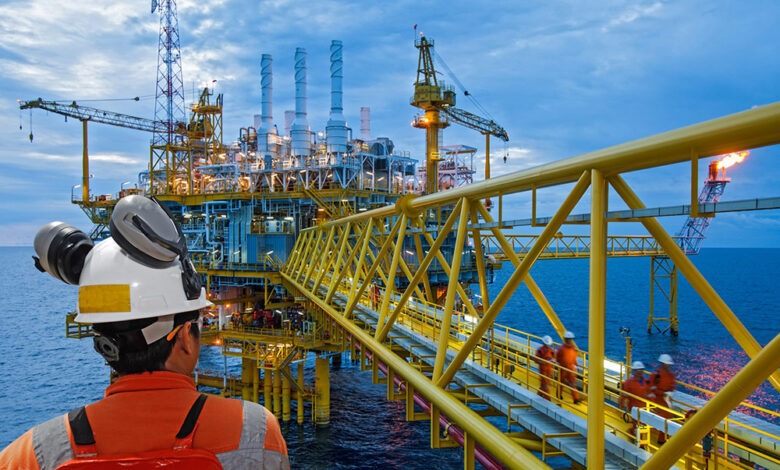
For decades, leadership in Kuwait’s oil and gas sector focused on technical expertise, operational discipline, and hierarchical authority. While these qualities remain essential for safety and reliability, modern organizations now face rapidly changing demands, requiring leaders to adapt.
Across the Gulf, governments and organizations are driving transformation that demands innovation, workforce engagement, and adaptability. Advances in technology, artificial intelligence, and changing demographics are reshaping operations. As a result, leadership is now evaluated by both operational results and the ability to develop people, foster collaboration, and build high-performing teams.
This shift reflects a broader evolution in leadership. While traditional command-and-control approaches provided structure, today’s challenges require leaders who navigate uncertainty, manage diverse teams, and promote continuous learning. Leadership is moving beyond supervision to enabling performance.
Recent global research reinforces this transition. Reports from the World Economic Forum (2025), Deloitte (2024), Gallup (2024), and PwC Middle East (2024) highlight the growing importance of adaptability, employee engagement, and workforce development in organizational success. Similarly, research on emotional intelligence underscores the importance of self-awareness, empathy, and relationship management in effective leadership (Goleman, Boyatzis, & McKee, 2013; Miao, Humphrey, & Qian, 2018). Strength-based leadership studies also show that organizations perform better when leaders focus on identifying and developing employee strengths (Rath & Conchie, 2009).
These findings indicate a clear trend: leadership is becoming more human-centered. Leaders are now expected to serve as coaches, facilitators, and talent developers, not just decision-makers. Sustainable performance relies on systems and processes, as well as on people feeling supported, trusted, and empowered.
In this context, emotional intelligence is now a critical leadership skill. Leaders with self-awareness, empathy, and strong communication build trust, manage conflict, and sustain engagement. In high-reliability industries like oil and gas, these abilities directly impact performance and safety.
At the same time, organizations are recognizing the value of strength-based leadership. Rather than focusing primarily on fixing weaknesses, this approach emphasizes identifying and leveraging employees’ unique talents. When individuals are placed in roles that align with their strengths, motivation tends to increase, leading to stronger alignment between individual performance and organizational goals.
Effective leadership today integrates technical expertise with people-centered skills. Technical competence remains essential for credibility in oil and gas, but it is no longer sufficient. Leaders must also understand people, recognize potential, and create conditions for employees to excel.
For Kuwait’s oil and gas sector, this is more than a change in leadership style. It marks a broader redefinition of organizational performance. While performance was once measured by efficiency, output, and compliance, it is now increasingly linked to employee engagement, leadership quality, and talent development.
The question, therefore, is not whether leadership is changing; it already is. The real question is whether organizational systems, leadership development pathways, and performance management practices are evolving at the same pace.
Organizations that successfully combine technical excellence with emotional intelligence and strength-based leadership will be better positioned to navigate future uncertainty and sustain long-term success.
As Kuwait’s oil and gas sector continues its modernization journey, leadership effectiveness may ultimately be defined not by how well leaders direct others, but by how effectively they develop people and unlock human potential.