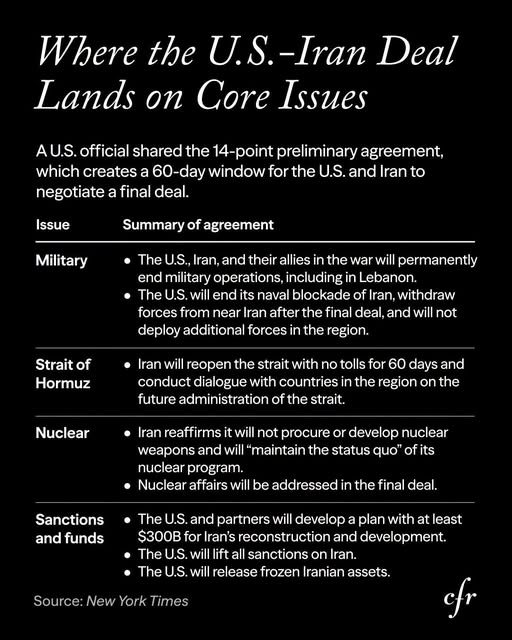
The preliminary U.S.-Iran deal, which was read to reporters by a U.S. official on Wednesday, appears to create a process for opening the Strait of Hormuz in the short run.
It also lays out a 60-day timetable to address many issues that remain, including the details for constraining Iran’s nuclear ambitions, as well as the scope of sanctions relief and financial support for Iran, according to the Council on Foreign Relations, a U.S.-based think tank focused on international affairs and foreign policy..
“Needless to say, there are a lot of details to be negotiated and, if the past is prologue, good reasons to be skeptical that a comprehensive peace, even if reached, will hold,” writes CFR President Mike Froman.
“Nonetheless, this could be seen as breaking a deadlock that has threatened the global economy, even if it puts on the table issues we may later come to regret.”