- After years of confrontation, military threats and diplomatic deadlock, the United States and Iran have agreed to a far-reaching framework aimed at ending hostilities, reopening the Strait of Hormuz and reviving Iran’s economy, with President Donald Trump announcing a 60-day push to convert the breakthrough into a permanent agreement.
- The agreement emerged after a day of intensive diplomacy by Trump during the Group of Seven summit in Evian-les-Bains, France. The president held meetings with Egyptian President Abdel Fattah El-Sisi and Indian Prime Minister Narendra Modi before briefing reporters on the Iran breakthrough.
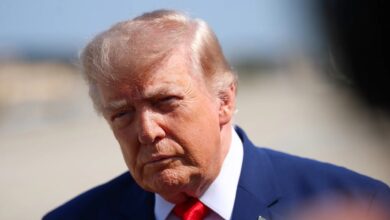
U.S. President Donald Trump said he had signed a preliminary agreement with Iran that could mark the most significant diplomatic breakthrough between the longtime adversaries in years, setting in motion a 60-day effort to negotiate a comprehensive accord covering Iran’s nuclear program, sanctions relief and regional security.
The White House confirmed that the agreement had entered into effect, although Trump cautioned that the arrangement remained unfinished and warned that military action could resume if negotiations collapse.
“If they don’t behave, we’ll go right back to dropping bombs right smack in the middle of their head,” Trump told reporters, underscoring the fragile nature of the deal despite the dramatic shift toward diplomacy.
Details released by senior U.S. officials show the 14-paragraph agreement outlines an immediate halt to military operations, a framework for lifting sanctions on Iran and commitments aimed at ensuring Tehran never acquires a nuclear weapon.
The accord declares the “immediate and permanent termination of military operations on all fronts, including in Lebanon,” potentially ending one of the region’s most volatile periods in recent years.
At the heart of the agreement is a commitment by Washington and Tehran to negotiate a final settlement within 60 days, with the possibility of extending talks by mutual consent if progress is being made.
The framework also addresses one of the world’s most strategically important shipping routes. Under the agreement, the Strait of Hormuz will remain open and toll-free for an initial 60-day period while broader negotiations take place. U.S. officials said Iran would subsequently work with Oman and Gulf states on a longer-term arrangement governing maritime traffic through the waterway, through which a significant share of global oil exports passes.
The United States also agreed to dismantle its naval blockade of Iran within 30 days and pledged to withdraw forces from the vicinity of Iran within 30 days after a final agreement is reached.
In a move likely to attract global attention, the agreement calls for the establishment of a reconstruction and economic development fund worth at least $300 billion for Iran. U.S. officials said Washington would work with regional partners to develop the fund, although the agreement does not require direct U.S. financial contributions.
The framework further commits the United States to lifting all sanctions imposed on Iran under a timetable to be negotiated in the coming weeks.
On the nuclear front, Iran agreed it would never possess a nuclear weapon. The two sides also agreed to cooperate on the disposal of Iran’s enriched nuclear material through a process of on-site blending supervised by the International Atomic Energy Agency (IAEA).
The agreement emerged after a day of intensive diplomacy by Trump during the Group of Seven summit in Evian-les-Bains, France. The president held meetings with Egyptian President Abdel Fattah El-Sisi and Indian Prime Minister Narendra Modi before briefing reporters on the Iran breakthrough, BBC reports.
Later, Trump travelled to Paris for a state dinner hosted by French President Emmanuel Macron and First Lady Brigitte Macron at the Palace of Versailles. According to officials travelling with the president, Trump signed the memorandum of understanding with Iran during the evening.
The signing capped a marathon day for the U.S. leader, who departed Versailles shortly after midnight local time and began the journey back to Washington as negotiators on both sides prepared for what could be a difficult and politically sensitive 60-day negotiating process.
While supporters view the agreement as a chance to defuse a crisis that has threatened regional stability and global energy markets, significant challenges remain. Key details surrounding sanctions removal, verification mechanisms and the long-term implementation of nuclear restrictions have yet to be negotiated.
For now, the accord offers a pathway away from confrontation. Whether it evolves into a lasting settlement or proves to be a temporary pause in a decades-long rivalry will depend on what happens over the next two months.