Americans prepare for midterm elections in foreshadow of what lies ahead
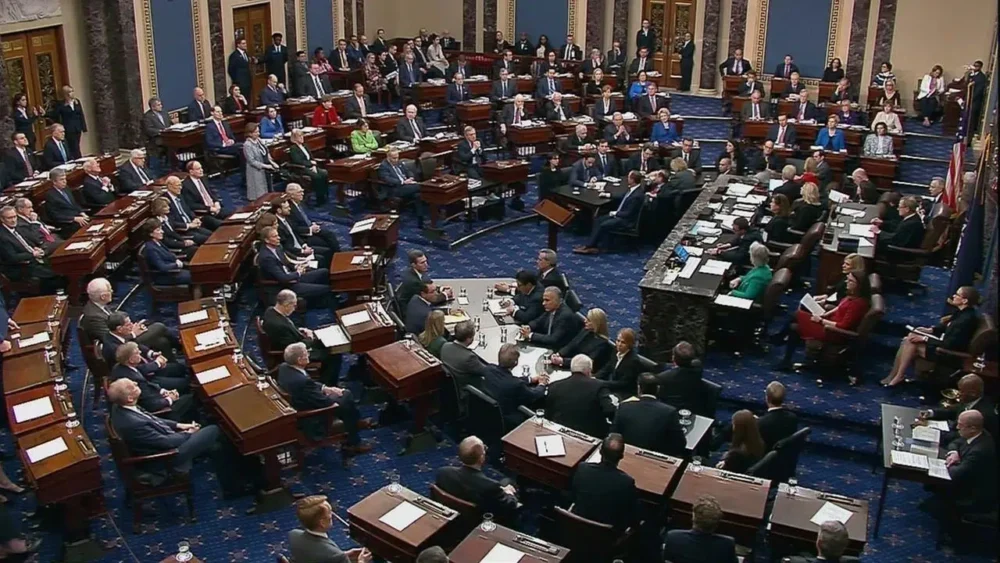
Americans are preparing to vote in the midterm elections on Tuesday, November 3, as US President Donald Trump’s four-year term reaches its midpoint, with his Republican Party fighting to retain its majority in the Senate and gain control of Congress.
Early voting began in September and will continue until the final days before Election Day, with voting schedules and procedures varying across states and regions. The elections carry significant importance in determining the political landscape during the remainder of Trump’s presidency.
Data from the University of Florida’s Election Lab indicates that more than nine million voters have already cast their ballots early. All 435 seats in the House of Representatives are being contested, with Republicans seeking to preserve their narrow majority.
The elections also cover 35 of the Senate’s 100 seats. Senators serve six-year terms, with approximately one-third of the seats contested every two years, according to information published on the House of Representatives’ official website.
Republicans are defending 22 Senate seats, compared with 13 held by Democrats. In the House of Representatives, the lower chamber of Congress, Republicans currently hold a slim majority of 218 seats against 214 for Democrats.
The Senate comprises 53 Republicans, 45 Democrats and two independents, Bernie Sanders and Angus King, both of whom caucus with the Democrats, bringing the Democratic-aligned bloc to 47 members.
The midterm elections are particularly significant because the party securing control of Congress gains greater authority over legislation, government spending and oversight of the administration. Congress also has powers to impose certain restrictions on foreign military actions, although the president retains considerable room to maneuver.
Texas, traditionally a Republican stronghold, has emerged as a key battleground in the Senate race, with Republican Attorney General Ken Paxton facing Democrat James Talarico for the seat currently held by senior Republican Senator John Cornyn. Another closely watched contest is taking place in Michigan, where Democrat Abdul El-Sayed and Republican Mike Rogers are competing for the seat being vacated by Democrat Gary Peters, who announced that he would not seek re-election.
A Fox News poll conducted in September showed El-Sayed narrowly ahead with 50 percent support, compared with 49 percent for Rogers. The Senate contest also includes closely fought races in Kansas, Iowa, Maine, Ohio and Texas, where the seats are currently held by Republicans. Neither party has established a commanding lead across these competitive races.
In the House of Representatives contest, projections indicate that Democrats could secure 214 seats, compared with 201 for Republicans, while 20 seats are classified as toss-ups. A poll by the Washington-based Pew Research Center found that 44 percent of registered voters preferred a Democratic candidate for the House, while 36 percent favored a Republican candidate and 15 percent remained undecided.
Economic concerns have emerged as a major factor influencing voter preferences. The Pew Research Center found that 84 percent of registered voters consider the economy the decisive issue when choosing whom to support. Inflation rose by 3.7 percent year-on-year in September, compared with 3.4 percent in August.
Adding to household concerns, gasoline prices increased by 9.1 percent in September, accounting for more than half of the monthly rise in the overall Consumer Price Index, while food prices edged up by 2.5 percent.
The US Federal Reserve raised interest rates by a quarter of a percentage point on September 16 to contain inflation and bring the rate closer to the range of 3.75 percent to 4 percent. The measure was aimed at restoring price stability and bringing inflation towards the central bank’s target of 2 percent.
Meanwhile, the possible repercussions of further US military action against Iran are also weighing on voters, particularly amid concerns about energy supplies and household expenses.
The US Energy Information Administration has cited supply disruptions linked to the conflict, highlighting the potential impact of the war on energy costs.
The conflict involving Iran could become another significant factor shaping voter sentiment ahead of the elections.
Opinion polls indicate considerable opposition to military confrontation with Iran. A Fox News poll released on October 14 found that 59 percent of respondents opposed the war, while 40 percent supported it.
Source: KUNA