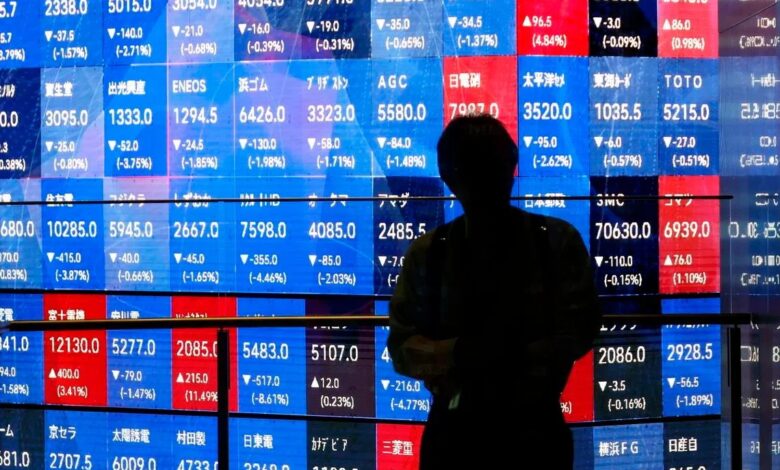
- South Korea’s Kospi index fell sharply as major chipmakers dragged the benchmark lower amid continued foreign selling and cautious sentiment across tech stocks.
- Asian equities traded mixed as investors weighed rising oil prices, currency volatility, and broader global economic risks affecting market direction.
- Chinese markets are in focus ahead of a major index rebalancing expected to trigger billions in passive inflows, supporting medium-term sentiment.
Asian stock markets traded mostly lower today (Friday) as investors reacted nervously to renewed geopolitical tensions in the Middle East, weaker technology sentiment, and concerns over global economic growth. Technology and semiconductor shares led the declines across several regional exchanges.
In South Korea, the Kospi index came under heavy pressure, falling sharply amid foreign investor selling and weakness in major chipmakers such as Samsung Electronics and SK Hynix. Analysts linked the decline to concerns over cooling enthusiasm in the global AI and semiconductor rally.
Markets in Japan also faced volatility, with technology and export-related stocks retreating as investors monitored currency movements and rising oil prices. The Japanese yen weakened toward the 160-per-dollar level, adding to market uncertainty.
Meanwhile, Chinese equities remained relatively resilient ahead of major index rebalancing expected later this month, which Goldman Sachs estimates could trigger nearly $48 billion in passive investment flows into mainland Chinese markets.
In Hong Kong, technology stocks remained volatile after recent strong gains driven by optimism around artificial intelligence and digital platforms. Earlier this week, the Hang Seng Index had surged on strong performances from Tencent and other tech giants, according to Reuters.
Indian markets showed mixed sentiment as investors monitored crude oil prices, foreign institutional investor activity, and policy signals from the Reserve Bank of India. Market analysts expect continued volatility in the near term due to global geopolitical risks.
Broader Asia-Pacific sentiment has also been affected by ongoing uncertainty surrounding the US-Iran conflict, which has pushed investors toward safer assets while weighing on risk appetite across global markets.
Despite the short-term pullback, some analysts remain optimistic about Asia’s long-term outlook, especially in semiconductor and AI-related sectors. South Korea, Taiwan, and Japan continue to benefit from strong global demand for advanced chips and AI infrastructure.