Kuwait opens new channels for domestic workers recruitment to regulate labor market
Ministry of Foreign Affairs, PAM intensify coordination, align policies with international standards, strengthens protections for both domestic workers and employers.
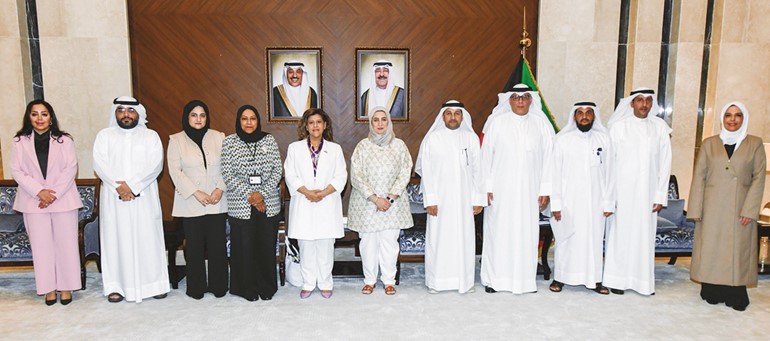
The Human Rights Affairs Department of the Ministry of Foreign Affairs, and the Public Authority for Manpower during a meeting reviewed the latest developments in workers’ rights and enhance institutional cooperation in line with Kuwait’s labor reform agenda.
According to KUNA, the meeting brought together key officials including Assistant Foreign Minister for Human Rights, Ambassador Sheikha Jawaher Al-Duaij, Assistant Foreign Minister for Legal Affairs, Minister Plenipotentiary Tahani Al-Nasser, and Director General of the Public Authority for Manpower, Eng. Rabab Al-Osaimi, and a number of specialists from relevant government bodies.
The meeting underscored ongoing national efforts to strengthen coordination among institutions and unify their roles in shaping labor-related policies and legislation. Officials emphasized the importance of achieving a balanced framework that safeguards the rights of both workers and employers, while improving the overall work environment and regulatory structure of the labor market.
The two sides also reviewed the international legal framework governing labor rights, reaffirming Kuwait’s commitment as a signatory to major global conventions, particularly those of the International Labor Organization, as well as international human rights covenants.
This reflects the country’s adherence to internationally recognized standards and its continued alignment with global best practices.
Discussions highlighted that labor issues are no longer confined to domestic considerations, but are closely linked to Kuwait’s international reputation and its relations with labor-exporting countries.
This dynamic, officials noted, requires enhanced coordination and a unified national approach that keeps pace with evolving global expectations.
The meeting also explored avenues of cooperation with international organizations, including the International Labor Organization, the International Organization for Migration, and the United Nations Human Settlements Program, focusing on their role in supporting national initiatives, building institutional capacity, and advancing policy development.