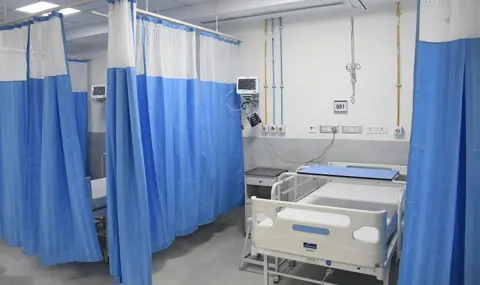
- Global private-equity firms have invested around $10 billion in Indian hospital chains over the past five years.
- Private-equity-backed operators account for less than 5 percent of India’s hospital beds, while the country has only about 1.3 beds per 1,000 people.
- Healthcare costs are rising sharply, with medical inflation reported at up to 13 percent annually.
- Even insured patients can face significant out-of-pocket expenses when procedures, technology or treatment components are excluded from coverage.
- Robotic surgery, implants and other sophisticated technologies can improve treatment options but may substantially increase hospital bills.
- Private hospital treatment costs an estimated five to 10 times more than public healthcare, putting growing pressure on families who have limited government support.
- The country needs private investment to expand healthcare, but policymakers must ensure that higher investment and better technology do not make quality treatment unaffordable for ordinary Indians.
India’s private hospital sector is attracting billions of dollars from global investors, helping expand hospital capacity and bring advanced medical technology to patients. But as private healthcare grows, a more pressing question is emerging for millions of Indians: who will ultimately pay for the rising cost of treatment?
Global private-equity firms including Blackstone, KKR, TPG and General Atlantic have invested around $10 billion in Indian hospital chains over the past five years, financing new hospitals, specialist facilities, medical technology and consolidation in a fragmented healthcare market.
The investment is helping address one of India’s long-standing healthcare challenges, a shortage of hospital infrastructure. But it is also raising concerns among insurers, policymakers and patient advocates about affordability, medical inflation and the extent to which patients with health insurance may still have to pay substantial amounts from their own pockets.
Private hospitals expand as demand rises
Private-equity-backed hospital operators currently account for less than 5 percent of India’s hospital beds, but their influence is much greater in lucrative specialist segments such as cardiac care and cancer treatment. India has historically had a shortage of hospital infrastructure, with about 1.3 hospital beds per 1,000 people. At the same time, demand for specialized healthcare has been rising as incomes increase, life expectancy improves and chronic diseases become more widespread.
In 2021, policymakers identified around 600 hospital projects requiring approximately $32 billion in investment, highlighting the scale of the infrastructure gap and the opportunity for private capital. For international investors, the sector offers strong demand, long-term cash flows and a fragmented market that can be consolidated into larger hospital networks.
Medical inflation adds to the pressure
Hospital revenues and valuations have consequently risen sharply, encouraging further investment and acquisitions. But for ordinary Indians, the key issue is whether increased investment will translate into healthcare that is not only better, but also affordable. The affordability debate intensified in August when an Indian parliamentary committee raised concerns over what it described as an unchecked influx of foreign capital into healthcare.
The committee warned that large corporate groups were acquiring relatively affordable, mid-sized hospitals and recommended a review of foreign investment rules, consideration of price controls and the creation of a dedicated regulator for hospitals. The concerns come as medical inflation remains high. According to the parliamentary report cited in the Bloomberg analysis, medical inflation has been running at as much as 13 percent annually.
Insurance does not always mean full coverage
For India’s growing middle class, this creates a particularly difficult situation. Families may have health insurance but can still face significant out-of-pocket expenses when hospital bills include procedures, devices or treatments that insurers do not fully cover. The relationship between private hospitals and insurance companies has become increasingly contentious. Insurers accuse some private hospitals, including private-equity-backed chains, of inflating bills and encouraging expensive procedures.
Hospitals, in turn, argue that insurers delay payments and reimburse them at rates that do not adequately reflect operating costs. Patients are increasingly caught between the two sides. The issue becomes particularly complicated when advanced medical technology is involved. Hospitals are increasingly offering robotic surgery, advanced implants and other high-end procedures that can improve treatment options and, in some cases, medical outcomes. But these technologies can also significantly increase the cost of treatment.
Insurers are questioning whether every expensive procedure provides sufficient additional clinical benefit to justify the higher price. Bhabatosh Mishra, chief operating officer of Niva Bupa Health Insurance, has argued that insurers need evidence-based treatment protocols to determine which procedures should be covered. Some robotic procedures, he noted, can cost considerably more than conventional surgery without necessarily delivering proportionately better outcomes.
For hospitals, however, advanced technology represents the evolution of modern healthcare and gives Indian patients access to procedures that were previously unavailable or difficult to obtain domestically. The challenge is deciding how those additional costs should be divided between hospitals, insurers and patients.
The patient at the centre of the dispute
A case highlighted in the Bloomberg report illustrates the problem. A 40-year-old Mumbai business consultant underwent robot-assisted surgery at a private hospital. She had a state-run health insurance policy with annual premiums of about Rs 21,000 and base coverage of Rs 1.5 million. She expected the procedure to be covered by her insurance. However, the insurer refused to reimburse the portion of the bill associated with the robotic component of the surgery, leaving her to pay the difference herself.
The case highlights a growing problem for India’s insured middle class: having health insurance does not necessarily mean having full financial protection against every medical bill. As hospitals adopt increasingly sophisticated technologies, patients need greater clarity about what their insurance policies cover, what procedures are excluded and how much they may have to pay themselves.
“The real battle in healthcare now is over who owns the patient relationship,” Acko General Insurance CEO Animesh Das said, according to the report. Despite concerns over affordability, India’s hospital sector remains highly attractive to international investors.
KKR has continued to expand its healthcare portfolio. Its investment in Kerala-based Baby Memorial Hospital in 2024 came when the hospital had around 1,000 beds. The hospital subsequently expanded through acquisitions and reported pretax earnings of around Rs 6 billion ($62.6 million) in fiscal 2026, according to the report.
In August, KKR also agreed to acquire the Indian operations of Swedish hospital chain Medicover for $1.4 billion. The transaction is expected to nearly double KKR’s hospital-bed presence in southern India to around 10,000 beds. KKR has previously invested in Radiant Life Care and supported its merger with Max Healthcare Institute. Its eventual exit from Max Healthcare was regarded as a successful private-equity healthcare investment.
Other investors have also generated substantial returns. Singapore’s Temasek, for example, is estimated to have generated roughly a 10-fold return on its 2017 investment in Manipal Health Enterprises following a partial stake sale during the hospital operator’s initial public offering in July.
India needs investment — but also affordability
India’s healthcare system is at a critical crossroads. The country needs billions of dollars in investment to build hospitals, increase bed capacity, upgrade medical infrastructure and expand access to specialist treatment. Private capital can play an important role in meeting that need. But private investment also seeks commercial returns, creating a difficult challenge for policymakers: how can India attract the capital needed to expand healthcare without allowing treatment costs to become increasingly unaffordable?
Crisil expects private hospital revenues to grow by as much as 15 percent in fiscal 2027, driven by higher patient volumes and an increase of up to 7 percent in average revenue per occupied bed. For investors, that points to a strong growth market. For patients, however, rising hospital revenues can mean higher bills unless greater transparency, competition and effective insurance coverage accompany the sector’s expansion.
The pressure could be particularly severe for India’s growing middle class — people who may not qualify for extensive government assistance but also lack the financial capacity to absorb rapidly rising private healthcare costs. Treatment at private hospitals is estimated to cost, on average, five to 10 times more than in the public system, with particularly large differences reported in cancer care, cardiac treatment, kidney-related treatment and maternity services.
“India has reached a point where healthcare can’t become progressively more expensive while insurance remains affordable,” Das said. That warning goes to the heart of India’s healthcare challenge. The country needs private investment to build more hospitals, introduce advanced technology and expand specialist care. But if the cost of that expansion rises faster than household incomes and insurance coverage, access to quality healthcare could become increasingly divided between those who can afford it and those who cannot.
For Indian patients, the next phase of the country’s healthcare story will therefore not be measured only by the number of hospitals built or billions of dollars invested. It will also be measured by a more fundamental question: can India build a world-class private healthcare system that ordinary families can still afford?