Uzbekistan is rapidly reshaping its image in the eyes of international investors. Once regarded as a relatively closed economy, the country has, over the past several years, pursued an ambitious agenda of market liberalization, private sector development, foreign investment promotion, and deeper integration into regional and global markets.
In 2025, Uzbekistan’s GDP expanded by 7.7 percent, surpassing US $145 billion. According to Invest Uzbekistan, total foreign investment exceeded US $43 billion, while the number of enterprises with foreign capital reached 17,595 as of November 2025 – representing a significant increase compared to five years earlier.
The significance of these figures lies not only in their scale but also in the diversification of foreign investment across multiple sectors, including manufacturing, energy, services, construction, and agriculture.
Economic Reforms: The Foundation for Investment
Investors evaluate more than market size alone. They seek transparent regulations, legal certainty, protected property rights, and predictable administrative procedures.
Recognizing these priorities, Uzbekistan’s economic reforms have focused on market liberalization, improving the regulatory framework, expanding privatization, simplifying administrative procedures, and strengthening investor protection. At the same time, the Uzbekistan-2030 Strategy aims to attract substantial investment while accelerating infrastructure development and technological modernization.
The country’s incentive framework includes free economic zones and preferential tax and customs regimes for eligible investment projects. However, the specific benefits available depend on the sector, location, investment volume, and project characteristics.
Consequently, investment incentives should always be assessed within the legal framework applicable to each individual project rather than through generalized assumptions.
Tourism and Hospitality: A rapidly expanding market
Tourism provides one of the clearest examples of a sector where strong growth is creating significant investment opportunities.

In 2025, Uzbekistan welcomed 11.7 million international visitors, while tourism service exports reached approximately US $4.8 billion.
This rapid expansion is generating growing demand for hotels, hospitality services, transportation, restaurants, and event management. The entry of internationally recognized hotel brands has further strengthened competition while demonstrating Uzbekistan’s increasing integration into the global hospitality industry.
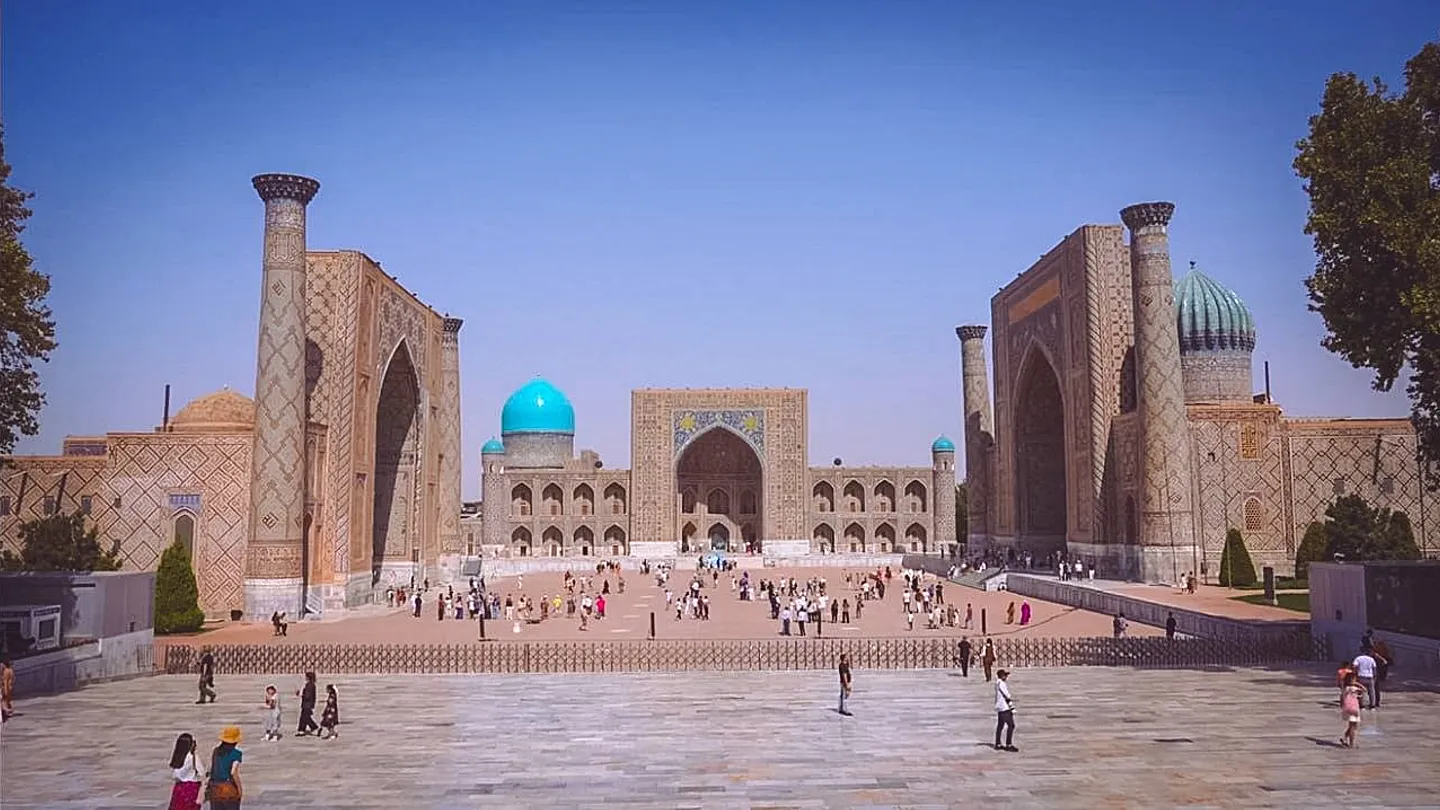
Importantly, these opportunities extend well beyond Tashkent. Historic cities offer considerable investment potential, while new prospects continue to emerge in eco-tourism, medical tourism, and business tourism.
Real Estate: Urbanization is creating a multi-segment market
Real estate represents another sector benefiting directly from Uzbekistan’s economic transformation.
Population growth and rapid urbanization continue to drive demand for residential housing, while expanding cities require new commercial centers, office buildings, logistics facilities, warehouses, and public service infrastructure.
Government housing programs indicate that large-scale residential construction will continue in the coming years. Mortgage financing initiatives are supporting effective market demand, while urban renewal projects and infrastructure investments are opening new opportunities for developers.
Nevertheless, successful real estate investment requires careful market selection. Nationwide demand does not imply equal opportunities across every city or market segment. The most successful investors are those who align their projects with demographic trends, household incomes, financing availability, and infrastructure development.
Agriculture: Moving beyond raw materials to higher value chains
Agriculture remains one of the most promising sectors for foreign investors.
Its strategic importance extends well beyond agricultural land and primary production. The greatest opportunities lie in narrowing the gap between raw agricultural commodities and higher-value processed products.
Uzbekistan is actively promoting modern agriculture, expanding food processing capacity, improving cold storage and logistics infrastructure, modernizing packaging systems, and increasing agricultural exports.
In 2025, agricultural exports reached approximately US $1.5 billion. During the same period, the Ministry of Agriculture launched investment projects valued at approximately US $988.5 million as part of a broader program aimed at mobilizing more than US $5 billion in investment.
The country has also established specialized agricultural free economic zones in Bukhara and the Republic of Karakalpakstan, offering preferential conditions designed to attract investment in agribusiness and agricultural processing.
The greatest investment potential lies in developing integrated value chains encompassing production, sorting, storage, processing, packaging, and export. As the share of domestic value-added processing increases, so does the overall economic value generated by agricultural production.
Economic diversification reduces dependence on a single sector
One of Uzbekistan’s principal advantages is that investors are not limited to a single industry.
Tourism offers strong growth potential, real estate benefits from accelerating urbanization, agriculture serves as an export-oriented sector, while manufacturing provides opportunities for industrial expansion.
Although diversification does not eliminate investment risks, it enables investors to develop more balanced and resilient strategies. In many cases, the strongest opportunities emerge at the intersection of sectors-for example, combining hotel development with real estate projects, integrating food processing with agricultural supply chains, or developing logistics facilities that support regional trade.
For this reason, understanding the broader macroeconomic environment is essential. Investors are not simply acquiring individual assets-they are investing in the long-term growth potential of an entire economic system.
The Next Challenge: Sustaining momentum through strong institutions
The success of foreign investment should not be measured solely by the number of projects entering the market, but by their long-term sustainability.
The next phase of Uzbekistan’s development will depend on improving project implementation, enhancing workforce skills, upgrading infrastructure, strengthening transparency, and further streamlining administrative procedures.
Investors must also recognize that opportunities, incentives, and regulatory requirements differ across sectors and regions. General investment incentives should never be assumed to apply automatically to every project.
Nevertheless, the continuation of economic reforms, rising foreign investment inflows, and the expanding role of the private sector provide a strong foundation for sustained long-term growth.
Why Invest in Uzbekistan now?
Today, Uzbekistan offers an investment story that differs markedly from that of mature economies. It combines a large domestic market, sustained economic growth, diversified investment opportunities, and a strategically important geographic location, while its economic transformation continues to gain momentum.
The key question is not whether Uzbekistan is free from investment risk—no market is. Rather, the relevant question is whether the available opportunities justify careful risk assessment and the development of a well-planned market entry strategy.
For sectors such as tourism, real estate, and agriculture, the answer appears increasingly compelling.
Investors entering Uzbekistan today are not entering a fully matured economy; they are participating in one that continues to evolve. This represents both the country’s greatest opportunity and its greatest challenge: the opportunity to participate in long-term growth, and the responsibility to understand the market before investing.