Kuwait sky set for spectacular August line-up of astronomical events
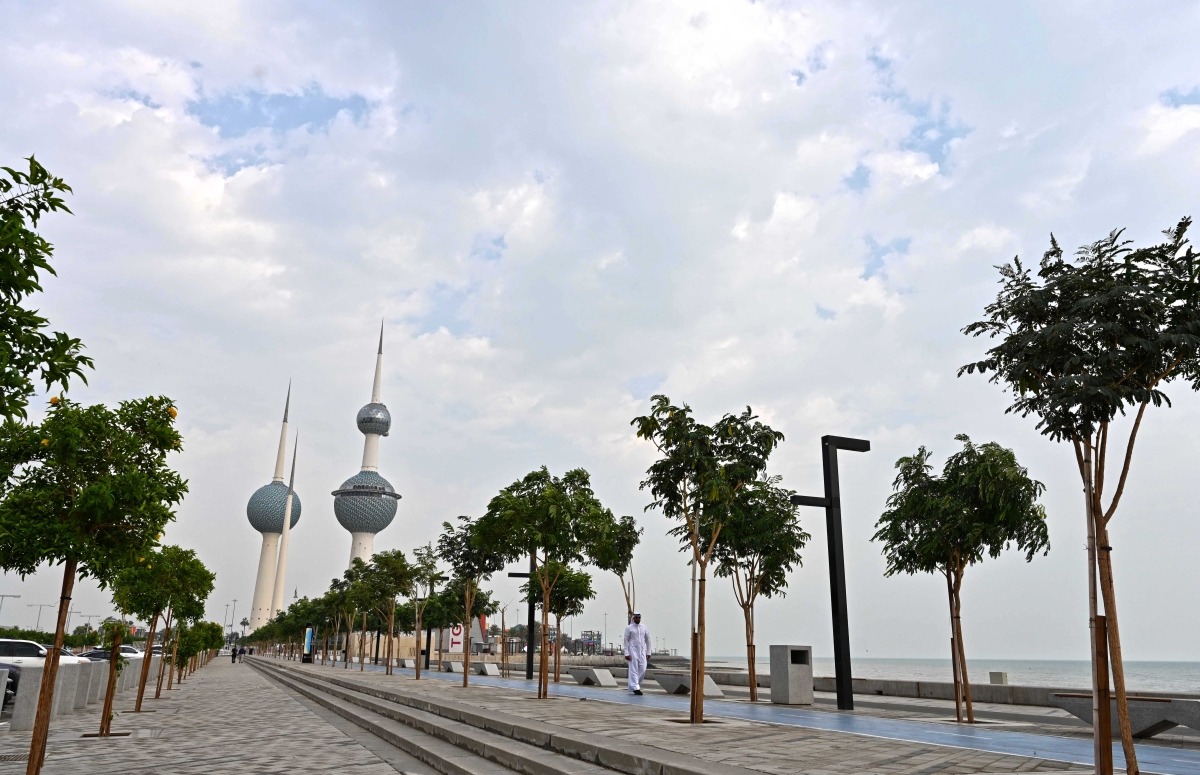
Skywatchers in Kuwait are set to witness a series of major astronomical events this August, including planet alignments, the Perseid meteor shower and a partial lunar eclipse, according to the Al-Ujairi Scientific Center.
August 9 – Moon and Mars Conjunction: The Moon will pass about 4.24 degrees north of Mars. The event can be observed from Kuwait City after the two objects appear in the sky at around 1:30am.
August 12 – Rabi’ Al-Awwal Crescent and Total Solar Eclipse: The crescent moon marking Rabi’ Al-Awwal 1448 AH will be born on the same day as a total solar eclipse, which will peak at around 6:36pm Kuwait time. The eclipse will not be visible from Kuwait as its path will pass through the Arctic region, Greenland, Iceland, the North Atlantic Ocean and parts of Spain.
August 13 – Perseid Meteor Shower Peak: Kuwait’s skies will witness the peak of the Perseid meteor shower, which begins on July 17. The meteor display will be visible after 7:30pm, with meteors appearing to emerge from the eastern horizon.
August 15–16 – Venus and Moon Events: Venus will reach its greatest eastern elongation on August 15, making it clearly visible in the western sky after sunset. On August 16, the Moon will pass close to Venus in a conjunction visible from Kuwait City at around 6:42pm.
August 28 – Partial Lunar Eclipse: A partial lunar eclipse will be visible from Kuwait before dawn. The eclipse will begin at 4:23am, continue as the Moon moves closer to the horizon and end at around 5:28am, shortly after sunrise.
August 30–31 – Moon and Saturn Conjunction: The month will end with a Moon-Saturn conjunction, as the Moon passes about 7.2 degrees north of Saturn. The two celestial bodies will be visible in Kuwait’s evening sky and will reach their highest point at around 2:04am.
The center explained that a partial lunar eclipse occurs when part of the Moon enters Earth’s shadow, causing a section of its surface to appear darker. The phenomenon will also be visible across large parts of Africa, Europe and the Americas. The August full moon is traditionally known as the “Sturgeon Moon,” a name linked to the seasonal abundance of sturgeon fish in North American lakes.
The Al-Ujairi Scientific Center advised skywatchers to choose locations away from strong artificial lights and noted that visibility of astronomical events depends on weather conditions and geographical location.