- Xi Jinping calls for de-escalation in global conflicts, urging ceasefire and continued negotiations, warning that further escalation—particularly in the Middle East—would worsen instability.
- China and Russia reaffirm an “unyielding” strategic partnership, with Xi highlighting deep political trust and Putin describing ties as reaching an “unprecedentedly high level.”
- Economic and geopolitical alignment continues to deepen, with expanding trade—especially Russian energy exports to China—strengthening Moscow’s economic resilience amid Western sanctions and reinforcing Beijing’s growing leverage.
Chinese President Xi Jinping has reiterated calls for restraint in global conflicts, telling Russian President Vladimir Putin that further escalation in the Middle East is “inadvisable” and stressing that a comprehensive ceasefire is urgently needed, according to Chinese state media.
Xi emphasized that resuming hostilities would worsen instability while continued negotiations remain essential, even as Russia’s war in Ukraine was not directly addressed in their initial remarks.
During high-level talks in Beijing, Xi also reaffirmed what he described as the “unyielding relationship” between China and Russia. He said both countries had built deep political trust and strategic coordination that has remained resilient despite external pressures, according to Xinhua.
Putin, in turn, described Russia–China relations as having reached an “unprecedentedly high level,” praising the strength and momentum of bilateral cooperation.
He said economic ties between the two nations continue to grow steadily despite global geopolitical tensions and invited Xi Jinping to visit Russia next year, signaling continued diplomatic engagement, dw.com reports.
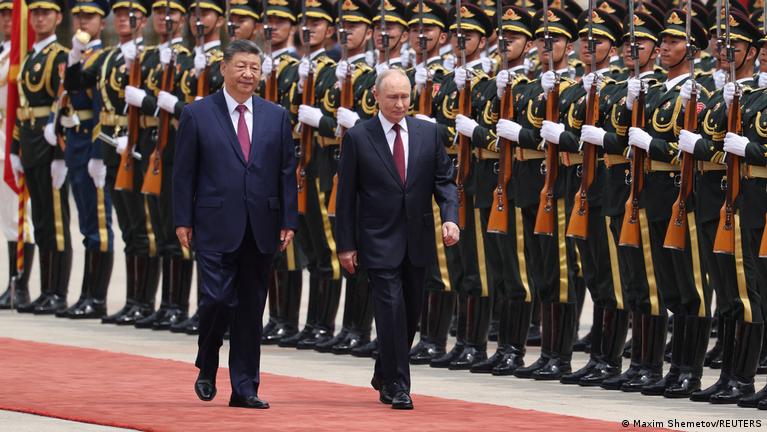
The Russian leader was received with full ceremonial honors at Beijing’s Great Hall of the People, where he and Xi walked along a red carpet and stood for their national anthems performed by a military band.
The meeting formed part of celebrations marking the 25th anniversary of the China–Russia Treaty of Good-Neighborliness and Friendly Cooperation.
The Kremlin dismissed comparisons between Putin’s reception and other recent high-profile state visits, including that of US President Donald Trump, arguing that the substance of diplomatic engagement matters more than ceremonial display.
Officials stressed that the core value of the visit lies in content and strategic outcomes rather than optics.
The Beijing summit underscores the deepening economic and strategic alignment between Moscow and Beijing, often described as a “no-limits” partnership.
Trade between the two has expanded significantly since the start of the Ukraine war, with Russia increasingly relying on China as a key buyer of energy exports, particularly oil, gas, and coal, providing Moscow with crucial revenue under Western sanctions.
Analysts note that while both countries project a balanced partnership, trade flows remain heavily weighted toward Chinese imports of Russian resources, reinforcing Beijing’s growing economic leverage even as both sides continue to present a united geopolitical front.