Kuwaiti officer to receive MAST honour in Scotland for defence and resilience work

A Kuwaiti officer will be honoured in Scotland in the coming weeks for work that has contributed to Kuwait’s engagement with institutions involved in Commonwealth security, resilience and future capability development.
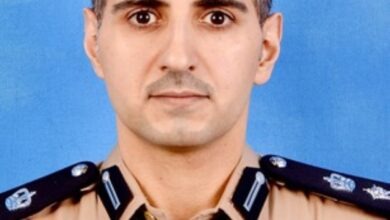
Captain Ali H. Ashour (NATO OF-5) of the Kuwait Ministry of Interior’s Kuwait Coast Guard will receive a silver salver from Maritime/Air Systems & Technologies (MAST) at its first Focus Forum in Glasgow.
MAST is a UK-based international gathering of defence and security policymakers and leaders covering the undersea, surface, air, space and cyber domains. Its Glasgow Focus Forum brings together ministers and former ministers, parliamentarians, senior commanders, cyber leaders, academics and industry leaders to discuss national and collective resilience.
The forum will also examine how governments, operators and industry assess risks amid growing geopolitical uncertainty, including the challenges posed by technological, infrastructure and economic changes.

The salver recognises Captain Ashour’s contribution to critical infrastructure resilience, evidence-based policy and UK-Kuwait scientific capacity-building, particularly in autonomous transformation, strategic feasibility and future capability development.
Ashour is the first non-Commonwealth national selected for a strategic defence research partnership on autonomy between BAE Systems and the PeriDynamics Research Centre. His research examines strategic feasibility across maritime and critical infrastructure systems, including digital twins, AI validation, autonomous transformation and the governance of future C5ISR capabilities.
His work focuses on how sovereign capability can help protect national continuity while supporting long-term economic growth, treating resilience as both a security requirement and a foundation for public confidence, investment and national development.
Major General Martin Smith CB MBE DL, former Head of the Special Boat Service, said Ashour represents an evolution in UK-Kuwait and wider UK-GCC defence and security cooperation towards shared capability, evidence-based capacity building and strategic resilience.
Smith also praised Kuwait’s investment in human capital, saying Ashour’s work demonstrates how such investment can contribute to institutional strength and sovereign capability.
Ashour’s work has also received professional recognition through fellowships with the Royal Institution of Naval Architects, the Institute of Marine Engineering, Science and Technology and the Institution of Engineers in Scotland. He was previously elected to the council of the latter and contributed to policy discussions on infrastructure resilience, technological transition and the links between energy, transport, communications and national security.
He has also held visiting lecturer positions with UK and Commonwealth defence and civilian education institutions, including Britannia Royal Naval College, University Royal Naval Units and the Defence STEM Undergraduate Scheme.
The developing scientific and professional cooperation forms part of a longer history of security ties between Kuwait, the Gulf and the United Kingdom. The partnership has evolved through periods including Operation Vantage in 1961, the Dhofar War, the Tanker War and the Royal Navy’s Armilla Patrol, the international coalition that liberated Kuwait in 1991 and subsequent counterterrorism operations.
More recently, the relationship has included cooperation on Gulf security, critical infrastructure and freedom of navigation amid regional tensions. Ashour will speak at the MAST Glasgow Focus Forum alongside Major General Martin Smith and Stewart McDonald, former Member of Parliament for Glasgow South and former SNP Defence Spokesperson. The initiative is also being presented to British policymakers and figures from the defence, security and resilience sectors as part of efforts to strengthen UK-Kuwait relations and deepen institutional links between the Commonwealth and the Gulf Cooperation Council.