Kuwait law redraws the line between collapse and survival as war shockwaves hit contracts
Force majeure or financial strain? As contracts come under fire, new legal study maps how war is reshaping business obligations in Kuwait

A new legal study has outlined the far-reaching implications of the ongoing war involving the United States, Israel, and the Iran on contractual obligations, highlighting its direct impact on Kuwait’s legal and economic landscape.
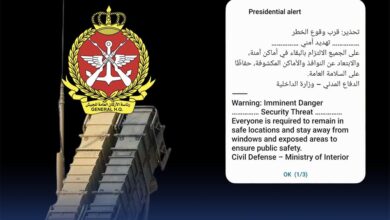
The study notes that the conflict, marked by attacks affecting regional infrastructure, including in Kuwait, has disrupted business continuity and contractual performance across multiple sectors. In response to escalating risks, authorities introduced precautionary measures, including workforce reductions in government entities to safeguard public employees.
At the core of the legal analysis is the classification of the war under Kuwaiti law, determining whether it constitutes force majeure or unforeseen circumstances, and the resulting consequences for contracts.
Force Majeure vs. Unforeseen Circumstances
The study explains that under Kuwaiti Civil Law, force majeure applies when an external event, such as war, renders the performance of a contractual obligation completely impossible. In such cases, obligations are automatically extinguished, and contracts may be terminated without liability.
By contrast, unforeseen circumstances arise when an exceptional and unpredictable event makes contract performance excessively burdensome, but not impossible. In these cases, courts may intervene to restore balance by modifying contractual terms or redistributing losses between the parties.
Legal experts stress that the distinction between the two doctrines depends on the degree of impact, with courts holding discretionary authority to assess each case individually.
Contracts Under Pressure
The war’s effects vary across different types of contracts:
- Unaffected contracts remain binding and must be executed as agreed.
- Burdened contracts may be amended to ease financial strain and restore economic balance.
- Impossible contracts may be terminated under force majeure provisions.
Where contracts lack explicit clauses addressing such crises, affected parties may seek judicial remedies or pursue negotiated settlements to adjust obligations, extend deadlines, or share losses.
Commercial Lease Disputes Intensify
The study highlights growing legal debate over commercial leases, particularly where government-imposed closures have prevented tenants from operating.
Under Kuwaiti law, rent is tied to the tenant’s ability to benefit from the property. If that benefit is significantly reduced or eliminated due to external factors, such as war-related restrictions, tenants may seek rent reductions or contract termination.
Temporary closures, however, are generally treated as exceptional circumstances, allowing for suspension rather than cancellation of contractual obligations.
Residential Leases: Limited Relief
In residential lease agreements, tenants remain obligated to pay rent as long as they occupy the property. However, courts may consider valid excuses for delayed payments, potentially preventing eviction if tenants settle dues before final judgment.
Employment Contracts Protected
Unlike commercial agreements, employment contracts are governed by strict labor protections. The study emphasizes that employers remain obligated to pay wages during closures not caused by employees, reflecting the law’s priority to safeguard workers’ livelihoods.
Legal and Practical Path Forward
The study concludes that war conditions introduce complex legal realities, with some contracts falling under force majeure, others under unforeseen circumstances, and some remaining unaffected altogether.
In practice, experts recommend amicable negotiations as the fastest and most effective solution, enabling parties to revise terms, defer obligations, or share financial burdens until stability returns.
Ultimately, Kuwaiti law seeks to strike a balance between the binding nature of contracts and the principles of fairness and good faith, empowering courts to ensure justice on a case-by-case basis amid extraordinary circumstances.