














Kuwait, a nation committed to peace amid regional conflict
The Times Kuwait Report
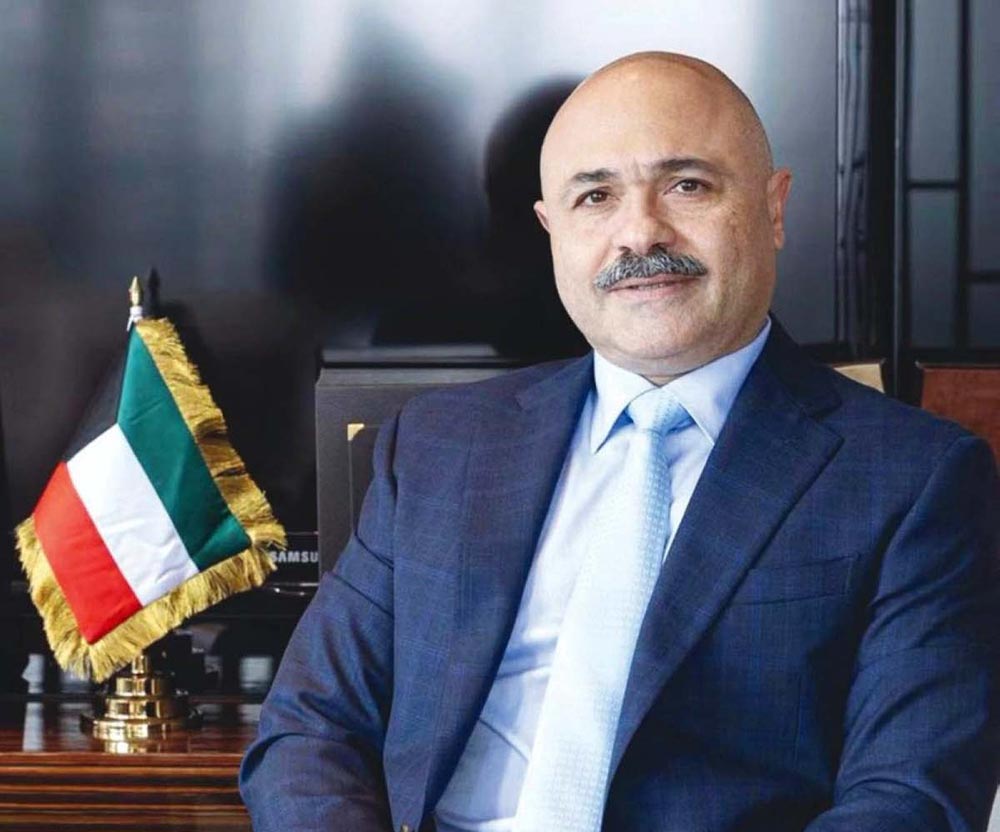
In a recent op-ed following the tragic death of the Indian national working at power and water desalination facility in Kuwait, veteran diplomat and Kuwait’s ambassador to India, Mishal Mustafa Al-Shamali offered his deepest condolences to the bereaved family of the worker. He highlighted Kuwait’s robust relations with India, and the shared views by both nations on peace and security.

Ambassador Al-Shamali also expounded on Kuwait’s principled and steadfast stance in support of peace, security and stability, the importance of dialogue and de-escalation, and voiced grave concern over the continued aggression by Iran against Kuwait and other Gulf states.
Ambassador Al-Shamali: On a solemn occasion marked by grief, condolences were extended on the passing of Indian national Santhansa Krishnan, who died while performing his duties at a power generation and water distillation facility in the State of Kuwait. Deep sympathies were conveyed to his family and loved ones, along with wishes for a swift recovery for those injured in the incident. The tragedy highlighted once again the human cost of instability and the urgent need to strengthen regional peace and security.
The Indian community in Kuwait is widely recognized as an integral part of the country’s social and economic fabric. Indian professionals across various sectors, including healthcare, engineering, education, and entrepreneurship, have made significant contributions to Kuwait’s development and progress over the years.
The Government of Kuwait remains fully committed to safeguarding the welfare, dignity, and security of all Indian residents. At the same time, it is acknowledged that long-term safety and stability depend on the reduction of regional tensions and adherence to international norms.

The State of Kuwait has consistently maintained a balanced and cautious approach toward ongoing regional tensions, firmly opposing escalation and any actions that lead to destruction and human suffering. Kuwait has not been a party to regional military confrontations and continues to uphold its longstanding commitment to peace, stability, and constructive dialogue across the Gulf region and beyond.
This principled stance reflects Kuwait’s enduring belief that diplomacy and mutual respect remain the only sustainable foundations for international relations.
Within this context, Kuwait has reiterated its commitment to the principles of international law, including respect for sovereignty, territorial integrity, and non-interference in the internal affairs of states. These principles remain central to the international system and essential for maintaining global order and stability.
Kuwait also reaffirms its inherent right to self-defense under Article 51 of the United Nations Charter, exercised strictly within the framework of international law. At the same time, Kuwait continues to prioritize restraint and responsible conduct, with a focus on de-escalation and the protection of civilians and civilian infrastructure.
Kuwait has consistently communicated its position that its territory and airspace are not to be used for any hostile actions against any party. Despite these efforts, the wider region has witnessed continued tensions, including incidents involving civilian infrastructure across multiple countries. Such developments have had serious humanitarian implications and have further underscored the importance of restraint and dialogue.
Critical civilian infrastructure in the region has been affected, including airports, energy installations, water facilities, residential areas, and ports—assets that are essential to daily life and regional economic stability. Disruptions to such facilities have had broader consequences for connectivity, humanitarian access, and essential services, reinforcing the need to safeguard civilian infrastructure in accordance with international humanitarian law.
The Gulf Cooperation Council (GCC) states have maintained a unified position calling for non-escalation and the prioritization of diplomatic solutions. Member states continue to emphasize the importance of regional stability and collective security, while supporting ongoing international efforts aimed at reducing tensions and fostering dialogue. This shared position reflects a long-standing regional commitment to peace and cooperation.
The continuation of regional conflict carries risks that extend beyond the immediate geography. The global economy has already experienced increased pressure due to disruptions in maritime routes and energy supply chains, particularly through key waterways such as the Strait of Hormuz. These disruptions have contributed to volatility in global energy markets and have affected economic stability in several regions.
Rising energy prices and supply chain constraints, including in petrochemical and fertilizer markets, have added further strain to global economic systems. These developments highlight the interconnected nature of today’s world, where regional instability can quickly generate wide-ranging international consequences, including impacts on food security, industrial production, and inflation.
In light of these challenges, the importance of safeguarding maritime security and ensuring the uninterrupted flow of global trade has become increasingly evident. The international community is encouraged to continue supporting all diplomatic initiatives aimed at de-escalation and the protection of global economic stability.
It is also recalled that GCC states have, on previous occasions, expressed solidarity with regional countries during times of crisis and have consistently supported the principles of good neighborliness and peaceful coexistence. These principles remain central to the region’s long-term stability and cooperation.
Kuwait continues to emphasize that sustained regional tensions present risks to both regional and international peace and security. For this reason, Kuwait calls on the international community to remain actively engaged in supporting diplomatic efforts and upholding international law. A collective and principled approach is essential to prevent further escalation and to preserve stability.
In this regard, Kuwait and its regional partners have expressed appreciation for the principled stance of the Republic of India. India’s consistent advocacy for dialogue, respect for international norms, and protection of civilians has been widely recognized as a constructive contribution to regional and global stability.
Kuwait, alongside GCC states and Jordan, also acknowledges India’s participation in discussions held during the emergency session of the United Nations Human Rights Council in Geneva on 25 March 2026. Emphasis on the protection of civilian lives, safeguarding of essential infrastructure, and ensuring the stability of global supply chains reflects shared international priorities in times of crisis.
The international community continues to urge adherence to relevant United Nations Security Council resolutions calling for the protection of maritime security and the avoidance of actions that could further destabilize the region. Compliance with international obligations remains a cornerstone for rebuilding trust and reducing tensions.
Kuwait remains firmly committed to the principle that dialogue and diplomacy are the most effective means of resolving disputes. Military escalation only deepens divisions and prolongs suffering, while sustained engagement and negotiation offer a viable path toward lasting peace and stability. Kuwait therefore continues to encourage restraint and constructive dialogue among all parties concerned.
Despite regional challenges, the Government of Kuwait remains dedicated to ensuring the safety and well-being of all residents within its territory. Essential public services continue to operate normally, and efforts remain ongoing to preserve stability, security, and quality of life for citizens and residents alike.
Kuwait continues to appeal for an end to actions that contribute to escalation in the region, not as a position of confrontation, but as a call for reason and responsibility. The path toward lasting security lies in dialogue, mutual respect, and adherence to international law, rather than military escalation.
The international community is therefore encouraged to act collectively and decisively in support of peace and stability at this critical juncture. Kuwait reaffirms its enduring commitment to peace, cooperation, and constructive engagement, with the belief that shared responsibility remains the only sustainable path toward regional and global security.