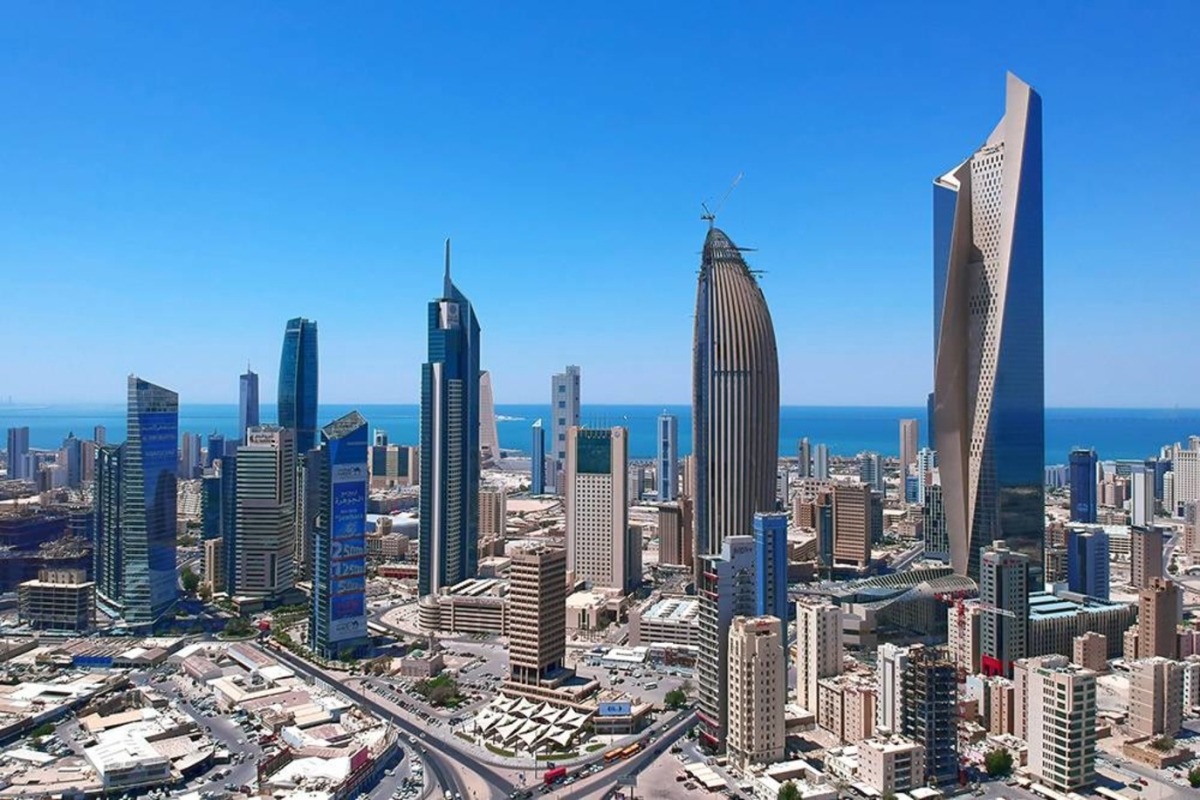
Kuwait’s economy is showing early signs of recovery, with the non-oil private sector returning to growth in July despite regional tensions, Iranian missile and drone attacks, and disruptions to shipping and energy flows, according to MEED magazine.
Kuwait completed several major economic deals during July, strengthening prospects for economic diversification and expansion of non-oil sectors if a settlement is reached between the United States and Iran. A survey of local businesses in early August also confirmed a return to growth after a period of stagnation.
MEED attributed Kuwait’s resilience to its strong sovereign financial position, large oil reserves and substantial Kuwait Investment Authority assets, as well as government support and regional cooperation.
Government deposits with local banks also increased between February and May, helping support the financial sector.
The economy’s ability to withstand shocks also reflects Kuwait’s experience in managing previous crises, including the 1990 Iraqi invasion, the global financial crisis and the COVID-19 pandemic. The Kuwait Emergency Response Fund further helped prevent the recent geopolitical shock from developing into a wider financial crisis.
A major boost to investor confidence came from Kuwait’s $6 billion sovereign bond issue on July 23, its first since October 2025. The three-tranche issue attracted demand of more than $18 billion, demonstrating strong investor appetite for Kuwaiti debt.
The following week, Kuwait Petroleum Corporation announced a $16 billion deal involving Kuwait Oil Company’s domestic crude and export pipeline network with a consortium comprising Blackstone, Brookfield and KKR.
The transaction, the largest foreign direct investment in Kuwait’s history, is expected to generate about $7.85 billion in upfront proceeds for KPC and its subsidiaries’ capital expenditure plans.
MEED said completing the pipeline deal amid regional turmoil and restrictions on oil export routes was a significant indicator of international investor confidence in Kuwait. Oxford Economics also viewed the bond issue and pipeline transaction as evidence of Kuwait’s ability to secure financing and investment, while Blackstone plans to open an office in Kuwait this year.
Infrastructure investment also continued, with the Ministry of Public Works signing a July 26 agreement with China State Construction Engineering Corporation to build, operate and maintain the Kabd North wastewater treatment plant and related facilities, aimed at expanding wastewater treatment and reuse capacity and supporting environmental sustainability.
Kuwait also introduced measures to reorganize the non-oil economy, including suspending new licenses for certain individual businesses and freelance professions pending regulatory review.
A decree issued on August 2 requires companies providing goods and services to obtain appropriate licenses, with violations carrying penalties of up to three years in prison and fines of up to 100,000 dinars, or the equivalent of profits generated from unlicensed activities. Certain foreigners were also allowed to convert visit visas into regular residency permits for a 150-dinar fee.
The latest S&P Global Purchasing Managers’ Index showed further improvement, with Kuwait’s non-oil private sector returning to growth in July for the first time since the conflict began. The resumption of flights at Kuwait International Airport helped increase production and new orders, while companies boosted purchasing and hiring.
The PMI rose to 50.8, above the 50-point growth threshold, while inflation remained relatively contained due to government support and price controls.