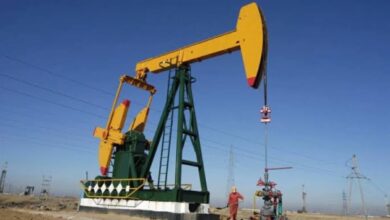
Kuwait currently produces around 2 million barrels per day
. . . as increasing numbers of oil tankers resume passage through the Strait of Hormuz

Kuwait is currently producing around 2 million barrels of oil per day, equivalent to about 75 percent of its pre-war output, as increasing numbers of oil tankers resume passage through the Strait of Hormuz.
The Kuwait Petroleum Corporation (KPC) CEO Sheikh Nawaf Saud Al-Sabah said Kuwait’s current production compares with approximately 2.6 million barrels per day before the outbreak of the war with Iran at the end of February. “More ships are passing through because people realize there is no alternative to the Strait of Hormuz,” Sheikh Nawaf told Bloomberg, stressing the strategic importance of the waterway to regional oil exports.
“Iran continues to threaten navigation in the Strait, but an increasing number of oil tankers are risking passage nonetheless,” Bloomberg said. Sheikh Nawaf said KPC is currently meeting its crude oil supply commitments to customers, while all of Kuwait’s refineries remain operational.
He added that the company remains on track with its planned projects, while Kuwait’s oil pipeline plans are progressing well. Routes through Saudi Arabia and the UAE remain under consideration, while the Kuwait National Petroleum Company (KNPC) is working on additional options.
Kuwait currently has oil production capacity of approximately 3 million barrels per day, according to Sheikh Nawaf , who also highlighted the continuing need for sufficient tanker capacity and plans to ensure the distribution of Kuwait’s oil. From a business perspective, the gradual return of tanker traffic through Hormuz is significant for Kuwait’s oil sector, given the Strait’s central role in moving the country’s crude to international markets.
At the same time, the gap between current production of around 2 million barrels per day and Kuwait’s approximately 3 million-barrel-per-day production capacity highlights the operational impact of the disruption. The developments also underline Kuwait’s efforts to maintain customer commitments, keep its refining system fully operational and explore alternative pipeline routes while maritime access through the Strait remains critical to the country’s oil trade.