Kuwait can restore 80% of oil output within a month after Iran war disruption, says KPC CEO
KPC in talks with Saudi Arabia and UAE to expand pipeline capacity for oil exports
Kuwait Petroleum Corporation (KPC) Vice Chairman and CEO Sheikh Nawaf Saud Al-Sabah said Kuwait is capable of restoring around 80 percent of its oil production halted during the Iran war within less than one month, while the remaining output would require an additional three to four months to return fully to global markets.
Speaking during a panel discussion on the sidelines of the Atlantic Council Global Energy Forum, he explained that Kuwait had deliberately reduced production at the onset of the conflict to the minimum required for domestic consumption, while continuing to supply refined products to regional markets. He noted that intra-Gulf trade in energy products continued throughout the period, forming what he described as a “mini-economy” within the region.
He added that Kuwait is now building on this experience in coordination with the Gulf Cooperation Council, emphasizing a collective regional approach to managing energy resilience and supply stability. Al-Sabah also confirmed ongoing discussions with officials in Saudi Arabia and the United Arab Emirates to explore expanding pipeline infrastructure to facilitate Kuwaiti crude exports and improve regional export flexibility.
On global oil markets, he said current prices are not at historically high levels when adjusted for inflation, noting that past cycles saw significantly higher real-term prices. He attributed recent market stability to temporary factors, including the release of strategic reserves by major consuming countries and a slowdown in global demand growth, stressing that these measures are short-term buffers rather than long-term solutions.
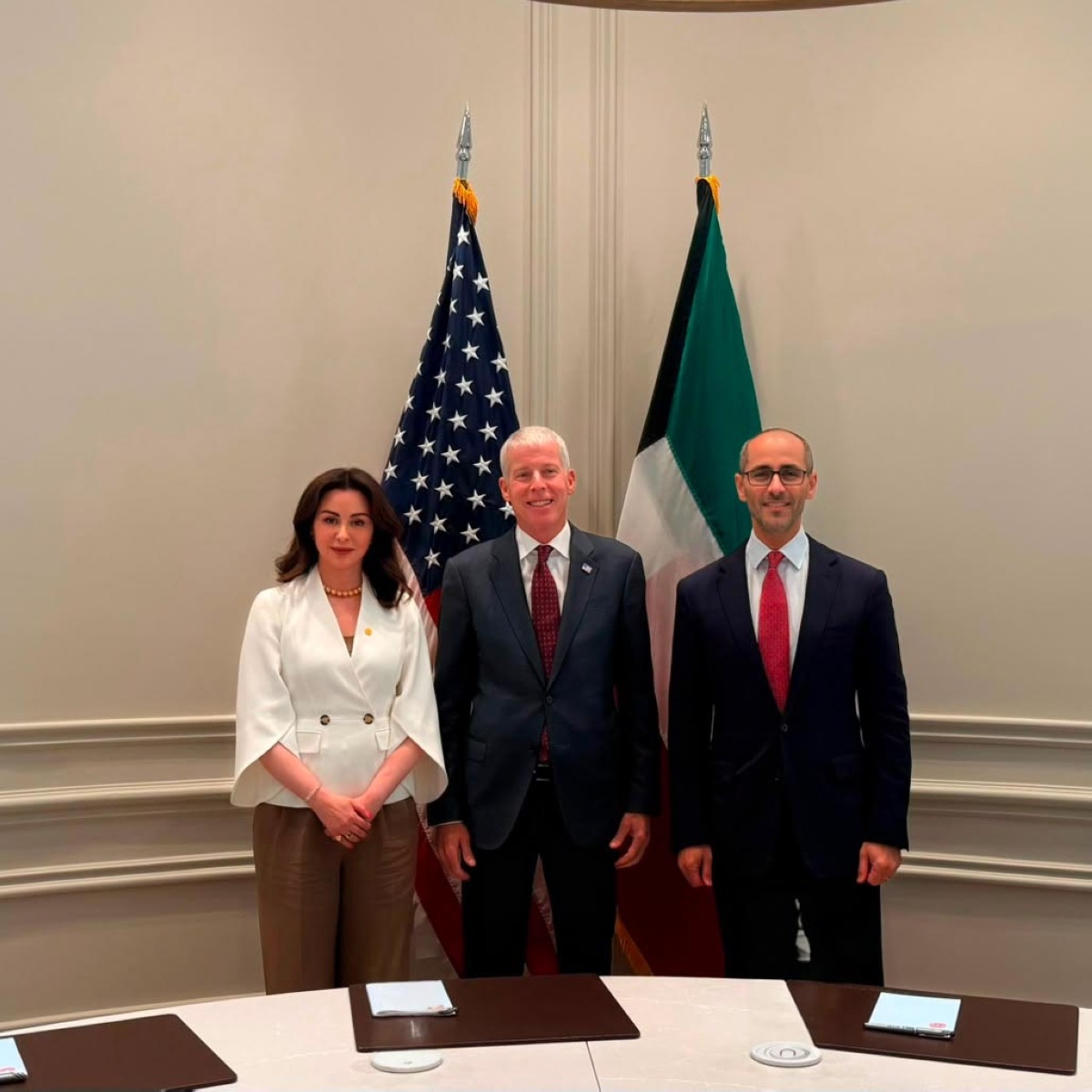
In Washington, Sheikh Nawaf Saud Al-Sabah also met with US Energy Secretary Chris Wright, in the presence of Kuwait’s Ambassador to the United States, Sheikha Al-Zain Al-Sabah.
According to a statement from Kuwait Petroleum Corporation, the meeting focused on strengthening the strategic energy partnership between Kuwait and the United States, reinforcing global energy market stability, and ensuring secure and reliable supply chains.
Both sides underscored the importance of maintaining the safety and freedom of navigation in the Strait of Hormuz, describing it as one of the world’s most vital energy corridors.
They also discussed expanding cooperation in infrastructure-related investments, with an emphasis on building more flexible and resilient systems capable of withstanding disruptions and enhancing global supply chain reliability.
Sheikh Nawaf stressed that the Kuwait–US energy relationship remains a key pillar of global energy stability, adding that continued investment in advanced infrastructure is essential for long-term economic growth and energy security.