Britain backs Kuwait’s defence, rules out offensive role in regional conflict
Ambassador highlights “exceptional professionalism” of Kuwaiti forces and frontline workers

- Britain deploys counter-drone systems while maintaining non-offensive stance
- London stresses diplomacy as priority, warns against widening conflict
- UK expands defensive cooperation with Kuwait amid rising regional tensions
The Times Kuwait Report
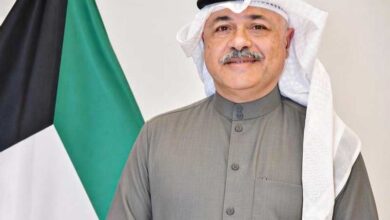
The British Ambassador to Kuwait, Qudsi Rashid, has lauded the Kuwaiti Armed Forces and frontline personnel for their courage and professionalism in responding to the ongoing regional tensions, highlighting their critical role in safeguarding lives and maintaining essential services.
Ambassador Rashid commended the efforts of the National Guard, Kuwait Fire Force, medical staff, and emergency and ambulance teams, as well as workers across the country who continue to operate tirelessly under challenging conditions. He noted that their unwavering commitment has ensured the continuity of vital services such as water and electricity, while maintaining public safety.
He emphasized that these efforts reflect exceptional professionalism and bravery, and demonstrate a strong capacity to protect both citizens and residents across Kuwait.
Condolences and solidarity
The ambassador extended his condolences to the families of military personnel and civilians Kuwaitis and non-Kuwaitis who lost their lives as a result of what he described as unjustified Iranian attacks on Kuwait. He reaffirmed the United Kingdom’s solidarity with the injured and their families, underscoring continued support during this difficult period.
Strong condemnation, no offensive role
Outlining the British government’s stance, Rashid stated that the United Kingdom unequivocally condemns the Iranian attacks, describing them as “appalling and unjustified” across the region. He noted that Iran had launched drones and missiles against neighboring countries, including those not involved in hostilities, calling such actions reckless and destabilizing.
He stressed that the British Prime Minister has made clear that this is not Britain’s war. The UK has not participated in strikes against Iran and will not engage in offensive military operations. This position, he said, reflects a deliberate decision based on national interests.
However, he added that Iran’s actions cannot be ignored, as they pose a threat to British citizens, UK interests, and regional allies. In response, Britain has approved specific and limited defensive measures aimed solely at protecting its partners in the region.
Defensive support for Kuwait
Rashid underscored that the United Kingdom’s role remains strictly defensive, focused on protecting British nationals, safeguarding national interests, and supporting the collective defense of allies, including Kuwait.
He highlighted that Britain is approaching the crisis with restraint, seeking to support regional stability without escalating the conflict into a broader war, while maintaining close coordination with Gulf partners.
Key measures: Rapid Sentry and military cooperation
Detailing Britain’s support to Kuwait, the ambassador outlined several measures currently in place.
Foremost among them is the deployment of British military capabilities and equipment within Kuwait, including the “Rapid Sentry” system, designed to protect Kuwaiti airspace through advanced counter-drone capabilities. Additional systems have also been deployed to counter missile and unmanned aerial threats.
These systems, he noted, are operated by personnel from the British Armed Forces mission in Kuwait.
The ambassador stated that the British military mission continues to serve only in an advisory role, with personnel working in training and operational support areas, and they do not operate these capabilities.
The ambassador further highlighted the long-standing British military mission in Kuwait, which has been present for 34 years and includes more than 30 personnel embedded within the Kuwaiti Armed Forces.
He also pointed to the role of specialized British companies, supported by the UK government, in providing advanced expertise and ensuring Kuwait has access to the necessary defense technologies both now and in the future.
Focus on de-escalation
Rashid reiterated that the UK’s position remains clear: Iran must cease its attacks on neighboring countries and take steps to reduce tensions. He stressed that Britain’s priority is to restore regional stability and pursue diplomatic solutions through negotiations.
No timeline for conflict end
Responding to questions about the duration of the conflict, the ambassador said it is not possible to predict when it will end, emphasizing the urgent need to halt hostilities as a pathway toward a negotiated settlement.
Security outlook in the Gulf
Assessing the broader security situation, Rashid acknowledged that conditions in the Gulf are far from ideal, but stressed that the current situation was not Britain’s choice. He reiterated that the UK’s priority remains to support its allies while working diplomatically to de-escalate tensions and prevent further instability in the region.