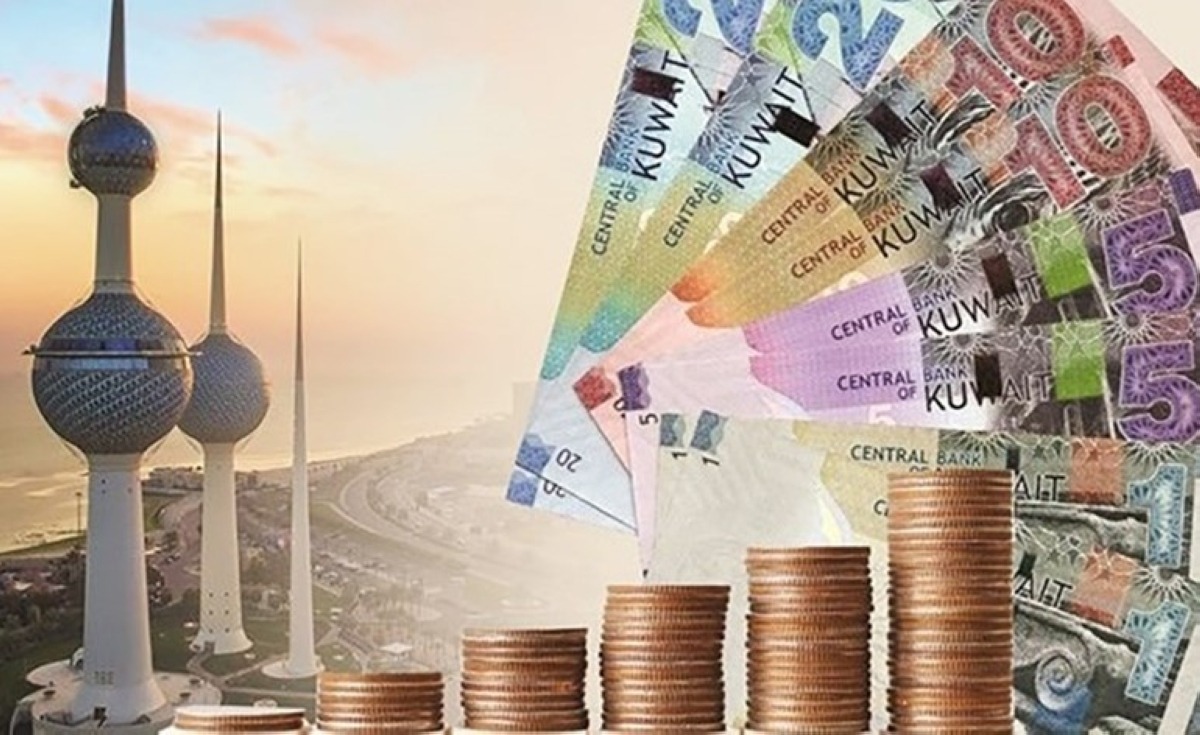
Moody’s Investors Service has described Kuwait’s new framework allowing the government to borrow from the Future Generations Reserve as credit-positive, saying it strengthens the country’s financial resilience and expands its financing options amid expectations of a wider fiscal deficit.
The decree issued on September 1, 2026, authorizes the State General Reserve Fund to borrow from the Future Generations Reserve under specific conditions. Moody’s said the framework gives the government access to part of its substantial accumulated financial savings, including to help cover a portion of the deficit expected from the ongoing conflict in the Middle East.
Moody’s, which rates Kuwait A1 with a stable outlook, estimated that the Kuwait Investment Authority (KIA) managed around $750 billion in government financial assets at the end of 2025, equivalent to about 475 percent of GDP. The KIA manages the General Reserve Fund and Future Generations Fund, along with other state assets.
Amendment creates a clearer institutional framework
The agency said the amendment also creates a clearer institutional framework governing the relationship between the General Reserve Fund, which serves as the government’s treasury account, and the Future Generations Reserve, the KIA’s main investment portfolio.
Before the amendment, legislation governing the Future Generations Reserve explicitly prohibited the government from withdrawing funds from the reserve. Any use of its assets therefore required separate legislative approval, Moody’s said.
Under Decree Law No. 81 of 2026, borrowing from the Future Generations Reserve is permitted as an exception to support the State General Reserve. The borrowing requires a Council of Ministers decision based on a proposal from the relevant minister, who chairs the KIA Board of Directors, as well as approval from the board.
Loan agreements must specify amount
Loan agreements must specify the amount, purpose, interest rate, maturity and repayment schedule, including installments and interest. They must also set out conditions for restructuring or rescheduling payments. Loans must be repaid from state revenues when a surplus is achieved and cannot be reduced or forgiven except through legislation.
The decree also establishes borrowing limits. Total outstanding loans in any fiscal year cannot exceed 100 percent of the reserve’s average returns over the previous five audited fiscal years. In addition, the total outstanding loan balance cannot exceed 10 percent of the reserve’s net asset value based on its latest audited financial statements. No new borrowing is permitted if either limit is breached.
Based on its estimates and an assumed average return of 6 to 8 percent, Moody’s estimates that annual borrowing from the Future Generations Reserve could amount to roughly 30 to 40 percent of GDP, while the total outstanding balance could reach around 50 percent of GDP.
Actual borrowing capacity can vary depending on KIA asset
The agency noted that the actual borrowing capacity could vary depending on the Investment Authority’s asset base and its growth. Some estimates put the authority’s assets at around 640 percent of GDP at the end of 2025, with reinvested returns continuing to support asset growth.
Moody’s said access to domestic financing from the Investment Authority broadens the government’s financing options and could slow the pace of debt accumulation if more financing needs are met through domestic sources. However, the agency said it will not count borrowing from Kuwait’s sovereign wealth fund as part of existing government debt.
Kuwait has already increased borrowing since the new Finance and Liquidity Law was enacted in March 2025. Moody’s said the government issued 3.75 billion dinars in domestic debt, equivalent to 7.9 percent of GDP for fiscal 2025-26, alongside $17.25 billion in dollar-denominated international bonds, equivalent to 11.1 percent of GDP, and another $11.65 billion in external debt, equivalent to 7.7 percent of GDP.
Nearly half of this borrowing was undertaken during the fiscal year ended March 2026, when the government recorded a deficit equivalent to 15 percent of GDP, compared with 2.1 percent in the previous fiscal year. Government debt consequently rose to 19 percent of GDP by March 2026, from 2.9 percent in March 2024.
In its baseline scenario, Moody’s expects shipping through the Strait of Hormuz to begin returning to normal in the coming months, although traffic is not expected to reach pre-conflict levels before the first quarter of 2027. The agency therefore expects Kuwait’s fiscal deficit to widen to around 20 percent of GDP in the current fiscal year.