- Cali, Pereira and Manizales among worst-hit areas
- Buildings collapsed, thousands made homeless, scores trapped under rubble as rescue operations continue
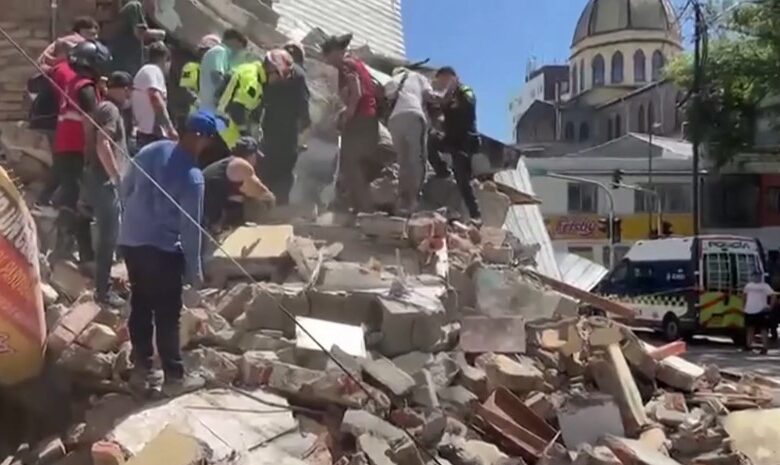
A powerful 7.4-magnitude earthquake struck western Colombia early Monday, killing at least 111 people and injuring 87, according to the latest figures released by the Colombian government. The quake caused widespread damage across several cities, with rescue teams searching collapsed buildings for people who may still be trapped under the rubble.
Colombian President Abelardo de la Espriella said the government had declared a national state of emergency and that rescuing survivors remained the top priority. As of 12:30 p.m. local time, authorities reported that 1,575 homes had been damaged, 37 completely destroyed and 61 buildings had collapsed. Eighteen health centres and 52 schools were also damaged.
The earthquake was centred near the eastern edge of Choco province on Colombia’s Pacific coast, close to the Tatama National Nature Reserve. The US Geological Survey (USGS) recorded the quake at magnitude 7.4, while Colombia’s national seismic authority initially reported a lower magnitude before revising it to 7.4.

Cali and other cities report major damage
Cali, one of Colombia’s largest cities, was among the areas affected by the earthquake. Cali Mayor Alejandro Eder said at least 20 structures had collapsed, with people reportedly trapped inside some of them. He said the city’s emergency and rescue agencies were working to respond to the situation and requested additional rescue personnel from Bogota and Medellin.
Authorities in Valle del Cauca, where Cali is located, reported at least 27 deaths before the president released the nationwide figures.
In Risaralda, officials reported 40 deaths, including at least 18 in the provincial capital Pereira, according to earlier statements from local authorities.

In Choco, where the earthquake’s epicentre was located, Governor Nubia Carolina Cordoba-Curi reported 12 deaths and 84 injuries by midday. Meanwhile, two people were reported killed in Manizales, in the neighbouring Caldas region.
Airports temporarily suspended
The earthquake also disrupted air travel, with Colombia’s civil aviation authorities reporting damage at several airports.
Operations were temporarily suspended at airports in Pereira, Manizales, Quibdo, Armenia, Cartago and Buenaventura while engineers assessed possible structural damage. Cali’s airport was later added to the list.
Authorities said the precautionary suspension was necessary to ensure passenger safety while inspections were carried out.
Earthquake was felt across western Colombia
The earthquake occurred at a depth of approximately 107 kilometres, according to the USGS. The agency said strong tremors were likely felt across much of western Colombia.
The epicentre was roughly equidistant from Bogota, Medellin and Cali, while the closest major population centre was Cartago, located about 30 kilometres from the epicentre.
Tremors were also felt in neighbouring Ecuador, Panama and Venezuela.
A magnitude-5.0 aftershock was recorded less than an hour after the main earthquake, adding to concerns for residents and emergency teams working in affected areas.
International support offered
The international community has offered support to Colombia following the disaster. European Commission President Ursula von der Leyen said the European Union was ready to provide additional assistance, while the EU’s Copernicus satellite service had been activated to support rescue and emergency operations.
US Secretary of State Marco Rubio also said Washington was closely monitoring the situation and was prepared to support the Colombian people.
The earthquake struck along the Pacific coast, near the Pacific Ring of Fire, one of the world’s most active regions for earthquakes and volcanic activity. Rescue operations and damage assessments are continuing as authorities search for survivors and determine the full extent of the destruction.