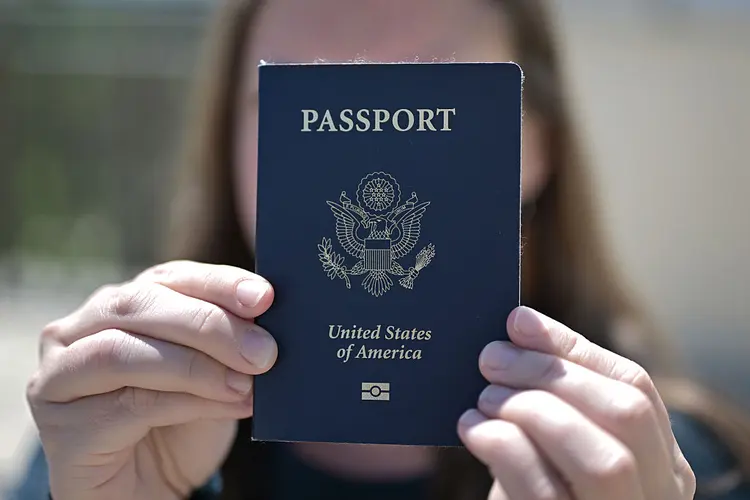
A decade ago, the United States passport was regarded as the most powerful travel document in the world, allowing citizens broad visa-free access across the globe. However, the latest Henley Passport Index for 2025 shows a dramatic shift, with the US passport falling out of the global top 10 for the first time in two decades.
The American passport has dropped from seventh place in 2024 to 12th place in 2025, tied with Malaysia, with visa-free or visa-on-arrival access to 180 destinations worldwide. The ranking reflects a growing decline in America’s global mobility influence compared to other leading nations.
Asian countries now dominate the top of the Henley Passport Index. Singapore holds the world’s strongest passport with access to 193 destinations, followed by South Korea with 190 and Japan with 189. Germany, Luxembourg and Italy are tied in fourth place, benefiting from expanding international travel agreements and visa-free arrangements.
Analysts say the sharp decline of the US passport is largely linked to stricter immigration and travel policies introduced during the administration of President Donald Trump. Experts argue that increasingly inward-looking policies have weakened America’s international standing and reduced travel reciprocity with other countries, the news agencies reports.
Christian Kaelin, chairman of Henley & Partners, said the weakening position of the US passport reflects broader changes in global influence and mobility. He noted that countries embracing openness and international cooperation are advancing, while nations relying on past advantages are losing ground.
The report also cited Annie Pforzheimer of the Center for Strategic and International Studies in Washington, who said the decline began even before a second Trump presidency. She argued that growing isolationist policies and tighter legal barriers to travel and temporary residence have raised concerns among international travelers.
Henley & Partners identified limited visa reciprocity as one of the main reasons behind the drop in the US ranking. While American citizens can travel visa-free to 180 destinations, the United States allows only 46 nationalities to enter without visas. In April, Brazil ended visa-free access for travelers from the US, Canada and Australia, citing a lack of reciprocal treatment.
The report also highlighted rising travel costs in the United States. The fee for the Electronic System for Travel Authorization (ESTA) nearly doubled in September 2025, increasing from $21 to $40, making travel to the US more expensive for foreign visitors.
Changes introduced by other countries further pushed the US down the rankings. China expanded visa exemptions for several European nations including Germany and France, but excluded the United States. Additional policy changes in Papua New Guinea, Myanmar and Somalia also reshaped the global passport rankings this year. Vietnam’s decision to exclude the US from its new visa-free travel list was described by Henley as another major setback for American passport strength.
The report also found a significant rise in Americans seeking alternative residency and citizenship options abroad. By the third quarter of 2025, applications from US citizens for second residency or citizenship programs had surged by 67 percent compared to the total recorded for all of 2024. Meanwhile, the United Kingdom also slipped in the rankings, though it remained inside the global top 10 in eighth place.