The Al Arfaj Flower Becomes Kuwait’s Symbol of Strength

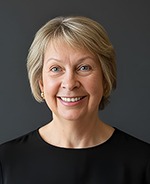
By Claudia Farkas Al Rashoud
Special to The Times Kuwait
A small, delicate yellow flower that blooms in the desert of Kuwait has become a symbol of strength, resilience and national unity in the face of armed conflict. Worn with pride in the shape of a badge, the Al Arfaj flower is at the heart of a grassroots campaign sweeping the nation. The flower badge was designed to express appreciation to all the people who are working on the front lines across all fields.
Just like those who are sacrificing for our safety, security and stability in the most challenging circumstances, the Al Arfaj flower thrives in the harshest conditions. It symbolizes tenacity, fortitude and strength under pressure. It is the national flower of Kuwait.
On their Instagram @alarfajflower the initiators of the campaign stated, “The Al Arfaj Flower Badge design is made available under a Creative Commons framework. It may be used, reproduced, and distributed for non-commercial and non-profit purposes.” The campaign quickly captured the hearts and minds of the residents of Kuwait and demand for the badge initially exceeded production.
The campaign organizers gave access to the design of the badge on their official website, www.alarfajflower.com, and now many people are making the badges using 3-D printers and distributing them free of charge.

The flower badge initiative is actively promoted on Instagram and is supported by many local companies, commercial outlets, organisations, and individuals. Scroll back to an image of the badge on @248am to get a partial listing of where they are available.
One example of private individuals who have taken up the campaign are the members of Al Bahar family in Rawda. In the evening they sit outside their home, serving tea to passersby and handing out flower badges. Nourah Al Bahar explains that she and her family are participating in the initiative in order to spread positivity and to teach their children about love and loyalty to their country.
Nourah’s four-year old daughter, Luolwah, proudly shows off a poster she made for the campaign. “During Ramadan we took Luolwah to help distribute food to the needy and she loved the experience,” says Nourah. “This campaign is a great way to get children involved in social activism, and now everyone in our family is taking part in the project.”
Nourah’s father, Abdulsalam Al Bahar, joins the discussion. “3-D printing is my hobby and I actually have six machines working around the clock producing Al Arfaj badges. In one day I made 1,300 badges.”
According to Abdulsalam, so many people in Kuwait are now making the badges that suppliers have run out of yellow filament, the long slender colored plastic thread that’s used for 3-D printing. “I’ve been using gold colored filament mixed with white to produce the yellow-gold color of the flower, while others are making them in white and then painting them yellow. That’s quite a time-consuming process, but it just goes to show how enthusiastic people are about this campaign.”

– Text and Photographs By Claudia Farkas Al Rashoud
Long before the invention of 3-D printers, during Kuwait’s pre-oil era, Al Arfaj bushes (Rhanterium epapposum) covered vast expanses of the desert. In Dame Violet Dickson’s book, “The Wildflowers of Kuwait and Bahrain” published in 1955, the author described the plant as a “perennial bush, with silver-colored stalks and olive-green leaves; in appearance the bush looks like lavender. The biggest bushes usually stand about three feet high…”
The shrub played a significant role in the lives of Kuwait’s bedouins, for not only did it provide excellent foodstuff for camels, sheep and goats but it also served as very efficient firewood, producing an intense flame. Enormous piles of Arfaj used to be loaded onto camels and taken to be sold in the souk. Up until the advent of oil it actually served as the country’s main source of fuel.
It was however, the development of the oil industry that indirectly led to the sharp decline of the plant. As Dame Violet Dickson observed, “Since the Oil Company opened up the Burgan Oil Field, the country has been denuded of Arfaj by workmen for firewood; a veritable dust bowl has been formed.”
Some twenty years ago, a decree outlawed the removal of the plant. It is now regarded as a national treasure and is experiencing renewed growth in certain areas.
Arfaj, like many other desert shrubs, has entirely bare branches throughout the long, hot summer, giving it the appearance of a withered bunch of dead sticks. But some six weeks after the autumn rains, the small, slim leaves appear followed by the golden blossoms later on in spring. Dame Violet Dickson wrote that when Al Arfaj was in full bloom, the desert took on a golden sheen.
In wake of the late heavy rainfall that Kuwait has enjoyed this year, parts of the desert are experiencing a super bloom of wildflowers. In the southern desert behind Al Zor chalets, Arfaj bushes grow in profusion, alongside prickly evergreen Ausaj shrubs, white and yellow desert daisies, and fragrant pale lavender Seliyh flowers. Butterflies and Basra nightingales dart between the bushes and the blossoms.
It is a peaceful, pastoral scene in which Kuwait’s brief but glorious spring expresses nature’s hope, joy, and renewal. In the magic of such a spectacle it’s easy to forget the war, but the golden Al Arfaj blooms provide a reminder of why a desert wildflower serves as the inspiration for a wartime solidarity campaign.
Printed on a card that comes with the Al Arfaj badge, a brief text states that the flower “reflects those on the front lines. They protect the nation and continue to give it strength so that, similar to the flower, the country returns stronger.”
Claudia Farkas Al Rashoud Originally from California, Claudia Farkas Al Rashoud has enjoyed working in Kuwait since 1979, when she became the first professional female photojournalist. She has written five books, with photographs, about Kuwait. Working as a freelance photographer for London-based picture libraries, her articles and photographs have appeared in many publications. She also serves as an ethnographic researcher and consultant.
Claudia has also worked in the field of animal welfare in Kuwait for many years. All proceeds from her books and other work benefit Touch of Hope Kuwait, the largest animal shelter in the country. As a founding board member of the Kuwait Society for Animal Welfare and director of the education program, she gives presentations on animal welfare for schools, universities and community groups. She also speaks on other subjects including Kuwait’s history, heritage, natural history and environment, journalism and photography, and palliative care.
Please see @claudia_alrashoud @touch_of_hope_q8 @ksaw_q8