The Times Kuwait Report
How can the story of Islamic civilization reach a generation that increasingly discovers history through smartphones, social media, streaming platforms and artificial intelligence?
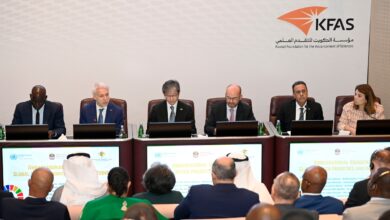
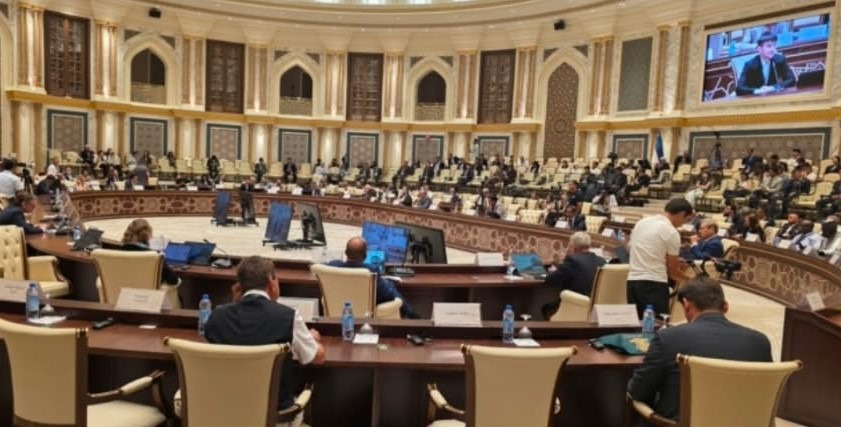
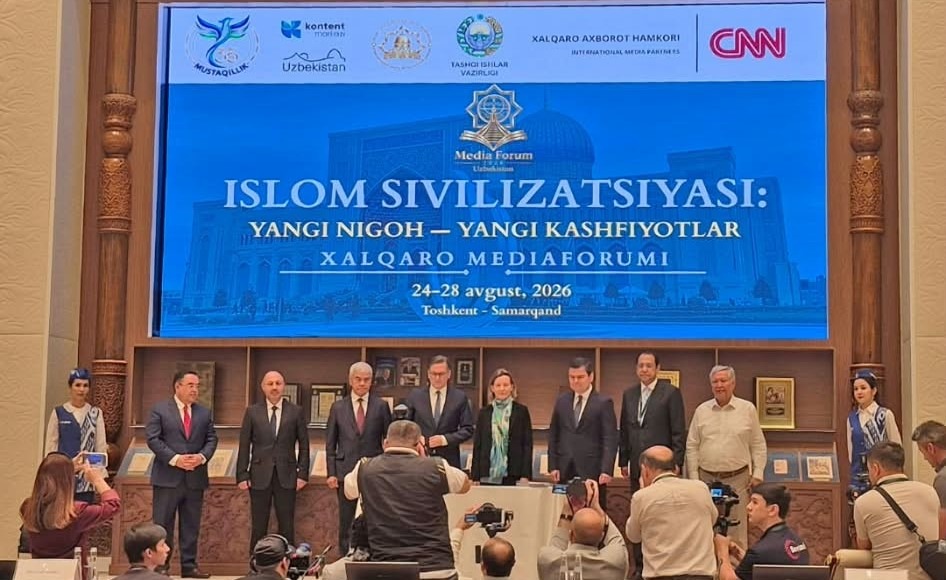
That question is at the heart of the International Media Forum, “Islamic Civilization: A New Perspective — New Discoveries,” underway in Tashkent from 24-28 August 2026 in Tashkent, Samarkand, where journalists, broadcasters, filmmakers, academics, publishers and digital-media professionals are examining how modern media can present Islamic civilization to global audiences.
Held at the Center for Islamic Civilization in Uzbekistan, the forum has brought together media professionals and experts from dozens of countries. Its central focus is not simply how to preserve Islamic heritage, but how to tell its story accurately, responsibly and in formats that connect with younger generations.
The discussions are looking beyond traditional journalism to documentaries, television, books, podcasts, social media, artificial intelligence and immersive technologies as tools for bringing the intellectual, scientific and cultural legacy of Islamic civilization to a wider audience.
A forum built around a media challenge
The forum comes at a time when audiences increasingly encounter history through digital platforms rather than traditional books and institutions. Participants are therefore examining how journalists and media organizations can transform manuscripts, monuments, scientific achievements and historical personalities into compelling stories without compromising accuracy.
A central message emerging from the discussions is that preserving heritage is only the beginning. The greater challenge is making the knowledge and human experiences behind that heritage meaningful to people living centuries later.
Islamic civilization produced generations of scientists, physicians, mathematicians, astronomers, philosophers, architects, writers and scholars whose work contributed to the development and transmission of knowledge across regions and centuries.
The forum is asking how those stories can move beyond academic circles and become part of mainstream media. For younger audiences, participants see opportunities in short-form video, podcasts, documentaries, interactive exhibitions and social-media storytelling.
Presenting the full story of Islamic civilization
Another major theme is the need to present Islamic civilization as a broad intellectual and cultural experience rather than viewing its history primarily through contemporary politics, conflict or security.
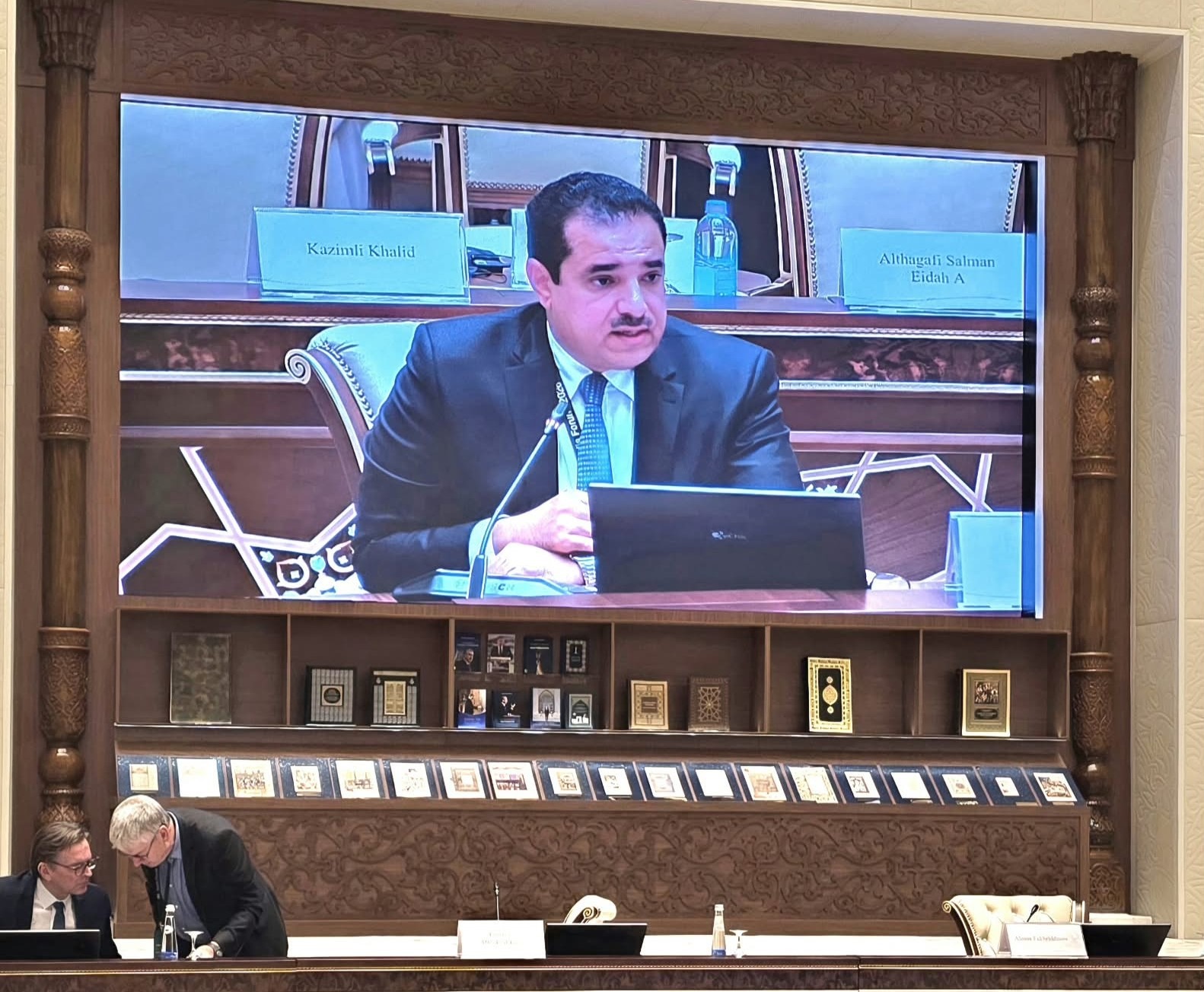
Its legacy includes contributions to mathematics, medicine, astronomy, philosophy, literature, architecture, education and scientific inquiry. Participants stressed that the objective is not to idealize the past, but to present its complexity and historical contribution more fully. The forum is therefore positioning media as a bridge between historical scholarship and contemporary audiences.
Uzbekistan seeks a larger international media role
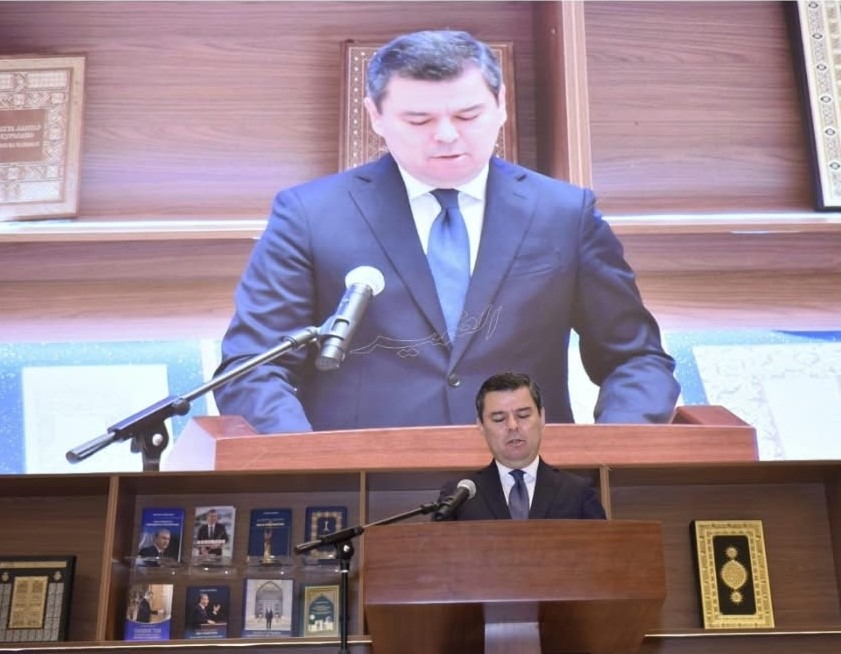
Opening the forum, Sherzod Asadov, press secretary to the President of Uzbekistan, described the gathering as carrying major symbolic significance because it seeks to present a centuries-old heritage that belongs to humanity as a whole.
He said preserving and communicating that heritage requires responsibility and trust, describing the forum as a platform for exchanging views and presenting Islamic civilization through modern approaches.
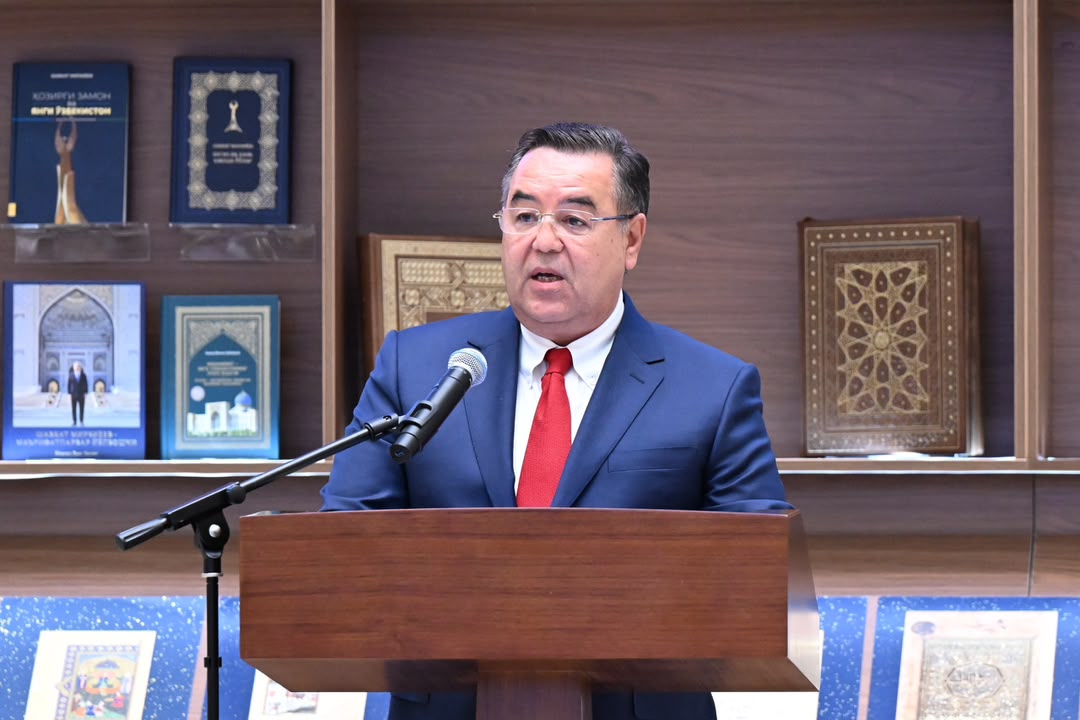
Dr. Firdavs Fridunovich Abdukhalikov, a prominent Uzbek cultural-heritage figure and the current Director of the Islamic Civilization Center in Uzbekistan also addressed the Forum.
Dr Abdukhalikov spoke during a plenary session that brought together about 300 media professionals, scholars, cultural figures and digital-media specialists from nearly 50 countries.
His central message was that the Islamic Civilization Center should function as a modern cultural, educational and media platform, rather than simply as a museum or repository of historical objects.
Klaus Strans, CEO and editor-in-chief of Euronews, highlighted Uzbekistan’s historical role in the spread of Islam and Islamic civilization and described the country as a bridge linking the Middle East and China.
Strans said international media rarely gives sufficient coverage to the history of Central Asian countries and emphasized Uzbekistan’s role in cooperation between East and West. His comments reinforced the forum’s broader call for greater international media attention to Central Asia’s historical and cultural heritage.
Center for Islamic Civilization at the heart of the initiative
The Center for Islamic Civilization in Uzbekistan is providing the institutional base for the forum and is being positioned as more than a place to preserve historical objects. The center brings together collections, manuscripts, research, educational programs and modern exhibition technologies. It also focuses on preserving and digitizing manuscripts and artefacts and documenting architectural traditions.
Its location is significant. Tashkent, Samarkand and Bukhara have played important roles in the development and transmission of Islamic scholarship. Firdaws Abdulkhalikov, director of the center, said historical studies alone are no longer sufficient to communicate Islamic civilization and that its heritage must also be presented through modern means.
He called for greater efforts to strengthen historical memory, communicate Islamic values to international audiences and address what he described as distorted portrayals of Islam. Abdulkhalikov said the center is not simply a heritage institution but also a platform for presenting and teaching Islam through modern methods.
International media partnerships
International media cooperation is another key issue at the forum. The center has partnerships with international media organizations and institutions and is seeking broader cooperation to bring stories about Islamic heritage and Uzbekistan to audiences worldwide.
Cooperation involving international broadcasters and media organizations is intended to develop documentaries, television programs, reports, books and digital projects focused on historical figures, cultural heritage and Uzbekistan’s development.
The forum is consequently treating media partnerships not simply as a means of coverage, but as a way to develop lasting international content around Islamic civilization.
Make the past meaningful to the future
Speaking at the forum, Tareq Yousef Al-Shumaimry, Editor-in-Chief of The Times Kuwait, said Islamic civilization should not be treated as a closed chapter of history. “Perhaps the greatest mistake we can make is to treat Islamic civilization as something that happened to us. It is something that continues to speak to us,” Al-Shumaimry said.
He stressed the responsibility of journalists and media professionals to make historical knowledge meaningful to future generations. “Our task as journalists and media professionals is not simply to preserve the past, but to make the past meaningful to the generation that will shape the future,” he said.
His remarks captured one of the forum’s central challenges: finding modern ways to communicate history while protecting its authenticity.
Our challenge is how we tell that history
The same issue was addressed by Reaven D’Souza, Executive Managing Editor of The Times Kuwait, during a forum discussion titled “Great Figures of Islamic Civilization Reimagined: How Can We Engage 21st-Century Audiences?”
D’Souza noted that Islamic civilization produced scientists, physicians, mathematicians, philosophers, astronomers, architects, writers and thinkers whose ideas travelled far beyond their own time and geography.
But he asked whether their stories are being told in ways that today’s audiences want to hear. “Our challenge is not a lack of history. Our challenge is how we tell that history,” D’Souza said.
He argued for moving beyond lists of achievements and dates to explore the human stories behind historical figures, their curiosity, motivations, challenges, discoveries and journeys. That approach, he said, can make centuries-old personalities more relatable to modern audiences.
Technology expands the possibilities
Technology is creating new tools for this work. Artificial intelligence can help digitize and organize large collections of manuscripts. Virtual and augmented reality can recreate historical environments. Documentaries can combine archival material with modern production techniques, while social media can bring historical stories to large audiences.
But participants stressed that technology cannot replace journalism. Research, verification, historical expertise and responsible storytelling remain essential. The aim is not simply to make history entertaining, but to make it accessible without sacrificing accuracy.
Young journalists join the conversation
The forum is also focusing on the next generation of media professionals. The Center for Islamic Civilization and the University of Journalism and Mass Communication of Uzbekistan have agreed to cooperate on a scientific and educational program for young journalists.
The program will combine education, research, training courses and media projects focused on Uzbekistan’s history, culture and scientific heritage.
The initiative reflects the forum’s recognition that future cultural storytelling will require journalists who understand both historical research and the digital technologies through which modern audiences consume information.
From preserving the past to speaking to the future
The Tashkent forum is ultimately seeking to change the way Islamic civilization is communicated. The question is no longer only how to protect manuscripts, monuments and artefacts, but how to make the knowledge and stories they represent relevant to a new generation.
Islamic civilization was shaped by scholarship, curiosity, dialogue, travel and the exchange of ideas. Those themes can now be carried through modern media to audiences far beyond the institutions where historical material is preserved.
For the forum’s participants, the task is clear: turn heritage into stories, history into human experience and knowledge into a conversation with the future.
That makes the Tashkent gathering more than a discussion about media. It is an effort to determine how one of the world’s major intellectual and cultural legacies will be understood by the generations that come next.