Sri Lanka’s tea industry, long considered one of the country’s most important economic pillars, is facing mounting pressure from rising global energy costs, trade disruptions, and weakening export demand linked to geopolitical tensions.
Valued at around US$1.5 billion, the tea sector is a major employer, supporting approximately 2.4 million people across plantations, factories, and related services. However, households dependent on the industry are increasingly struggling as rising production and living costs erode already low wages.
A significant share of Sri Lanka’s Ceylon tea exports, nearly half, worth about US$680 million annually, goes to Middle Eastern markets. This heavy reliance has made the sector particularly vulnerable to instability stemming from the ongoing conflict in the region, which has disrupted shipping routes and reduced demand from key importers.
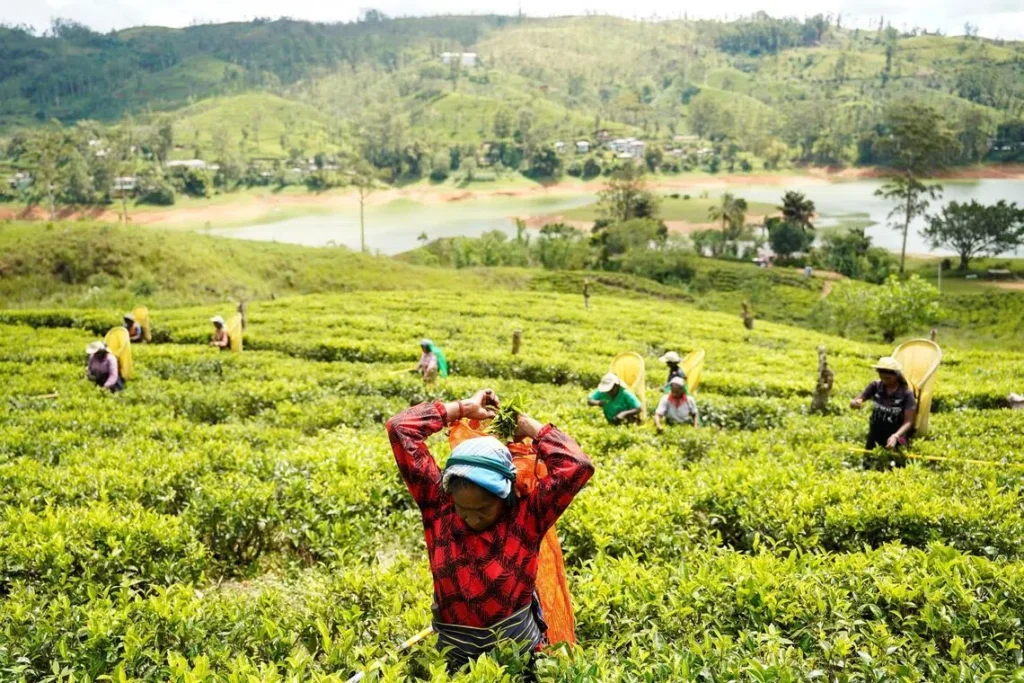
Nearly half of Sri Lanka’s Ceylon tea exports, worth about US$680 million annually, are shipped to Middle Eastern markets, making the industry particularly exposed to regional instability.
Recent export data shows tea earnings fell 17.3% year-on-year in March to US$114.75 million, with sharp declines in shipments to key buyers such as Iraq and the United Arab Emirates.
At the grassroots level, plantation workers remain among the lowest-paid segments of the workforce, earning only slightly above the national minimum wage.
Workers on tea plantations typically earn between 1,350 and 1,750 Sri Lankan rupees (S$5.00–S$6.50) per day, only slightly above the national minimum wage of 1,200 rupees. More than half of these workers live below the World Bank’s lower-middle-income poverty threshold of US$3.65 a day.
Industry representatives warn that the situation is contributing to broader social challenges, including higher school absenteeism, reduced nutrition, and migration from plantation areas to urban centers in search of better opportunities.
Exporters are also feeling the pressure. Major tea companies with global footprints report rising logistics costs, shipping delays, and inflationary pressures affecting supply chains. While firms have so far absorbed part of the additional costs, sustained increases in fuel and freight prices are becoming increasingly difficult to manage.
The wider Sri Lankan economy is also under stress, with fuel price hikes, energy rationing, and austerity measures adding to operational challenges across sectors.
Overall, the tea industry remains a vital but vulnerable backbone of Sri Lanka’s economy, highly dependent on external markets and exposed to global shocks, with workers at the plantation level bearing much of the economic burden.