Kuwait leads Gulf in liquidity strength as banks brace for war fallout
S&P highlights resilient Gulf banks amid crisis, roll out war support measures

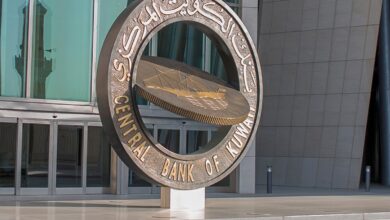
A recent report by S&P Global Ratings has confirmed that the Central Bank of Kuwait has implemented a series of measures to strengthen liquidity across the banking sector, positioning the country among the most resilient in the Gulf amid ongoing geopolitical tensions.
The measures include reducing the liquidity coverage ratio and net stable funding requirements to 80 percent, alongside raising the loan-to-deposit ratio ceiling to 100 percent.
These steps form part of broader support packages introduced by central banks across the Gulf to mitigate the economic impact of the war in the region, reports Al-Rai daily.
According to the report, monetary authorities in Kuwait, the UAE, and Qatar have adopted relief policies aimed at enhancing liquidity access and providing temporary regulatory flexibility.
These include permitting banks to defer loan repayments and interest for individuals and businesses affected by the crisis.
In the UAE, key measures have included allowing banks to access up to 30 percent of mandatory cash reserves, alongside offering liquidity facilities in both local and foreign currencies, and easing capital buffer requirements.
Similarly, Qatar has reduced reserve requirements to 3.5 percent, introduced short-term repo facilities, and allowed affected borrowers to defer payments for up to three months.
S&P noted that while there is potential for funds to shift toward safer institutions within the banking system, Gulf banks have so far avoided any significant outflows of domestic or foreign funding.
The report highlighted Kuwait’s exceptional liquidity position, with liquid assets estimated at approximately 517 percent of its projected 2026 GDP, the highest in the Gulf, compared to 211 percent for the UAE and 181 percent for Qatar. It also indicated that Saudi Arabia retains strong capacity to support its domestic banking sector if required.
The agency maintained a stable outlook for most Gulf banks, citing robust capital buffers and asset quality. The average Tier 1 capital ratio for major banks is expected to reach 17.1 percent by the end of 2025, while non-performing loans remain low at 2.5 percent, supported by strong provisioning coverage.
Looking ahead, S&P revised its expectations for US interest rate cuts, projecting a modest reduction of 25 basis points in 2026, down from earlier forecasts of 50 basis points prior to the war. This adjustment is expected to provide partial support to bank profitability across the region.
Despite an anticipated slowdown in economic growth, the agency affirmed that Gulf banks remain well-positioned to continue lending and supporting domestic economies. The option to defer loan repayments is expected to provide critical relief for affected companies, allowing them to navigate short-term financial pressures.
Petrochemical Sector Faces Prolonged Disruptions
In a parallel assessment, S&P examined the impact of the crisis on the Gulf’s petrochemical sector, noting that while shipping activity through the Strait of Hormuz is expected to gradually improve in the near term, disruptions are likely to persist for several months due to ongoing geopolitical uncertainty.
The agency warned that higher petrochemical and fertilizer prices may not fully offset supply disruptions and declining inventories, potentially leading to pressure on operating margins and rising debt levels among companies in the sector.
While the geographic diversification and financial strength of Gulf petrochemical firms may cushion near-term impacts, S&P cautioned that prolonged instability could erode credit quality and narrow rating headroom, underscoring the high level of uncertainty surrounding the current crisis.