From May 3, secondary school students resume classroom studies
. . . as Kuwait marks safe return to classroom learning

High schools in Kuwait will reopen on Sunday to receive students, marking the resumption of in-person learning in a step that reflects the country’s firm approach to balancing educational field safety as a top priority with sustaining the learning process.
Since the onset of the exceptional circumstances caused by the Iranian aggression, the State demonstrated notable flexibility by swiftly transitioning to distance learning, relying on advanced digital infrastructure and continuously updated platforms to ensure smooth and uninterrupted education delivery.
On the organizational level, the Ministry of Education adopted a detailed plan via Microsoft Teams, setting five daily classes of 25 minutes for theoretical subjects, while kindergartens followed a non-synchronous system with four recorded sessions daily, and adult education centers maintained five classes.
Technical support teams across educational districts were tasked with resolving platform issues, while the Information Systems Department ensured system efficiency and cybersecurity, addressing any technical challenges or threats to digital infrastructure promptly.
The Ministry also updated the “Salem and Abeer” application to align with kindergarten curricula, offering interactive content including questions, activities, and educational games tailored to young learners. In response to prevailing conditions, short exams were postponed on March 9 and again on March 24 to ease psychological pressure on students, before introducing an “achievement assessment” mechanism on April 19 as an alternative evaluation method for core subjects.
Further adjustments included revising school hours for secondary students, with a schedule running from 9:00 a.m. to 1:15 p.m., comprising six 35-minute classes daily to enhance learning quality and content distribution.
Educational continuity was maintained through coordinated efforts among school administrations, technical supervision, and teaching staff, ensuring lessons and assessments proceeded smoothly via digital platforms.
To enrich learning resources, the Ministry launched a digital library with 1,417 digitized books and documents, while also executing a comprehensive plan to deliver school textbooks to students’ homes through 500 service points using school buses and available logistical resources.
Parallel to crisis management, development efforts continued through initiatives such as the artificial intelligence project, specialized training workshops for outstanding students, and programs to identify and nurture talent.
The Ministry also began preparations for the 2026/2027 academic year by conducting detailed studies on staffing needs, organizing transfer requests, and carrying out field inspections to ensure school safety and maintenance through “Balligh” platform.
In promoting community partnership, the Ministry analyzed results of a public survey on curricula via the government “Sahel” application, aiming to incorporate feedback from educators and parents into continuous improvement efforts.
Psychological support was reinforced through activating “IstaShir” platform, providing confidential social and mental health consultations by qualified national professionals to support students and their families.
Minister of Education Jalal Al-Tabtabaei has chaired a series of meetings since February 28 to closely monitor the educational process and ensure continuity under the highest safety standards, stressing that student welfare remains the central pillar guiding all decisions.
The Ministry emphasized ongoing coordination with relevant state bodies to monitor developments and ensure that all measures prioritize safety while maintaining stability of the educational system.
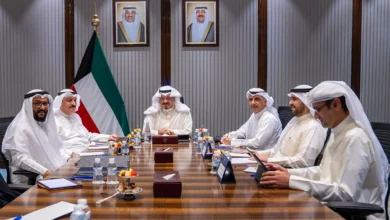
The Cabinet had approved the return of in-person attendance for all secondary students and staff starting Sunday, with the Ministry affirming full readiness to implement the decision through a comprehensive and organized plan.
It noted that all administrative and organizational details related to the return would be announced, alongside integrated plans for each educational stage to ensure efficiency, stability, and balance between the rights and duties of students and teachers.
Kuwait had shifted to distance learning across all stages on February 28 following more than 40 days of Iranian aggression, which resulted in casualties, including the martyrdom of members of the Kuwaiti armed forces and border security personnel, as well as injuries and damage to infrastructure.
— KUNA