By Reaven D’Souza
Executive Managing Editor
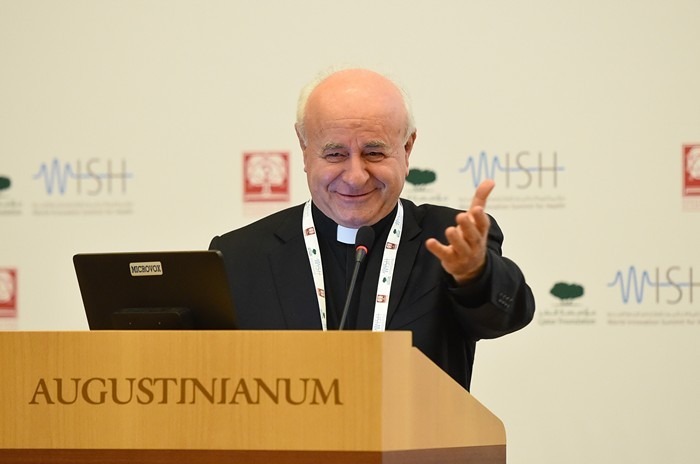
Global health leaders and communities must foster a “culture of care” rather than a “community of neglect” when it comes to the treatment of the elderly, with palliative care at the forefront of relieving the suffering of older members of society during their final days. The elderly can no longer be “pushed to the margins of society,” Archbishop Vincenzo Paglia, president of the Vatican’s Pontifical Academy for Life (PAL), said.
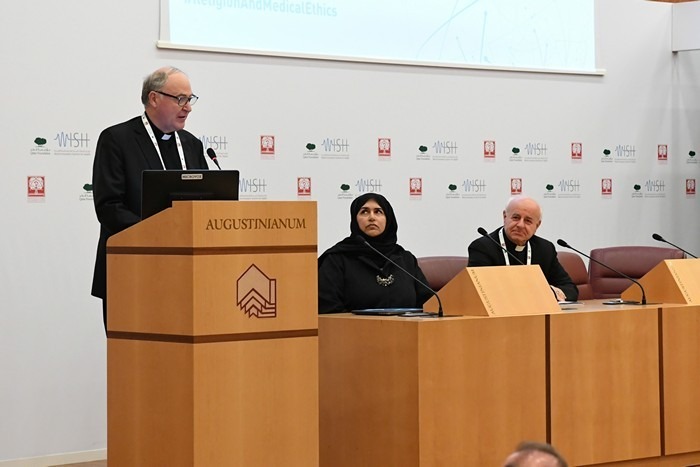
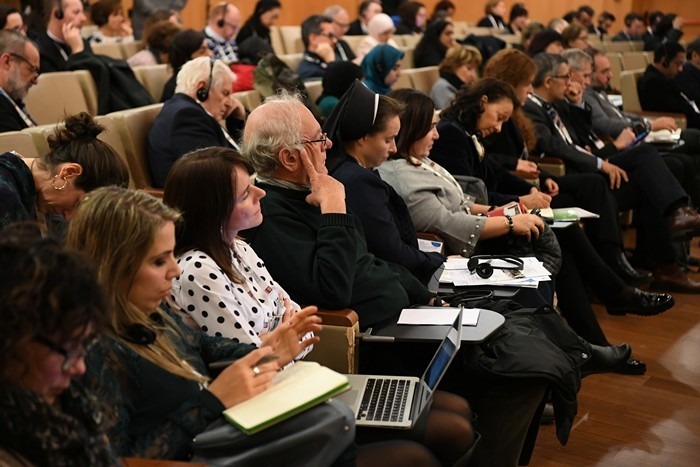
The archbishop was speaking on the opening day of the ‘Religion and Medical Ethics: Palliative Care and the Mental Health of the Elderly’ symposium held recently in Vatican City. Organized jointly by the World Innovation Summit for Health (WISH), an initiative of Qatar Foundation, and PAL, the Rome symposium aimed to address the treatment of patients facing life-threatening illness and death, with a focus on interfaith dialogue and the challenges and barriers facing palliative care worldwide. The symposium was attended by hundreds of medical practitioners and media representatives from around the world.
In his address, Archbishop Paglia stressed that the world is in urgent need of a “palliative care movement.” “Together with all religions, we have to improve knowledge in the application of palliative care,” he said. “There is a great deal of ignorance about palliative care, and we run the risk of abandonment. We do not want a culture of abandonment; we want a culture of accompaniment and a culture of love. In my opinion, all people of all religions are in agreement with this.”
Archbishop Paglia praised WISH for co-organizing the symposium, saying the issue of palliative care has never been more pressing. “The themes reflected in this congress, palliative care and mental health in old age, are two important areas, not only for healthcare, but also for the future of our societies,” he said. “All too often, terminally ill patients and the elderly, especially those affected by mental illness, are pushed to the margins of society and it is believed they have nothing more to offer, or that they are a burden. The Pontifical Academy for Life is committed to promoting a culture of palliative care, not only within the community of believers but everywhere in the world.”
Archbishop Paglia said the Vatican City symposium followed a productive previous meeting in Doha that reflected on euthanasia, assisted suicide and the promotion of palliative care within “the two great traditions; the Islamic tradition and the Christian tradition.” Emphasizing that interfaith discussions are critical to ensuring compassion and dignity for every person in the final stages of life, he said, “I believe you have to have strong [inter-faith] friendships, because that allows us to better understand not only our traditions, but also our future together.” He added that “palliative care is a human right” and that the true human right is “the right to be recognized and accepted as a member of society, as part of the one and only human family.”
According to Archbishop Paglia, palliative care provides support not only from a medical standpoint but also from a human and cultural perspective. “The goal of healing is fundamental in today’s medicine,” he explained. “This means that when you can no longer heal, medicine believes it has failed. However, medicine can always treat even when it cannot heal. This is one of the pillars we must highlight.”
He said the medical community must recognize that stopping treatment when it can no longer help does not equate to abandonment. “It is not true that there is nothing more to do, because presence and accompaniment are also important,” he said. “Holding a patient’s hand and offering to talk is important. We must always help to weaken suffering by offering love.” He called for a renewed culture of accompaniment until the time of death, noting that proper palliative care and pain therapy can also help governments reduce healthcare costs and develop new approaches to medical care.
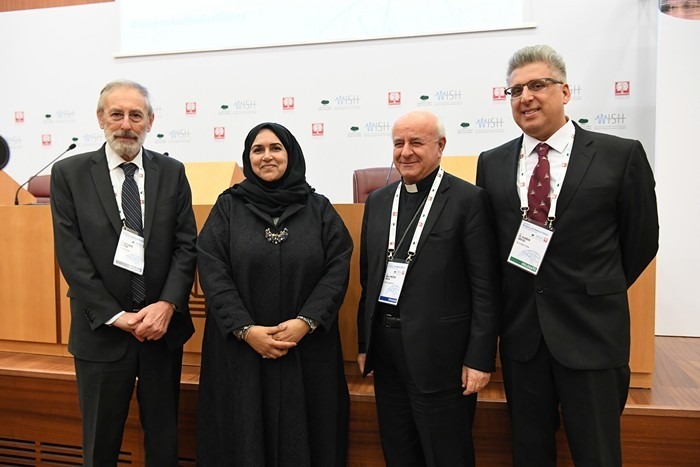
Archbishop Paglia also called for greater focus on pediatric palliative care and the mental health of the elderly, noting that longer life expectancy has brought an increase in serious conditions such as Alzheimer’s disease and dementia. “Weakness is often seen as a form of guilt. We must change this perspective, and promote acts of solidarity and love in times of weakness,” he said, describing palliative care as effective not only medically but also as a tool for “global humanism.”
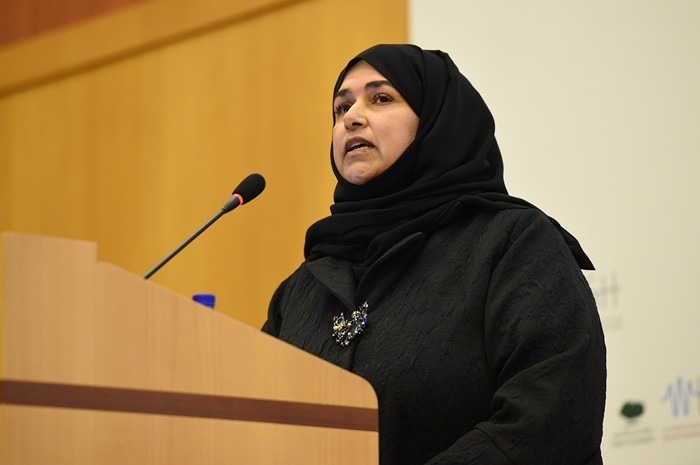
In her welcome remarks, WISH CEO Sultana Afdhal pointed out that many Muslim-majority countries lack codified palliative care laws, hospital guidelines or national policies, leaving healthcare professionals vulnerable to malpractice and liability charges. She said controversy surrounding palliative care was rooted in the accepted view that healthcare personnel have a duty to help people live rather than help them die, while no human has the right to end another person’s life. However, she raised the question of how healthcare systems should respond when death is inevitable and continuing treatment amounts to little more than prolonging suffering.
In 2018, WISH published a report on Islamic ethics and palliative care addressing some of these issues. The report was discussed at the biennial WISH global summit held in Doha last November, which attracted more than 2,000 healthcare leaders from around the world. The report recommended prioritizing policies relating to end-of-life care and emphasized the need to raise public awareness.
Earlier this year, WISH signed a declaration on palliative care with the Pontifical Academy for Life. The declaration was later used as the basis for a positioning paper on palliative care, signed by a large group of Abrahamic faith leaders and presented by Archbishop Paglia to the Pope.
Since WISH was launched in 2012, its mission has been to build a healthier world through global collaboration. Its presence in Vatican City was therefore seen as a natural progression in its efforts to promote dialogue between people of faith and medical experts on issues that have a profound impact on individuals, families, communities and healthcare workers.
WISH provides a platform for global experts and stakeholders to meet and discuss key healthcare issues. Its parent organization, Qatar Foundation, is a Doha-based non-profit organization with nearly 25 years of experience in education, science and community development in Qatar and around the world.
Afdhal said WISH wanted to initiate conversations with genuine potential to benefit humanity as a whole, regardless of individual beliefs. She emphasized that interfaith and interdisciplinary medical dialogue on palliative care and the mental health of older people is essential to establishing common ground and finding more effective ways to bridge differences in faith-based ethical approaches.