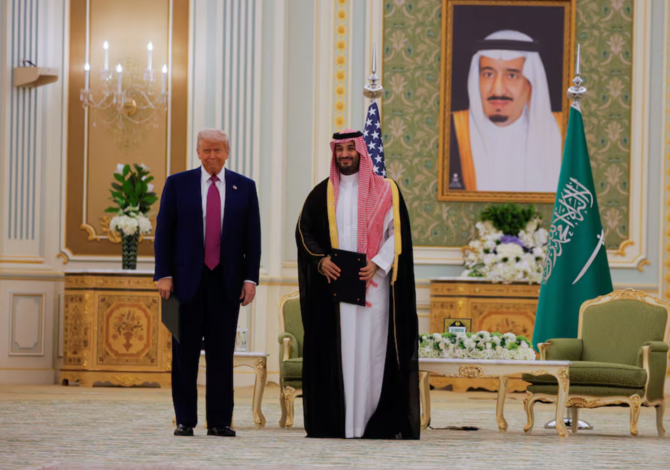
Saudi Crown Prince and Prime Minister Prince Mohammed bin Salman and US President Donald Trump have reaffirmed the importance of diplomacy in addressing the ongoing regional crisis, as tentative signs of a possible breakthrough emerged in the five-month conflict involving Iran, Saudi daily Arab News reported.
During a telephone conversation on Sunday, the Crown Prince underscored Saudi Arabia’s longstanding position that dialogue remains the only sustainable path to restoring stability in the Middle East. According to the Saudi Press Agency (SPA), he stressed the need to prioritize diplomatic engagement and intensify efforts toward securing a truce that could pave the way for a comprehensive political settlement.
Prince Mohammed warned that continued escalation risks widening the conflict, with potentially serious consequences for both regional and international security, reaffirming the Kingdom’s commitment to supporting initiatives aimed at preserving peace and stability.
The conversation came shortly after President Trump announced that he had decided to suspend planned military strikes against Iran, saying discussions involving regional partners had produced the framework of a potential agreement to halt hostilities.
In a statement posted on social media, Trump said the proposed understanding would include the immediate reopening of the Strait of Hormuz and measures to eliminate what he described as Iran’s nuclear threat. He added that he had agreed to halt further attacks “for the future benefit of the world” and expressed hope that the move would create conditions for a broader diplomatic agreement. Trump also said Israel supported the decision.
The announcement marked a notable shift after days of increasingly aggressive rhetoric from Washington, where officials had suggested renewed military action remained under consideration if Tehran failed to return to negotiations.
Iran, however, swiftly rejected Trump’s claims. State media, quoting military officials, dismissed the assertion that Tehran had requested Washington to refrain from launching additional strikes, describing it as “false” and insisting that Iran’s armed forces remain on full operational readiness to respond to any military action.
The latest diplomatic developments unfold against the backdrop of a conflict that began on February 28, when the United States and Israel launched coordinated military operations against Iranian targets. Washington said the campaign aimed to degrade Iran’s missile capabilities, prevent it from acquiring nuclear weapons, and curb its support for regional armed groups.
Despite intermittent diplomatic initiatives—including a ceasefire effort earlier this year—the conflict has repeatedly reignited, leaving the region in a prolonged state of uncertainty.
While hopes for renewed negotiations have emerged, security concerns remain widespread across the Middle East. The United States has advised its citizens in several regional countries to remain vigilant and be prepared for possible emergency departures, citing the risk of sudden escalation.
Recent incidents have reinforced those concerns. A drone strike targeted a US-owned gas vessel at an Egyptian port last week, causing a fire, while an unidentified projectile struck a commercial tanker off the coast of Oman. Investigations into both incidents are continuing.
Meanwhile, the Strait of Hormuz remains one of the conflict’s most critical flashpoints. Iran continues to exercise significant control over navigation through the strategic waterway, requiring commercial vessels to obtain authorization before transiting. Maritime intelligence firms report that shipping traffic through the strait has declined sharply since the conflict erupted, reflecting persistent concerns over security and the uninterrupted flow of global energy supplies.
Although no formal peace agreement has yet been announced, Sunday’s high-level engagement between Riyadh and Washington signals renewed diplomatic momentum. Whether these efforts translate into a durable ceasefire will largely depend on the willingness of all parties to move from military confrontation toward meaningful negotiations.
For Saudi Arabia, the message remains consistent: lasting regional stability can only be achieved through dialogue, restraint, and diplomacy rather than continued escalation.