Kuwait is preparing to turn seven historic buildings and sites into commercial, hotel and cultural destinations as part of a broader plan to unlock the economic value of heritage assets, attract private investment and revitalize the capital’s city center.
The initiative marks a shift in the way the government views historic properties, moving beyond the traditional approach of spending on restoration and maintenance towards finding sustainable uses that can generate revenue, support businesses and preserve Kuwait’s architectural and cultural identity.
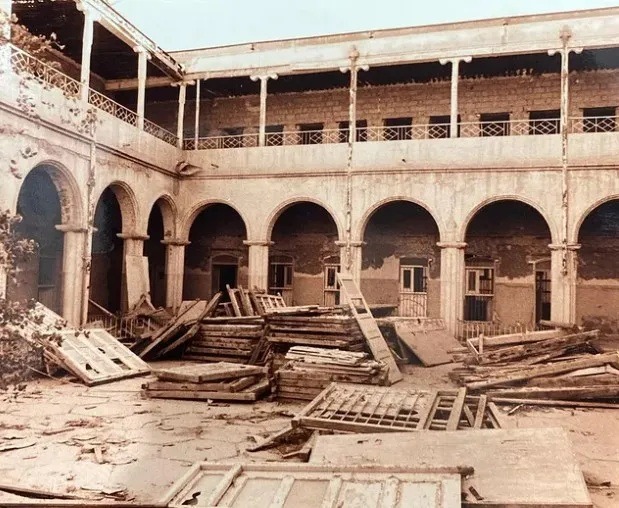
The initial development plan covers the Mishref Palace, the old Chest Hospital and Al-Mubarakiya School. Four additional sites that are being considered are Fahad Al-Salem Palace, the Awqaf Complex, the Palace of Justice and Safafir Market, also known as the Coppersmiths’ Market.
The authorities are also examining a proposal to revive the Qibla Cultural District by connecting unused spaces and heritage locations into an integrated cultural and commercial destination.
The Public-Private Partnership Projects Authority has already presented a project to prepare and develop educational infrastructure for the creative economy under the National Council for Culture, Arts and Letters’ strategic roadmap.
The first phase focuses on the three initial locations, while the National Council, in cooperation with the Public Authority for Industry and the Ministry of Finance, is studying how the other sites could be incorporated into the development program.
The proposals offer different investment possibilities based on the character and location of each property. Fahad Al-Salem Palace, opposite the Amiri Hospital, is being considered for conversion into a boutique hotel or entertainment destination, subject to site assessments and feasibility studies.
The Palace of Justice could be repurposed as a heritage hotel hosting cultural events and activities, while the Al-Mubarakiya School could be linked more closely to the traditional market and used for design, architecture and urban planning activities.
Safafir Market is expected to play a crucial role in developing the creative economy by moving beyond its traditional retail function and becoming a center for crafts, creative manufacturing and related productive activities.
The National Council has submitted a proposal to the Public Authority for Industry to use the market as part of efforts to revive central Kuwait City, attract private-sector investment and create opportunities for local craftspeople and creative businesses.
The proposed revival of the Qibla Cultural District would connect Qibla School, the National Museum and the National Library with the Al-Mubarakiya School and the inner market. The aim is to create a more connected urban destination capable of attracting cultural, commercial and tourism activities.
The Awqaf Complex is also under review, with authorities examining a more integrated economic and cultural use for the property. The assessment takes into account its high capital cost and the challenges of achieving strong occupancy rates in central Kuwait City.
The plan extends beyond heritage buildings to the country’s network of 56 public libraries. Authorities are considering ways to expand their role as spaces for learning, research, design and innovation, while hosting exhibitions, workshops, professional programs and cultural events in cooperation with private-sector companies and cultural institutions.
The proposals also seek to diversify funding, improve operational efficiency and measure the libraries’ wider social, educational and economic contribution. For investors, the proposed program could open opportunities in hospitality, cultural tourism, creative manufacturing, design, event management and the operation of heritage properties. It could also create business opportunities for small enterprises, designers, artisans and other professionals linked to the creative industries.
However, the projects remain at the conceptual, feasibility-study and private-sector consultation stages. No investment requirements, projected financial returns or implementation schedules have yet been announced.
Their commercial viability will depend on the development models adopted, operating costs, investor participation and the ability to attract sustained demand without compromising the heritage value of the properties.
Legislative framework
Alongside the property development plan, government agencies are working with the Ministry of Finance, the Civil Service Bureau and the Fatwa and Legislation Department to prepare a draft decree-law governing creative industries.
The proposed legislation is intended to provide a more flexible framework for cultural and creative businesses, allowing the National Council to expand partnerships with private investors and attract creative talent.
It is also expected to establish clearer arrangements for financing, project operation and risk management, helping ensure the long-term sustainability of investments while protecting the cultural and historical value of the assets.
The initiative comes as Kuwait seeks to diversify its sources of income and strengthen its knowledge-based economy. By putting underused public properties to productive use, the government aims to combine heritage preservation with commercial activity, support local businesses and position Kuwait as a regional destination for design and creative industries.