FBCK talks highlights strategic sovereignty and infrastructure security
“No country is fully sovereign,” Dr. Khaled A. Mahdi said during the French Business Council Kuwait’s FBCK Talks, stressing that in today’s interconnected world, true strategic sovereignty lies not in isolation, but in a nation’s ability to act independently, secure essential resources, and maintain resilience during crises through strong institutions, technological capability and operational autonomy.
The Times Kuwait Report
In a timely gathering focused on resilience, strategic autonomy, and long-term economic cooperation, the French Business Council Kuwait (FBCK) hosted a new edition of its FBCK Talks at the Residence of France, bringing together policymakers, business leaders, and strategic thinkers to examine how nations and institutions can navigate an increasingly uncertain global environment.
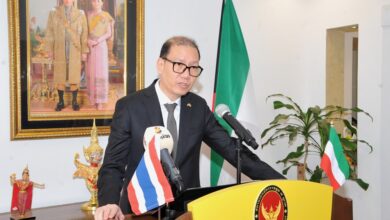
Hosted by His Excellency Olivier Gauvin, Ambassador of France to Kuwait, the event centered on the theme, “Post-Crisis Opportunities and Strategic Sovereignty: Building Autonomy for a Resilient Future,” reflecting the growing urgency of strengthening resilience amid geopolitical uncertainty, economic disruptions, and evolving global dependencies.
Welcoming participants, Ambassador Gauvin described the FBCK Talks as a growing platform for Franco-Kuwaiti economic dialogue, emphasizing its importance not merely as a conference series, but as an interactive forum where strategic conversations evolve into meaningful partnerships, institutional cooperation, and future business opportunities.
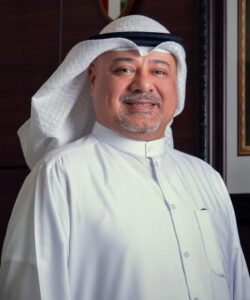
Former Secretary-General of Kuwait’s Supreme Council for Planning and Development
The event brought together two distinguished speakers—Dr. Khaled A. Mahdi, former Secretary-General of Kuwait’s Supreme Council for Planning and Development, and Sabry ElKady, Chief Operating Officer of Veolia Arabia—offering complementary perspectives from strategic public policy and operational industrial resilience.
Dr. Mahdi delivered a thought-provoking keynote exploring the evolving meaning of sovereignty in today’s interconnected world, challenging traditional assumptions about national independence.
He drew a critical distinction between formal sovereignty and strategic sovereignty, arguing that while nations may possess internationally recognized borders, institutions, and diplomatic legitimacy, true sovereignty is tested during crises—when countries must demonstrate the capacity to act independently, secure essential resources, protect vital infrastructure, and absorb external shocks without losing operational stability.
“No country is fully sovereign,” Dr. Mahdi observed, noting that modern globalization, digital interdependence, and complex international supply chains have fundamentally changed the meaning of autonomy.
Rather than viewing sovereignty as absolute independence, he argued that the more relevant concept today is strategic autonomy—the practical ability of nations to make independent decisions and sustain resilience under pressure.
Drawing from French political thought, Dr. Mahdi referenced the long-standing strategic philosophy that sovereignty requires not simply political legitimacy, but capability, institutional strength, and national preparedness.
He emphasized that strategic sovereignty rests on five critical pillars: energy sovereignty, industrial sovereignty, technological sovereignty, financial sovereignty, and institutional sovereignty.
Expanding on these pillars, Dr. Mahdi stressed that energy security is no longer simply about resource ownership, but about diversification, resilience, and reliability. Industrial sovereignty, he said, has become increasingly important as global crises exposed dangerous dependencies in supply chains and manufacturing systems.
He also highlighted technological sovereignty as a growing strategic concern, particularly in an age dominated by artificial intelligence, cybersecurity risks, foreign software dependencies, and digital infrastructure vulnerabilities.
Financial sovereignty and institutional governance, he argued, are equally essential, as economic resilience and effective implementation ultimately determine whether ambitious national strategies can be translated into practical outcomes.
Referencing France’s investment in nuclear energy and Singapore’s transformation of water scarcity into strategic resilience, Dr. Mahdi emphasized that strategic sovereignty is not about isolationism or disengagement from globalization, but about participating in the global economy from a position of strength.
For Kuwait and the wider GCC, he stressed that the real challenge is not formal sovereignty, but capability-building developing human capital, resilient institutions, and operational autonomy that can withstand future crises.
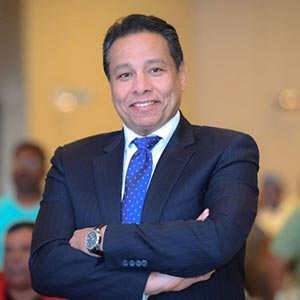
COO of Veolia Arabia
Complementing this strategic perspective, Sabry ElKady, COO of Veolia Arabia, delivered a practical industry-focused assessment of resilience in modern infrastructure systems.
ElKady noted that recent global crises have fundamentally reshaped corporate and governmental priorities, accelerating investments in sectors considered essential to operational continuity and national resilience, including water, energy, oil and gas, environmental services, and industrial infrastructure. He emphasized that while crises inevitably create disruption, they also generate opportunities for innovation, transformation, and strategic repositioning.
Drawing on Veolia’s international expertise, ElKady explained that resilient organizations are built not merely on capital investment, but on strong technical know-how, highly skilled personnel, autonomous operational capabilities, secure supplier ecosystems, and rapid-response infrastructure.
He noted that access to critical spare parts, chemicals, mobile utility systems, and emergency deployment solutions has become indispensable for maintaining operational continuity during disruptions.
ElKady also highlighted the increasing importance of mobile water treatment systems and rapid deployment utility services, particularly in emergency scenarios where infrastructure continuity becomes mission-critical. Looking specifically at Kuwait, he expressed confidence that the country will continue prioritizing strategic infrastructure investment in desalination, industrial water security, oil and gas support systems, waste optimization, and energy efficiency as part of its broader modernization agenda.
With more than 170 years of global experience, Veolia remains well positioned to support Kuwait’s future mega projects through expertise in industrial water management, environmental services, utility optimization, emergency response capabilities, and digital infrastructure solutions.
The event concluded with an interactive Q&A session and networking reception, reinforcing the French Business Council Kuwait’s growing role as a bridge between French expertise and Kuwait’s development ambitions.
As geopolitical uncertainty continues to redefine strategic priorities worldwide, the discussions highlighted a shared understanding that resilience, strategic autonomy, and strong international partnerships will remain central to sustainable economic growth and long-term stability.