Unified national effort drives Kuwait’s vision to advance human dignity
. . . and international accountability

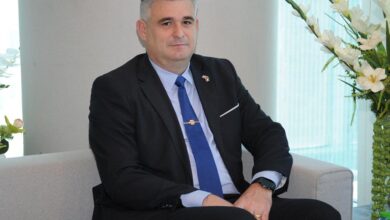
Assistant Foreign Minister for Human Rights Affairs and Head of the National Standing Committee for the Preparation of Reports and Follow-up on Recommendations Related to Human Rights, Ambassador Sheikha Jawaher Ibrahim Duaij Al-Sabah, underscored the critical role of institutional coordination in showcasing
Kuwait’s national efforts to meet its international obligations and strengthen human rights across all sectors.
She said this in her address to the representatives from prominent academic and training institutions, including the Kuwait Institute for Judicial and Legal Studies, the Saud Nasser Al-Sabah Diplomatic Institute, colleges affiliated with the ministries of Defense and Interior, Kuwait University, and the Public Authority for Applied Education and Training, during the key meeting of the Standing National Committee on Tuesday, reports the Kuwait News Agency.
The meeting coincided with Kuwait entering its third year of membership in the United Nations Human Rights Council, a milestone that further underscores the country’s commitment to international human rights frameworks.
Al-Sabah emphasized the importance of maintaining regular coordination meetings to deepen collaboration with national stakeholders, particularly academic and research institutions. She noted that such engagement is vital for translating Kuwait’s voluntary pledges into tangible outcomes, especially within the framework of its Human Rights Council membership.
She added that the meeting forms part of a broader series of coordinated efforts led by the committee in partnership with relevant government entities. These initiatives aim to reinforce institutional alignment, highlight national achievements, and ensure compliance with international human rights commitments.
According to Al-Sabah, the discussions focused on monitoring the implementation of international obligations and advancing Kuwait’s approach to protecting human dignity, in line with the country’s long-term development strategy, Kuwait Vision 2035.
The agenda also covered upcoming international commitments for the current year, as well as training and capacity-building programs designed to equip national professionals with the latest knowledge and standards in human rights.
Particular attention was paid to the development of specialized curricula within national academies to reflect evolving global standards, reinforcing Kuwait’s commitment to constructive engagement at both national and international levels.
The National Standing Committee, chaired by the Ministry of Foreign Affairs, includes representatives from multiple government bodies. It was established as part of Kuwait’s ongoing commitment to engaging positively with international human rights mechanisms, both treaty-based and non-treaty-based, and to ensuring consistent follow-up on recommendations.