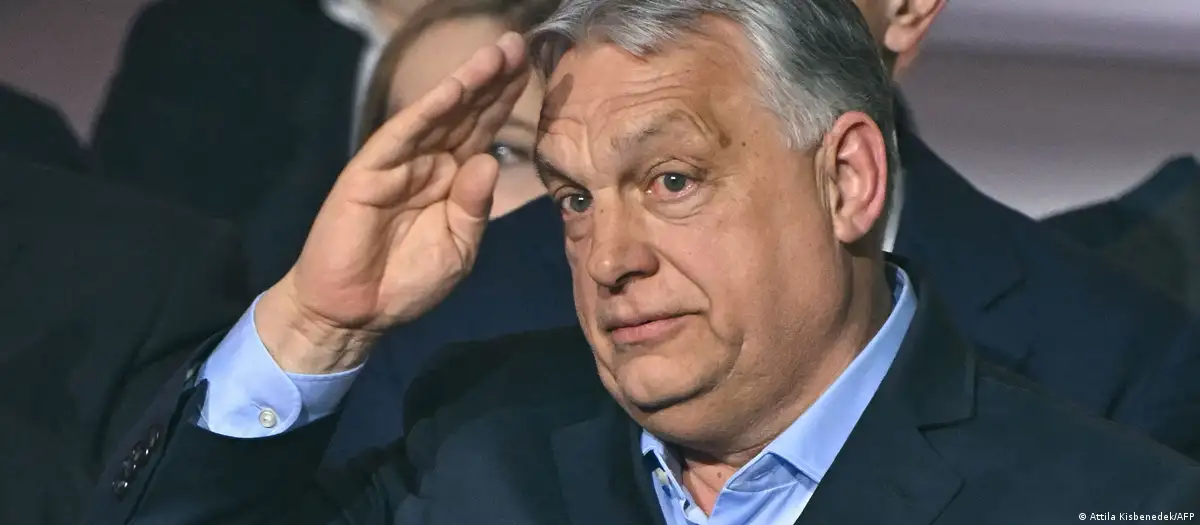
Hungary has entered a new political era after voters delivered a decisive victory to the opposition, ending 16 years of uninterrupted rule by Prime Minister Viktor Orban and his Fidesz party.
Preliminary results show that the conservative Tisza party, led by Peter Magyar, secured a commanding two-thirds majority in the 199-seat parliament, winning 138 seats, surpassing the threshold required to implement sweeping legislative and constitutional reforms.
With more than 98 percent of votes counted, Tisza garnered approximately 53.5 percent of the vote, equivalent to over three million ballots.
Fidesz, which had dominated Hungarian politics for over a decade and a half, trailed significantly with 37.95 percent, translating into 55 seats and a new role as the largest opposition bloc.
The outcome marks a dramatic political turnaround for Tisza, a relatively unknown formation prior to Magyar assuming its नेतृत्व in mid-2024 after breaking away from Fidesz. His campaign capitalized on mounting public dissatisfaction and pledged to restore democratic checks and balances, dw.com reports.
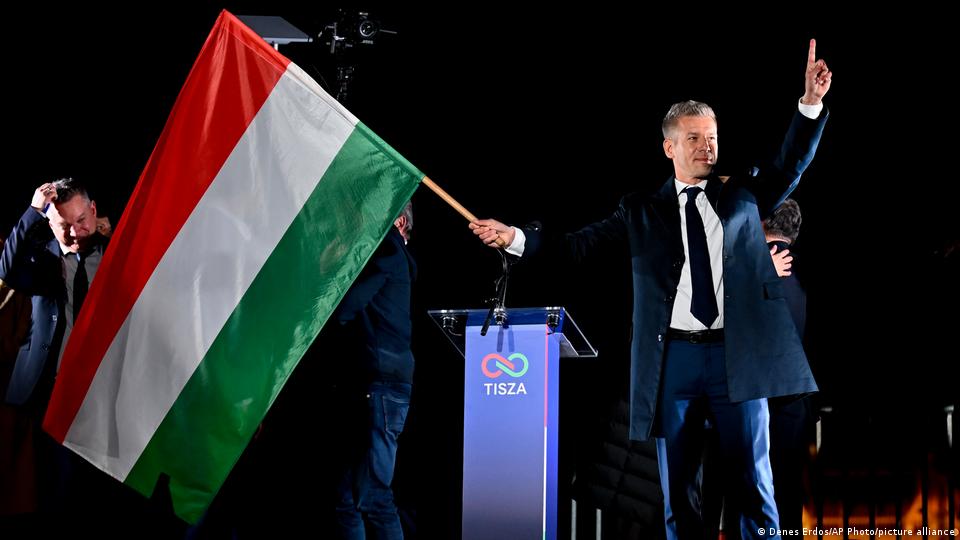
Addressing supporters in Budapest, Magyar declared the country “liberated” and vowed to dismantle what he described as entrenched control over state institutions.
He signaled plans to pursue accountability measures and push for the resignation of key officials appointed under the previous administration.
The supermajority places Magyar in a strong position to deliver on campaign promises, including structural reforms and potential constitutional amendments aimed at rebalancing institutional power.
Despite the electoral defeat, Orban and his government will remain in a caretaker capacity until the new parliament is formally constituted in May.
International reaction has been swift, with Donald Tusk welcoming the result as a step toward renewed alignment within Europe, particularly between Hungary and Poland after years of strained relations over foreign policy differences.
Magyar has indicated that his first official visits abroad will include Warsaw, Vienna and Brussels, underscoring his intention to rebuild ties with European partners and unlock suspended EU funding.
The election result signals not only a domestic political shift but also a potential recalibration of Hungary’s position within the European Union at a critical geopolitical juncture.