GCC–EU Strategic Partnership: From the Brussels Commitments to the Riyadh Summit
An upcoming summit to consolidate a strategic partnership extending beyond economic interests to shared security, stability and prosperity

By Tareq Yousef AlShumaimry
Former Secretary-General of the GCC Commercial Arbitration Centre
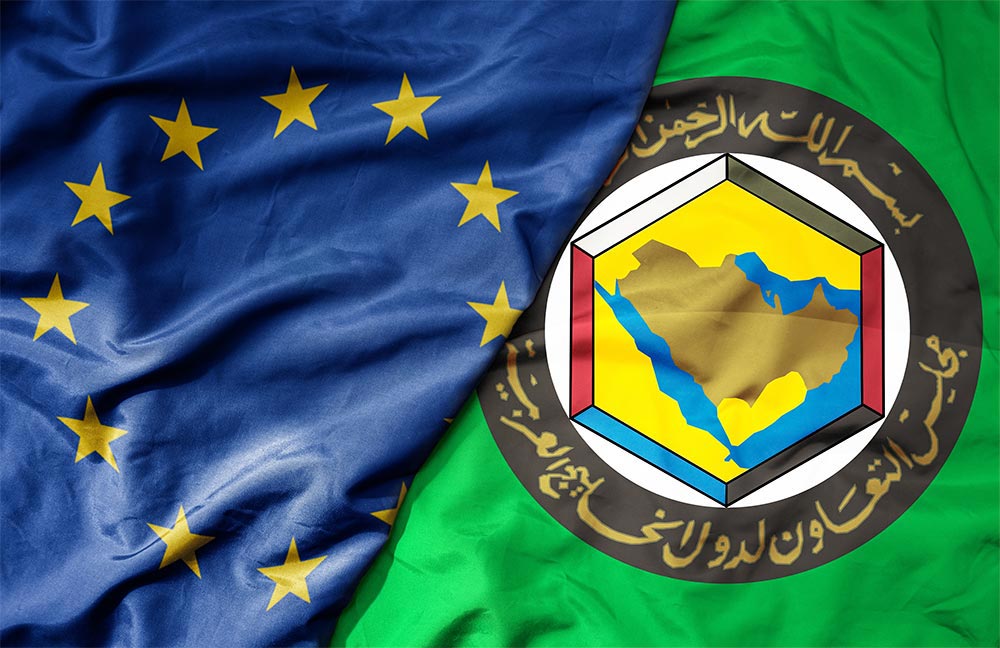
The second summit between the Gulf Cooperation Council (GCC) and the European Union (EU), scheduled to take place in Saudi Arabia on 24 October 2026, comes at a time when relations between the two blocs are evolving towards a more comprehensive strategic partnership. This transformation has been driven by global political, economic and security developments, which have created challenges requiring closer institutional coordination beyond traditional frameworks of cooperation.
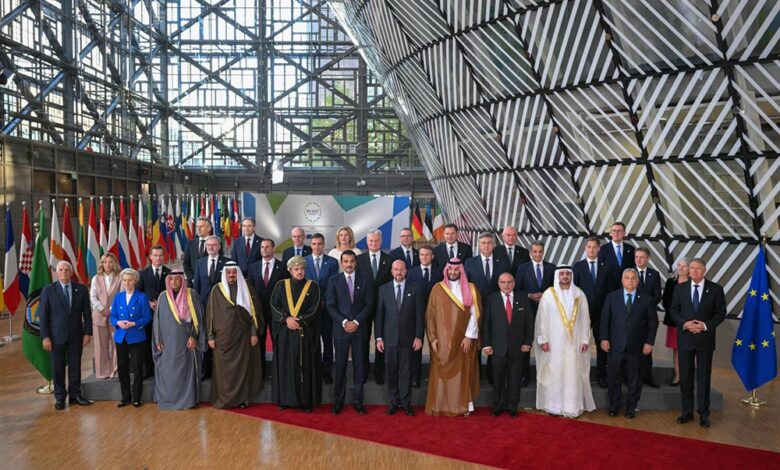
While the inaugural summit, held in Brussels on 16 October 2024 under the theme “Strategic Partnership for Peace and Prosperity”, laid the political foundations for this partnership, the forthcoming Riyadh Summit presents an opportunity to assess the progress achieved over the past two years and translate shared commitments into practical initiatives that advance the mutual interests of the six GCC member states and the EU’s 27 member states.
The relationship is rooted in the Cooperation Agreement signed in 1988, which entered into force in 1990, and gained renewed momentum following the launch of the EU’s Strategic Partnership with the Gulf in 2022.
It is important in this context to distinguish between the European Union as a political and economic bloc comprising 27 member states and the European Council, which brings together EU heads of state or government to determine the Union’s overall political direction and priorities. The Council of the European Union, meanwhile, comprises national ministers responsible for legislation and policy coordination.
The European side of the Riyadh Summit will be represented at the highest institutional level by European Council President António Costa, alongside European Commission President Ursula von der Leyen, reflecting the summit’s political significance and institutional importance.
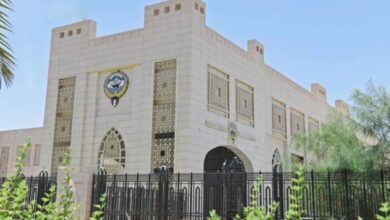
The period following the Brussels Summit has witnessed tangible progress, notably the 29th GCC–EU Joint Council and Ministerial Meeting, hosted by Kuwait on 6 October 2025. The meeting was co-chaired by Kuwait’s then Foreign Minister Abdullah Ali Al-Yahya and EU High Representative for Foreign Affairs and Security Policy Kaja Kallas, with the participation of GCC Secretary-General Jasem Mohamed Albudaiwi.
The meeting reaffirmed the importance of implementing the outcomes of the Brussels Summit and expanding political, economic and security cooperation, reflecting a transition towards more structured consultation and institutional follow-up.
In the security sphere, the second round of the GCC–EU Regional Security Dialogue was held in Brussels on 24 April 2025, addressing maritime security, cybersecurity, counterterrorism, non-proliferation and crisis management.
Security cooperation gained further urgency during the extraordinary ministerial meeting held on 5 March 2026, which addressed military escalation and Iranian attacks against GCC states. The European Union expressed solidarity with GCC countries and reaffirmed the importance of international law, civilian protection and regional security.
Economic indicators provide compelling evidence of the growing importance of this partnership. According to European Commission figures, bilateral trade in goods reached approximately €165.7 billion in 2025, representing an increase of 1.1 percent compared with the previous year. EU exports to GCC markets amounted to €110.3 billion, while imports from GCC countries totalled €55.4 billion.
The European Union is the GCC’s second-largest trading partner, accounting for 10.9 percent of its total global merchandise trade. Trade in services reached €84.4 billion in 2024, while the stock of EU foreign direct investment in GCC countries stood at €163.1 billion. Conversely, GCC foreign direct investment stocks in the European Union amounted to €189.8 billion.
These figures demonstrate not only the depth of economic interdependence but also the considerable potential for expanding joint investment in renewable energy, advanced industries, technology and infrastructure.
In this context, the Gulf Research Center (GRC), in its 2026 Strategic Report, highlights the significant expansion of institutional relations since the adoption of the EU’s Gulf partnership strategy in 2022.
The report identifies 2025 as an important period in developing bilateral frameworks, particularly following the Council of the European Union’s approval in July 2025 of a mandate to initiate negotiations on strategic partnership agreements with individual GCC member states.
Nevertheless, the report also points to continuing challenges concerning a comprehensive GCC–EU free trade agreement, visa facilitation and the practical implementation of political commitments. These outstanding issues add further significance to the Riyadh Summit.
Trade relations have also advanced through the launch of negotiations between the European Union and the United Arab Emirates on a free trade agreement in 2025, reflecting a growing European preference for strengthening bilateral economic partnerships alongside the broader GCC framework.
The challenge remains to ensure that bilateral arrangements complement rather than undermine collective GCC–EU cooperation, while preserving the strategic value of negotiations between the two blocs.
Diplomatic engagement has extended beyond formal ministerial meetings. During the Munich Security Conference in February 2026, GCC Secretary-General Jasem Albudaiwi met with the EU Special Representative for the Gulf, Luigi Di Maio, to review the implementation of previous agreements, advance joint initiatives and strengthen political and security coordination.
Such meetings demonstrate that relations between the two sides are increasingly characterised by sustained institutional engagement rather than occasional diplomatic encounters.
Looking ahead, the Riyadh Summit is expected to address several strategic priorities, including developments concerning the Palestinian question, regional crises, maritime security and energy security, alongside trade, investment, digital transformation, climate cooperation and food security.
Facilitating the movement of citizens, businesspeople and professionals between the two regions, including European visa arrangements, is another important area in which tangible progress could strengthen economic opportunities and people-to-people relations.
Among the potential outcomes of the summit are clearer mechanisms for monitoring previous commitments, renewed momentum in trade negotiations, expanded security and technological cooperation, and joint investment projects supported by defined implementation timetables.
Achieving these objectives, however, will require both sides to address regulatory differences, commercial obstacles and political divergences that continue to affect the pace of certain initiatives.
The significance of the Riyadh Summit therefore extends beyond another high-level meeting between two influential political and economic blocs. Its importance lies in the opportunity to consolidate a strategic partnership founded on balanced interests, mutual respect and shared responsibility for international peace and stability.
If the Brussels Summit established the political foundations of this relationship, the Riyadh Summit will provide an important opportunity to assess the progress achieved and advance towards a more effective, sustainable and results-oriented partnership.
Ultimately, the future of GCC–EU relations will be measured not merely by the volume of trade or the number of agreements concluded, but by the ability of both sides to translate their political, economic and diplomatic capabilities into meaningful cooperation that serves the interests of their peoples and contributes to regional and global security, stability and prosperity.