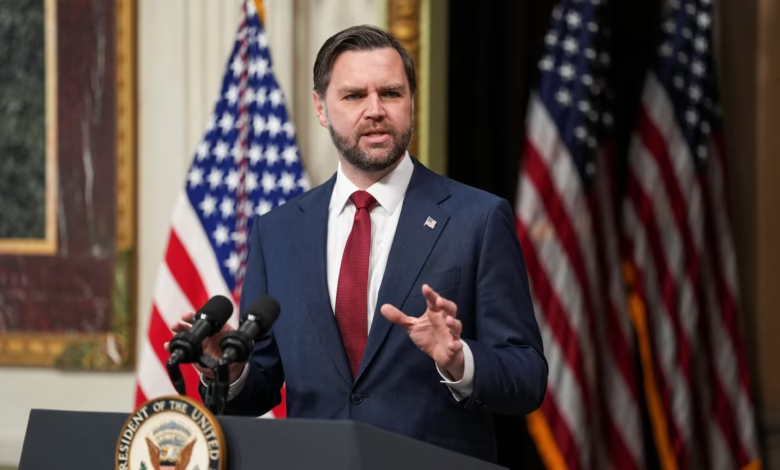
US Vice President J.D. Vance expressed optimism regarding the prospects of securing a preliminary memorandum of understanding (MoU) with Iran, though he underscored that all strategic options remain available to President Donald Trump.
Speaking to reporters at Andrews Air Force Base in Maryland, Vance stated that Washington and Tehran are “very close” to an agreement. However, he noted that “outstanding points” persist, particularly regarding the technical mechanisms to address Iran’s stockpile of highly enriched uranium.
The remarks follow US media reports indicating that the two sides have drafted an interim framework. The proposed deal reportedly includes a 60-day ceasefire extension, the reopening of the strategic Strait of Hormuz, and the initiation of a new round of comprehensive diplomatic talks over Iran’s nuclear program.
Vance confirmed that negotiators from both nations are actively exchanging views on the memorandum’s core provisions. He stressed that discussions remain heavily focused on defining boundaries for Iran’s nuclear enrichment capabilities.
Despite ongoing friction, the Vice President evaluated the current diplomatic climate positively, stating that Iranian negotiators are showing “good faith, at least so far.” He expressed hope that draft terms would progress to a stage mature enough for formal ratification by President Trump, who retains final executive authority.
Addressing recent direct engagements between the US military and the Iranian Revolutionary Guard Corps (IRGC), Vance described the security environment as standard for high-stakes transitions, remarking that “ceasefires like this are often a bit chaotic.”
He added that regional truces frequently encounter minor escalations, reiterating that the United States maintains its sovereign right to conduct defensive strikes to counter threats against maritime traffic and assets.
Concurrently, Washington maintains its policy of maximum economic pressure against Tehran. The administration continues to enforce strict economic sanctions and a tight naval blockade, while reserving the right to resume broader military action if talks collapse. – Kuna