













TIF Seeks to Transform Turkic Cooperation into Investment and Growth
The Times Kuwait Report
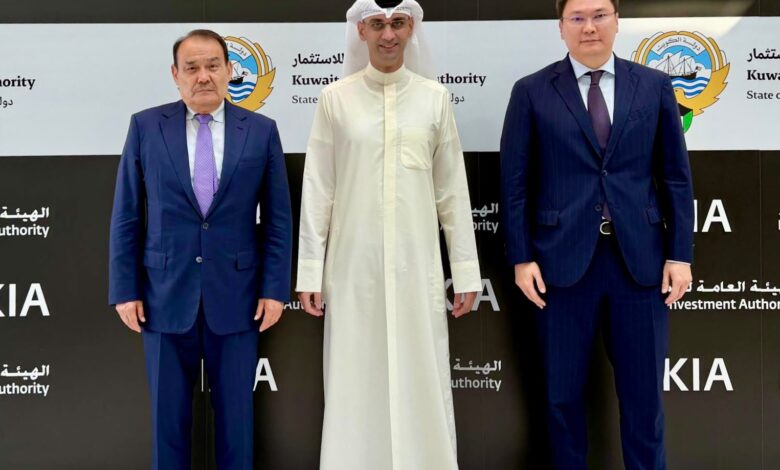
The Turkic Investment Fund (TIF) is moving into a new phase focused on turning the growing political and cultural cooperation among Turkic states into tangible economic opportunities, TIF Secretary General H.E. Baghdad Amreyev said during his visit to Kuwait.

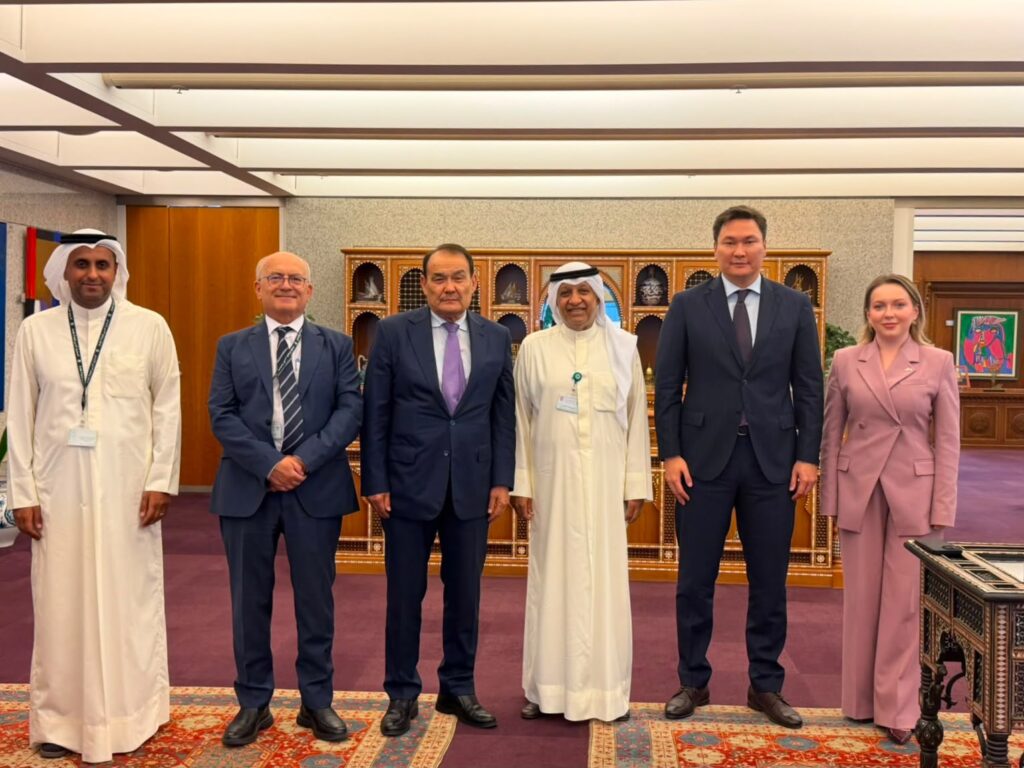
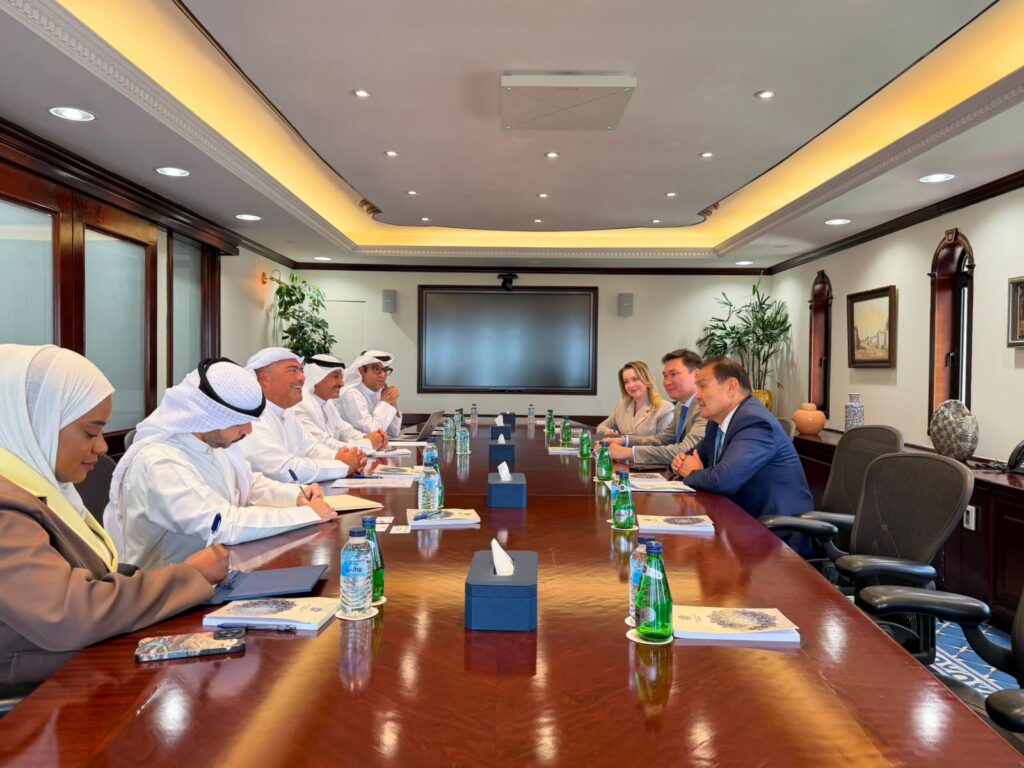
Amreyev, who held meetings with senior officials at the Kuwait Investment Authority, Kuwait Fund for Arab Economic Development and Arab Fund for Economic and Social Development, said there was strong interest from the Kuwaiti side in exploring opportunities for investment and financial cooperation.
“I came to Kuwait with a very clear purpose to explore practical opportunities for financial and investment cooperation between Kuwait and the member states of the Turkic Investment Fund,” Amreyev said.
The Fund’s member states are Azerbaijan, Hungary, Kazakhstan, Türkiye and Uzbekistan, with the wider Turkic cooperation framework also involving Kyrgyzstan. He said the discussions covered commercial investment, development finance, co-financing, project preparation and ways in which institutions in Kuwait and the Turkic region could work more closely.
“What encouraged me most was the genuine interest from the Kuwaiti side. But I always believe that interest is only the beginning. The real measure of success is whether we can now turn these discussions into projects that make economic sense for both sides,” he said.
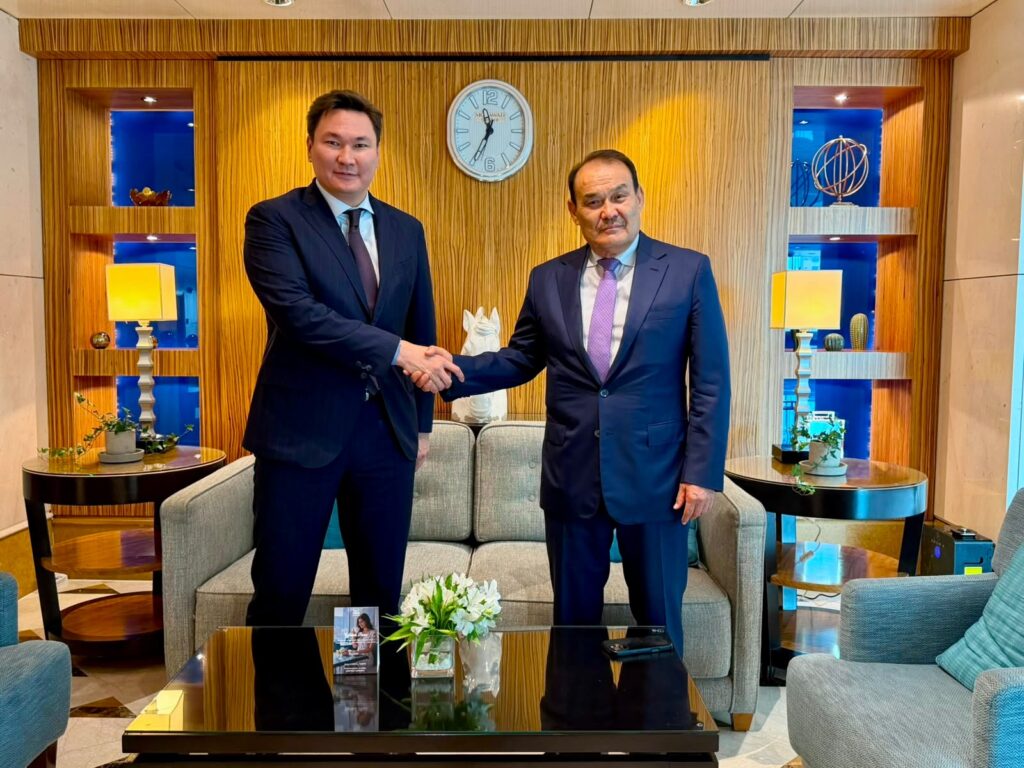
Amreyev also acknowledged the support of Kazakhstan’s Ambassador to Kuwait, H.E. Yerzhan Yelekeyev, who accompanied him during the meetings and helped facilitate the visit.
From institution building to financing
Reflecting on the development of TIF, Amreyev said the Fund has now moved beyond institution building and into actual financing. “During 2023 and 2024, we focused on establishing the Fund. In 2025, we built the governance, risk, investment, compliance and administrative systems needed for a credible financial institution. By the end of 2025, we were ready to begin financing,” he said.
The next three years, he added, will be about building a strong portfolio of projects across the member states. TIF will focus on areas including infrastructure, connectivity, energy, agriculture and private-sector development, while also seeking to bring international and regional financial institutions into projects.
“The ambition is not simply to have a larger Fund. It is to have a Fund that produces tangible economic results,” Amreyev said.
Middle Corridor offers wider economic opportunity
The growing importance of the Middle Corridor was another key area of discussion. Amreyev said the route connecting Central Asia with Türkiye and Europe should not be viewed simply as a transportation network.
“I think the Middle Corridor has to be understood as much more than a route for moving goods. Its real potential is to become an economic corridor one that attracts investment, creates businesses and generates production across the countries it connects,” he said.
Cargo volumes have already increased significantly, while projections indicate further substantial growth by 2030. But Amreyev stressed that infrastructure bottlenecks must be addressed if the corridor is to reach its full potential.
This includes greater railway capacity, improved Caspian shipping and port infrastructure, faster border procedures, digital documentation and better alignment of standards and procedures. “A faster railway doesn’t help much if a shipment then spends hours waiting at the next border,” he noted.
TIF can contribute by financing transport and logistics infrastructure, ports, storage facilities, digital infrastructure and companies providing services along the corridor. However, Amreyev said the success of the Middle Corridor should ultimately be measured by more than cargo volumes.
“We should ask: How much investment is it attracting? How many businesses are being created? How many jobs are being generated? How much more are our countries producing and trading with one another?” “That is when a transport corridor becomes a genuine economic corridor,” he said.
Co-financing key to TIF strategy
Amreyev said partnerships with international financial institutions will remain central to TIF’s strategy. The Fund has been engaging with institutions including the European Bank for Reconstruction and Development, OPEC Fund for International Development and Islamic Corporation for the Development of the Private Sector.
“Co-financing is central to our strategy,” he said, noting that established international financial institutions bring decades of experience, while TIF contributes its regional mandate and understanding of the Turkic economies.
“For me, co-financing is not simply about two institutions putting money into the same project. It is about bringing together different strengths capital, experience, risk assessment and regional knowledge and using those strengths to mobilise significantly more financing than TIF could provide on its own,” Amreyev said.
Gulf capital can play important role
Amreyev sees significant potential for deeper cooperation between TIF and Gulf sovereign wealth and development institutions. He said organisations such as the Qatar Investment Authority and Kuwait Investment Authority have different mandates from development institutions such as the Qatar Fund for Development, Saudi Fund for Development and Kuwait Fund for Arab Economic Development, but each could potentially contribute to the region’s development in different ways.
“The Gulf has significant pools of long-term capital and considerable investment and development experience,” he said. At the same time, the Turkic economies offer infrastructure requirements, natural resources, agricultural and manufacturing capacity, growing consumer markets and a strategic geographical position between Asia and Europe.
“We need to change the way we present the region to investors,” Amreyev said. “We should stop thinking of the Turkic economies as six separate country stories. Increasingly, investors should see them as a connected regional market.” He said TIF could serve as a bridge between Gulf investors and opportunities across the wider Turkic region.
AI and digital economy emerging as new priorities
Artificial intelligence, digital development and new technologies are also becoming increasingly important areas for TIF. Amreyev said discussions at the recent Informal Summit of the Organization of Turkic States in Turkistan highlighted the potential role of TIF in supporting digital projects, technology and start-ups.
“We see significant opportunities in areas such as data centres, high-speed connectivity, digital financial infrastructure, digital trade systems, cybersecurity infrastructure and technology services,” he said.
However, he stressed that AI development requires more than software. “AI requires computing power, data infrastructure, reliable electricity, strong connectivity and skilled people. In many cases, financing that underlying infrastructure may be just as important as financing an individual AI company.” TIF can also support innovative companies through banks, specialised financial institutions and other partners.
Turning political closeness into economic integration
Asked about the biggest obstacle to deeper economic integration among Turkic countries, Amreyev said the challenge is increasingly about implementation rather than political will. “The Turkic countries already have strong political relationships and a much stronger institutional framework than they had 15 years ago,” he said.
“The challenge is turning that political closeness into deeper economic integration.” Differences in customs procedures, standards, documentation, border practices, financing conditions and regulations continue to make cross-border business more complicated than it needs to be.
“A political agreement can be reached in a day. Making a cross-border transaction simple, predictable and profitable can take much longer,” he said. While TIF cannot address every regulatory or customs issue, Amreyev said financing can create incentives for greater integration.
“If we finance a logistics connection, help a company establish a regional value chain, support a business expanding across borders or finance infrastructure that removes a bottleneck, then integration becomes economically useful,” he said.
A vision beyond diplomacy
Looking back at his long diplomatic career, including his tenure as Secretary General of the Organization of Turkic States, Amreyev said cultural closeness alone cannot create economic integration.
“Cultural closeness is a tremendous strength, but it does not automatically create economic integration,” he said. He wants to see the Turkic countries become better connected through transport, digital infrastructure, investment, production and energy cooperation, while remaining fully integrated with the wider global economy.
More importantly, he wants TIF to become a credible international financial institution with a strong portfolio and trusted partnerships. “But I also want this to remain practical,” he said.
“Declarations have their place. But declarations have limited value if they don’t produce results.” For Amreyev, the ultimate measure of success will be visible on the ground in businesses expanding across borders, infrastructure removing bottlenecks, new investment flowing into the region and entrepreneurs finding new markets.
“If we can achieve that consistently, then we will have succeeded in turning more of the vision of Turkic cooperation into economic reality,” he said. “For me, that would be the most meaningful legacy.”