Rare lesser flamingo spotted alongside greater flamingos at Kuwait’s Jahra Reserve
Rare bird sighting highlights Kuwait’s biodiversity and the importance of protecting wetlands
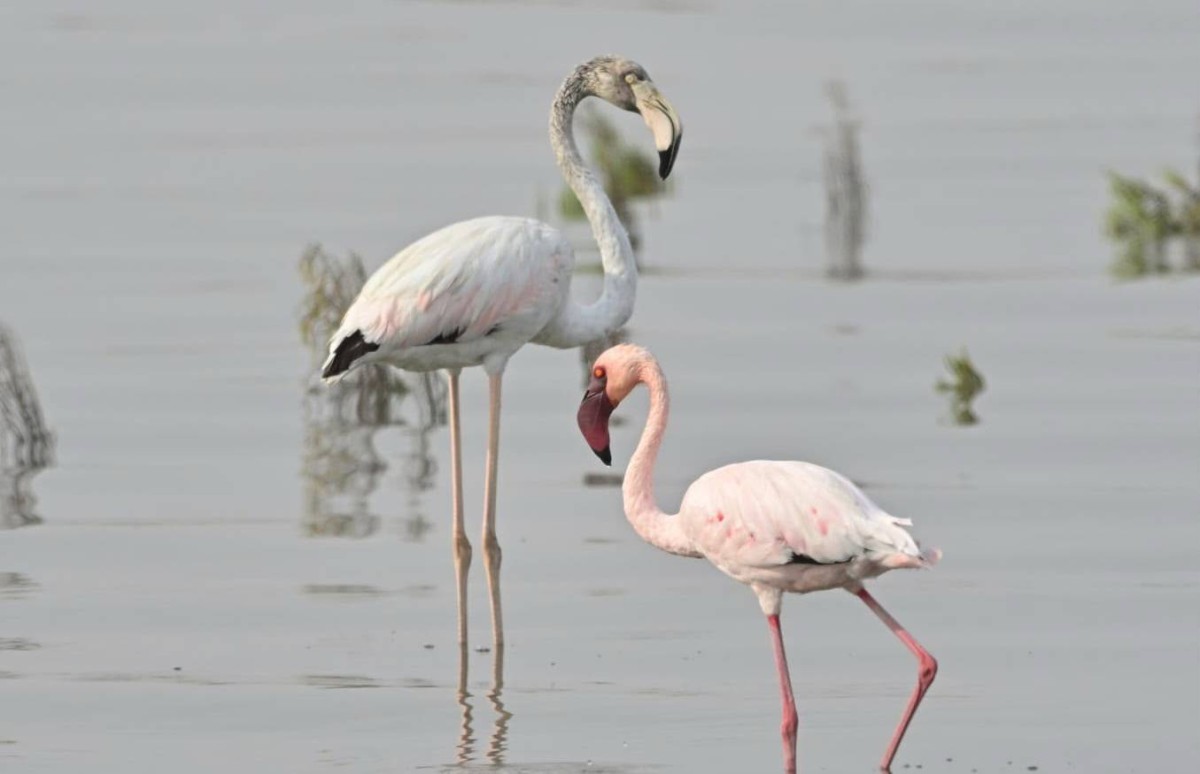
A rare lesser flamingo (Phoeniconaias minor) has been photographed alongside greater flamingos (Phoenicopterus roseus)at Jahra Nature Reserve during the 2026 bird migration season, highlighting Kuwait’s rich biodiversity and the importance of its protected wetlands as feeding and resting grounds for migratory birds.
Samira Al-Khalifa, head of the environmental photography team at the Kuwait Environment Protection Society, documented the distinctive scene and told the Kuwait News Agency (KUNA) on Monday that the sighting was a valuable addition to Kuwait’s bird-monitoring records. The lesser flamingo is rarely seen in the country compared with the greater flamingo, while sightings of both species together are particularly uncommon.
The photographs captured clear differences between the two species. The lesser flamingo has a smaller body, deeper pink colouring and a dark reddish bill tipped with black. The greater flamingo is noticeably taller and has a lighter-coloured bill with a black tip.
A vital stopover for migratory birds
Al-Khalifa said Jahra Nature Reserve was an important site for migratory birds because of its water bodies, mudflats and suitable feeding and resting habitats. Kuwait’s location along regional migration routes further enhances the importance of such protected areas for birds moving between seasonal habitats.
The reserve, officially known as Al-Khuwaisat (Al-Jahra) Natural Reserve, provides a wetland environment that supports a variety of wildlife. The Environment Public Authority identifies it as a sanctuary for resident and migratory birds and a site for protecting biodiversity.
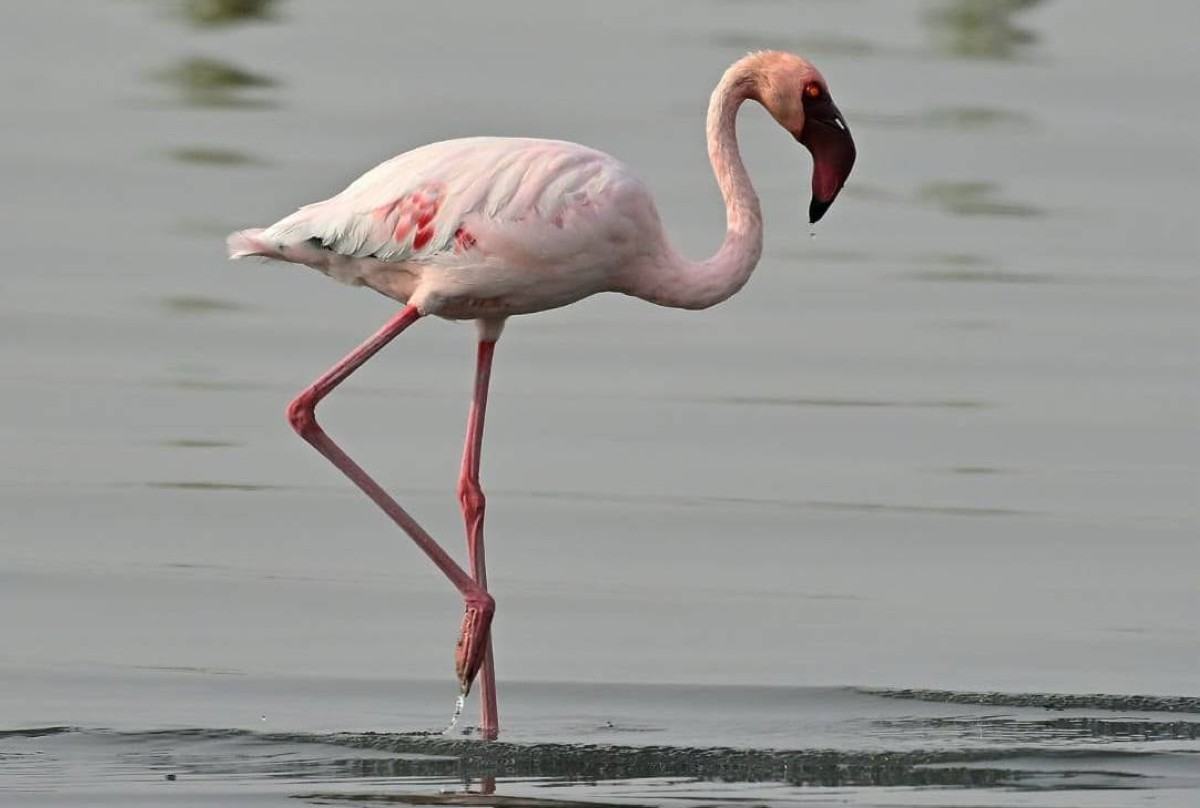
Al-Khalifa also highlighted the conservation concerns facing the lesser flamingo. The species is classified as Near Threatened on the International Union for Conservation of Nature (IUCN) Red List. Pressures on its natural habitats include wetland degradation, changes in water levels and salinity, pollution, and declining quality at some feeding and breeding sites.
Flamingos help sustain wetland ecosystems
Beyond their striking appearance, flamingos play a role in the ecological processes of shallow wetlands. Al-Khalifa explained that the birds feed on microscopic aquatic organisms, including small crustaceans, using specialised bills to filter food from water and sediment.
As they search for food, flamingos also disturb the upper layers of mud with their feet. This movement can resuspend organic matter and nutrients, making them available to other organisms within the food web and contributing to ecological interactions in wetland environments.
Their presence in mudflats illustrates the close relationship between wildlife and the habitats on which it depends. Al-Khalifa stressed that protecting these areas from pollution, landfilling, encroachment and other damaging activities is essential to maintaining their ecological balance.
Protecting biodiversity through documentation
Al-Khalifa emphasised that conserving nature reserves is crucial to safeguarding biodiversity and sustaining the species that depend on them during seasonal migrations. She also called attention to the importance of regional and international efforts to protect wetlands.
Photographic records of rare species provide valuable environmental information, help monitor biodiversity and draw public attention to wildlife conservation. Documenting such sightings also highlights the importance of Kuwait’s nature reserves as stopover sites for migratory birds.
The appearance of the lesser flamingo alongside its larger relative offers a striking reminder of the wildlife that depends on Kuwait’s wetlands. Protecting these habitats is essential not only for migratory birds but also for preserving the ecological processes that sustain wetland ecosystems.