The Times Kuwait Report
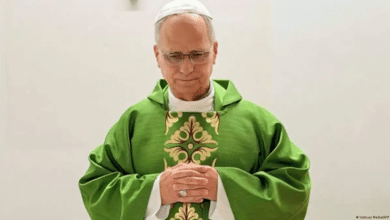
One year after his historic election, Pope Leo XIV has emerged as a defining voice in a rapidly shifting global landscape, balancing institutional reform within the Church with an assertive moral presence on the world stage. Marking his first anniversary as head of the Catholic Church and sovereign of Vatican City, the pontiff’s tenure has been shaped by efforts to strengthen governance, promote unity within the Church, and expand its engagement with global challenges.
In a series of recent addresses, Pope Leo XIV has reiterated strong calls for peace, warning against rising geopolitical fragmentation, armed conflict, and the resurgence of extreme nationalism. He has positioned the Vatican as an active moral interlocutor in international affairs, urging dialogue and multilateral cooperation.
Over the past year, the Pope has undertaken multiple pastoral visits and high-level engagements across continents, reinforcing the Church’s global presence and deepening diplomatic and interfaith dialogue at a time of heightened international instability. Born Robert Francis Prevost in Chicago in 1955, Pope Leo XIV is the first American-born pontiff, the first member of the Order of Saint Augustine to ascend to the papacy, and only the second pope from the Americas after Pope Francis. His election in May 2025 was widely viewed as unexpected, signaling a shift in the geographical and cultural profile of Church leadership.
Governance reforms and synodality
From the outset, Pope Leo XIV has emphasized continuity with his predecessor while introducing a more structured approach to discipline, institutional cohesion, and governance reforms.
A key priority has been strengthening episcopal oversight, improving accountability mechanisms, and refining the global process for the selection of bishops — steps aimed at ensuring transparency and consistency in Church leadership.
He has also advanced the principle of synodality, expanding consultation and participation among bishops, clergy, and lay members. This reflects a governance model rooted in the legacy of the Second Vatican Council, promoting dialogue and shared responsibility within the Church.
Social justice, climate, and digital ethics
Social justice has remained central to his papacy, with continued emphasis on poverty alleviation, migrant protection, and support for marginalized communities – priorities closely.