Regional tensions intensified on Monday after Iran-aligned Houthi forces launched a fresh attack on Saudi Arabia, while Gulf Arab states postponed planned talks with Iran, raising fears that the widening Middle East conflict could further threaten oil supplies and vital shipping routes.
The Houthis said they launched dozens of missiles and drones at a military airbase in Khamis Mushait in southern Saudi Arabia, targeting aircraft hangars, radar systems, runways and ammunition depots. They described the attack as retaliation for Saudi airstrikes in Yemen.
Saudi authorities issued emergency alerts in Khamis Mushait and three other southern cities that have previously been targeted by Houthi attacks. The latest escalation came as US President Donald Trump said Iran wanted to reach a deal with Washington, suggesting a possible diplomatic opening despite growing regional tensions.
Trump said on Truth Social that Iran wanted to reach an agreement “quickly and badly” and that Washington was open to considering negotiations. The comments came after Oman postponed a planned meeting between Iran and Gulf states aimed at discussing negotiations to reopen the Strait of Hormuz, a critical route for global oil shipments that has been largely closed since the United States and Israel attacked Iran in late February.
Omani Foreign Minister Sayyid Badr Albusaidi announced the postponement, while Iran said the decision had been made at Saudi Arabia’s request. The developments have added to concerns over the security of Gulf energy infrastructure and shipping routes.
Oil prices climb
Oil prices initially surged more than 4 percent when markets reopened on Monday following the weekend’s developments, although most of the gains later eased after Trump’s comments. Brent crude was trading about 1.6 percent higher at around $106 a barrel by 1730 GMT.
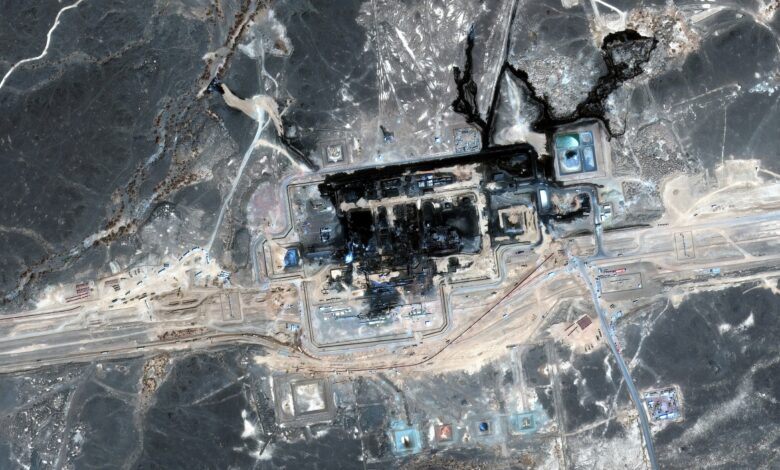
Traders warned that a prolonged shutdown of Saudi Arabia’s east-west oil pipeline could remove as much as 4 percent of global oil supply from the market. The pipeline provides a route for Gulf oil exports to bypass the Strait of Hormuz. Satellite imagery has shown fire damage along parts of the pipeline, although Saudi authorities have not said when operations will resume.
Iran also issued a warning to ships using the Strait of Hormuz, publishing a list of 77 vessels it said had violated its operating protocols. Tehran said the vessels could face fines, detention or confiscation during future transits.
US Energy Secretary Chris Wright said the number of vessels crossing the strait covertly with US support was increasing, although independent monitors have indicated that oil flows may have fallen this month as fighting intensified.
Yemen fighting widens
The renewed fighting in Yemen presents another challenge for Trump, who faces pressure from Gulf allies to help contain the Houthis while seeking to avoid opening another major front in the regional conflict. Saudi Arabia has led a coalition fighting the Houthis since 2015.
The conflict had largely eased under a ceasefire in recent years, but fighting has intensified this month as the Houthis have advanced against forces aligned with Yemen’s internationally recognized government. The International Organization for Migration estimates that about 82,000 Yemenis have fled their homes since the beginning of September as the Houthis seized territory, including the strategic Red Sea port of Mocha last week.
The escalation has also deepened the humanitarian crisis, with civilians caught between advancing forces and restricted access to food and water. Saudi state media reported that Crown Prince Mohammed bin Salman met US Central Command chief Admiral Brad Cooper in Jeddah on Monday to discuss regional developments.
Three sources told Reuters that Washington has so far resisted Saudi requests for direct military intervention beyond intelligence support. The United States previously launched a two-month bombing campaign against Houthi targets in 2025 before Trump halted the operation following a ceasefire agreement with the group. according to Reuters.
The latest escalation leaves the region facing heightened security risks at a time when disruptions around the Strait of Hormuz and Gulf energy infrastructure are already putting pressure on global oil markets.