Kyrgyzstan calls for stronger UN authority, Security Council reform, tougher enforcement of resolutions at UNGA
With Kyrgyzstan set to join the Security Council in 2027, President Sadyr Zhaparov urges reforms to strengthen UN authority, improve compliance and expand global representation.
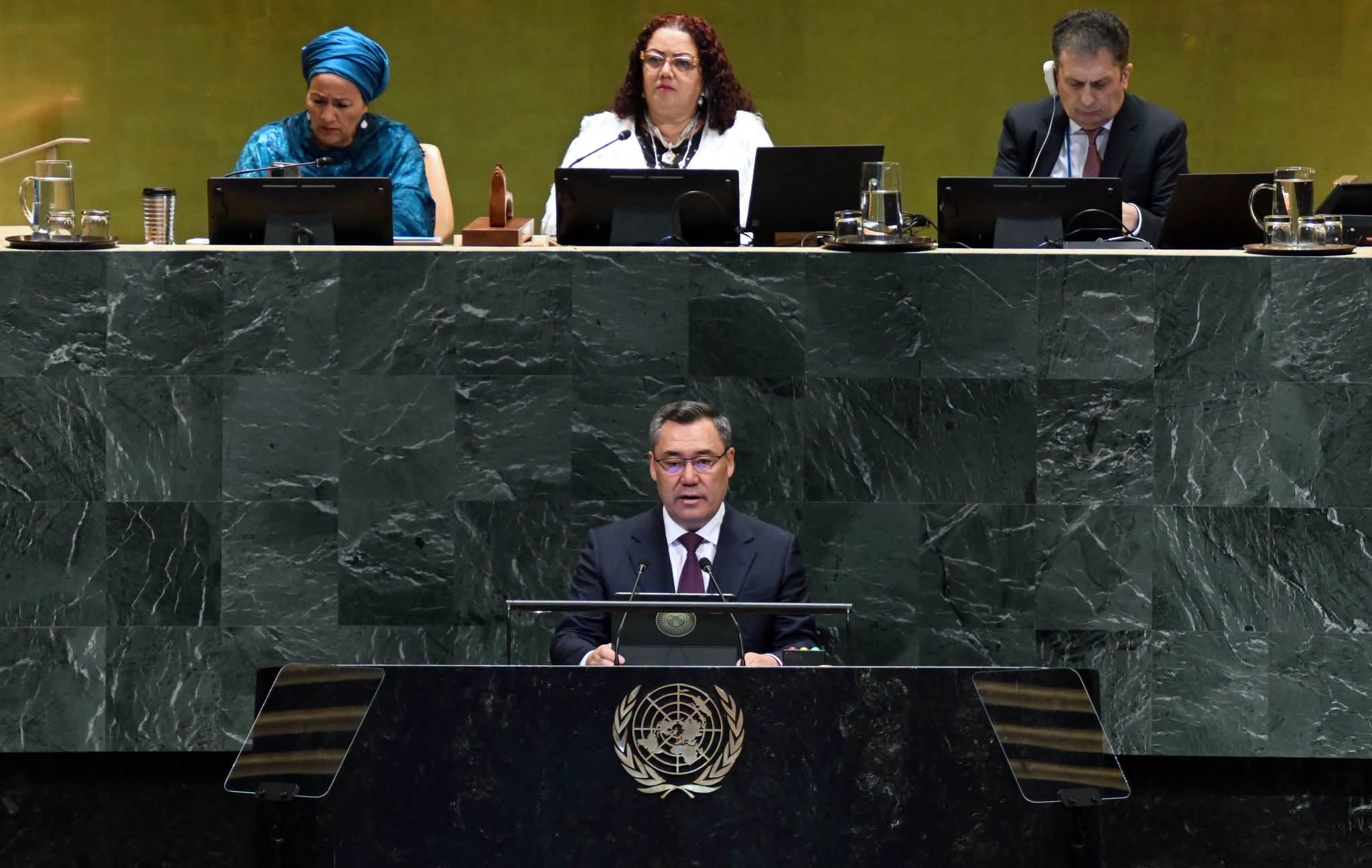
Kyrgyz President Sadyr Zhaparov has called for sweeping reforms to strengthen the United Nations, improve enforcement of its decisions and expand Security Council representation, while urging greater international action on sanctions, climate change and the protection of mountain regions.
Addressing the General Debate of the 81st session of the UN General Assembly in New York on September 22, Zhaparov said wars and humanitarian crises in several regions, including Ukraine, Iran, Sudan and Palestine, underscored the need for stronger international cooperation on peace, security and sustainable development.
Zhaparov said Kyrgyzstan, which has been elected to the UN Security Council for the first time for the 2027–2028 term with the support of 142 member states, viewed the membership as a responsibility rather than a privilege. He pledged that Kyrgyzstan would uphold international law, human rights and a multilateral system based on mutual respect and shared responsibility.
Push for Security Council reform
Zhaparov called for an expansion of Security Council membership, proposing two permanent seats for Africa and one for Latin America. He also said the aspirations of other developed countries seeking Security Council membership should be considered.
He argued that the UN also needs stronger mechanisms to ensure member states implement its decisions, warning that repeated non-compliance undermines confidence in the multilateral system and the principle that international law applies equally.
Kyrgyzstan proposed establishing a permanent public registry within the General Assembly to track implementation of UN resolutions and obligations. The proposed registry would record compliance, require regular reports from member states, provide analytical assessments and ensure transparency and equal access to information.
Zhaparov also proposed a gradual response mechanism for cases of systematic non-compliance, beginning with official notification and consultations, followed by monitoring missions, consideration by the General Assembly and, where appropriate, procedures under the UN Charter.
Calls for restraint on Security Council veto
The Kyrgyz president further urged permanent members of the Security Council to voluntarily refrain from using their veto when matters concerning implementation of UN decisions are being considered. He proposed establishing an open working group within the General Assembly to examine possible models for such a mechanism and prepare recommendations for consideration by the General Assembly and Security Council.
Zhaparov said Kyrgyzstan intends to formally submit its proposals to the relevant committee after joining the Security Council on January 1, 2027. Addressing sanctions, Zhaparov said decisions imposing sanctions should be taken in accordance with the UN Charter and argued that the Security Council should have the exclusive mandate to impose sanctions on states.
He proposed a mandatory mechanism for prior review of sanctions, including an assessment of their potential humanitarian, economic and social consequences. He also called for greater transparency from states imposing sanctions, including disclosure of the legal basis, objectives and conditions for lifting them.
Zhaparov also proposed a unified international mechanism under UN auspices to monitor sanctions and review them regularly. During his remarks, he praised US President Donald Trump for a decision to halt funding for certain non-governmental organizations, saying it had strengthened the sovereignty of states and allowed them greater freedom to determine their development paths.
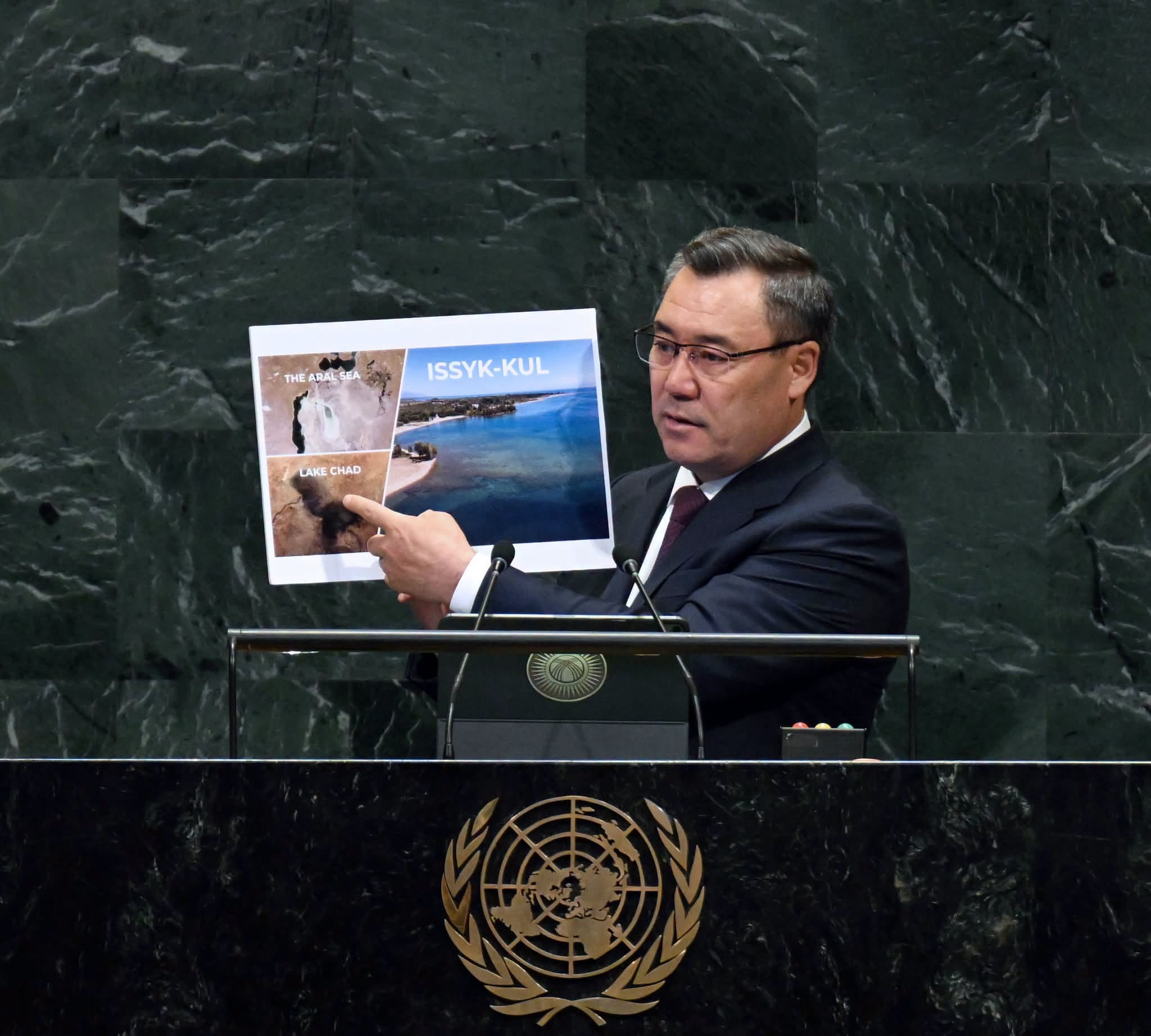
Zhaparov devoted part of his address to climate change and the vulnerability of mountain regions, highlighting the environmental pressures facing Kyrgyzstan and Lake Issyk-Kul. He said the lake’s water level has fallen by nearly 14 meters over the past 170 years, while the decline has accelerated to about seven centimeters annually over the past five years.
Of 101 rivers that historically flowed into Issyk-Kul, only around 30 now flow throughout the year, he said. Zhaparov said more than 30 percent of mountain glaciers in the region have melted over the past 70 years, with nearly 20 percent of that reduction occurring during the past seven to 10 years. He warned that the trend threatens regional biodiversity and the economic stability of hundreds of thousands of people.
Kyrgyzstan has been implementing environmental restrictions and projects to monitor the depth of Issyk-Kul using underwater robotic technologies, while continuing efforts to clean the lakebed and waters, he said.
$10 million pledge for Issyk-Kul
Zhaparov called on the United Nations, international financial institutions and donor countries to support the creation of a Special Joint Trust Fund for the Preservation of Lake Issyk-Kul. He said Kyrgyzstan was prepared to contribute $10 million from its state budget to the proposed fund, describing the initiative as a global partnership to protect the lake rather than a request for assistance.
He also announced that Bishkek will host the Second Global Mountain Summit, “Bishkek+25,” from October 21 to 23, 2027, as part of the Five Years of Action for the Development of Mountain Regions for 2023–2027.
Zhaparov concluded by calling for collective international action to address conflict, climate change and other global challenges, saying Kyrgyzstan would continue advocating dialogue, cooperation and sustainable development.